
Development and Design
The TL-2000 Sting emerged from the innovative mind of Jiri Tlusty, founder and chief designer of TL-ULTRALIGHT s.r.o., who established the company in 1989. Building upon the success of earlier models like the TL-32 Typhoon and TL-96 Star, Tlusty introduced the Sting Carbon around 2000 as a high-performance composite aircraft designed to meet the evolving demands of ultralight and light sport aviation.
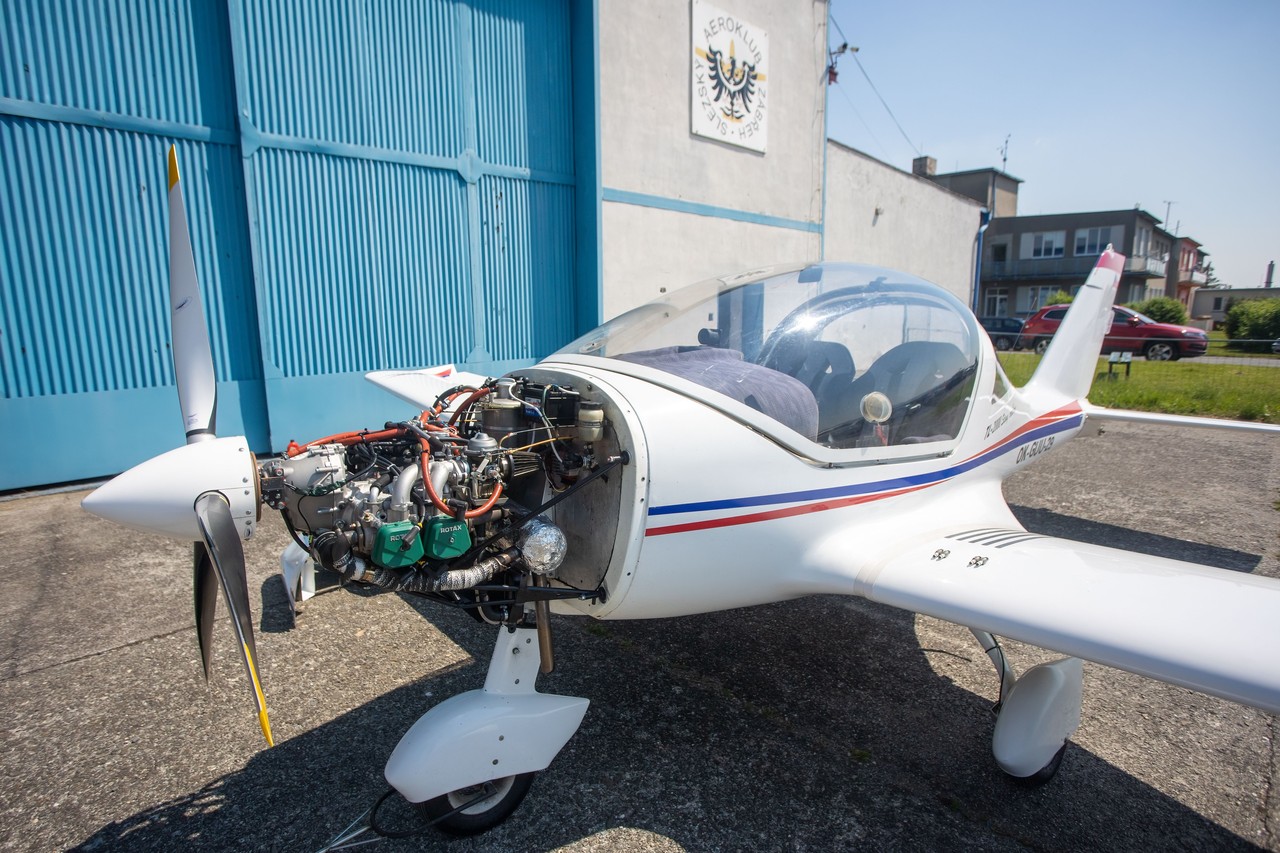
The aircraft incorporated several advanced features for its category, including a high-performance wing design, anti-servo elevator system, and low-drag conforming engine cowling. The composite construction provided superior strength-to-weight ratios compared to traditional aluminum designs while enabling sleek aerodynamic forms that enhanced performance across the entire flight envelope.
Production Evolution
TL-ULTRALIGHT launched production with the original Sting Carbon in 2000, subsequently developing multiple variants to address different market segments. The TL-2000 RG, announced at the Aero '03 Friedrichshafen exhibition in April 2003, featured retractable landing gear and achieved cruise speeds of 177 mph. The company introduced the TL StingSport between 2004 and 2006, specifically certified as a Special Light Sport Aircraft for the American market.
The evolution continued with the TL-2000 Sting S3, produced from 2007 to 2009, which incorporated a new tapered wing spanning 29 feet 11 inches and provided 540 pounds of useful load. The current production model, the TL-2000 Sting S4, entered service in 2010 with refined canopy design, improved instrument panel, upgraded landing gear, and enhanced engine cowling.
Technical Specifications and Performance
The Sting series utilizes proven Rotax four-stroke engines, offering operators choices between the 80-horsepower Rotax 912UL, 100-horsepower 912ULS or 912iS, and the turbocharged 115-horsepower Rotax 914. These Austrian-manufactured engines provide exceptional reliability with 1,500-hour time-between-overhaul intervals, making them particularly suitable for flight training operations that typically accumulate 10 to 15 hours weekly.
With the 100-horsepower Rotax 912ULS installation, the Sting S4 achieves maximum cruise speeds of 115 knots at 8,000 feet altitude while maintaining impressive climb rates of 700 to 800 feet per minute. The aircraft rotates at just 40 knots, demonstrating excellent short-field capabilities. Range extends to approximately 550 miles with optional long-range fuel tanks holding 32 gallons total.
Manufacturing and Global Presence
TL-ULTRALIGHT operates its manufacturing facility in Hradec Králové, near Prague, where skilled technicians produce each aircraft using advanced composite construction techniques. By mid-2010, European civil aviation registers recorded 153 TL-2000 Stings in service, excluding Russian registrations, indicating substantial production volumes following the company's earlier success with over 200 TL-32 Typhoons and more than 300 Condor aircraft.
The manufacturer has established a global presence, with Sting aircraft operating throughout Europe, the United States, Australia, New Zealand, and South Africa. Flight schools particularly favor the type for its economic operation, spacious 44-inch-wide cabin comparable to the Cessna 210, and docile handling characteristics suitable for primary training.
Operational Service
The TL-2000 Sting serves primarily in private ownership and flight training roles, where its combination of modern avionics, comfortable accommodations for two adults plus baggage, and efficient operation make it competitive with certified aircraft from the 1940s and 1950s while remaining within light sport aircraft limitations of 1,320 pounds gross weight and 120-knot maximum speed.
Pilots appreciate the aircraft's predictable handling qualities and excellent visibility from the bubble canopy design. The spacious cockpit accommodates pilots and passengers comfortably for extended cross-country flights, with typical legs extending five hours or more. Advanced examples feature modern glass cockpit displays and GPS navigation systems that rival those found in much more expensive certified aircraft.
Legacy and Current Status
The TL-2000 Sting represents a significant achievement in Czech aviation manufacturing, demonstrating how European ultralight manufacturers successfully transitioned to meet light sport aircraft certification requirements while maintaining the performance and economic advantages that made ultralights popular. Recent production examples, such as construction number 25-ST-514 registered SP-SPWK in 2017, confirm continued manufacturing activity.
TL-ULTRALIGHT continues operations today, producing the Sting alongside other models including the Sirius, Sparker, and Stream, maintaining Jiri Tlusty's vision of high-performance composite aircraft accessible to recreational pilots. The company's evolution from powered hang gliders in 1989 to sophisticated light sport aircraft demonstrates the rapid advancement of European general aviation manufacturing in the post-Cold War era.