
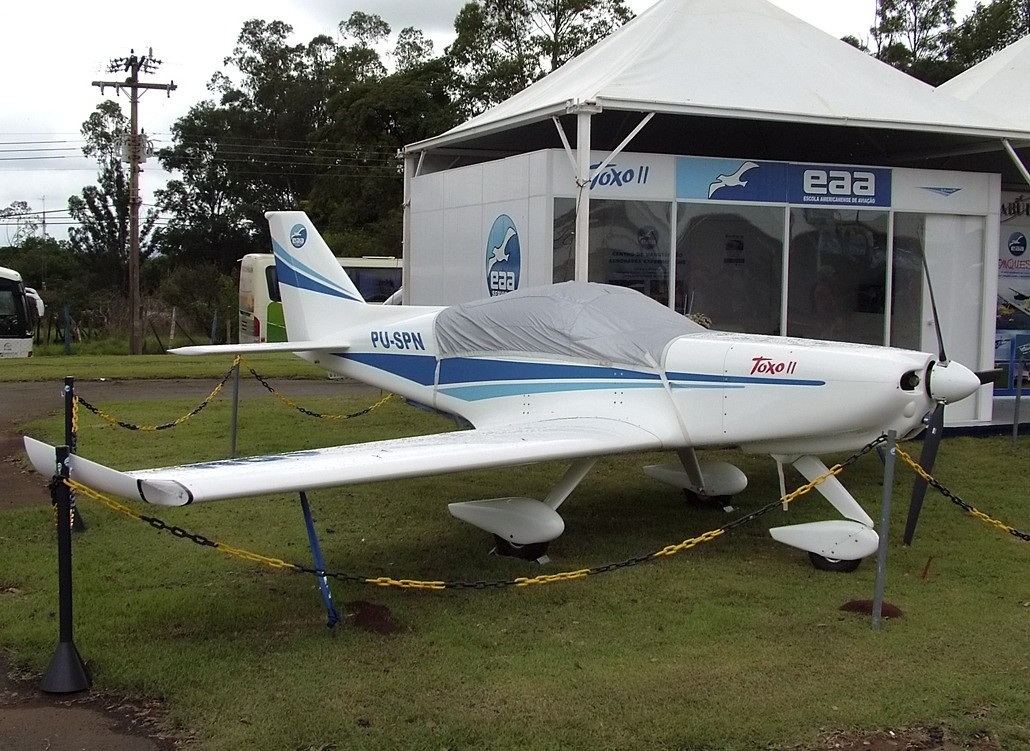
Development and Design Philosophy
The CAG Toxo emerged during the late 1990s boom in ultralight aviation, when manufacturers worldwide were exploring simplified aircraft designs for recreational pilots. CAG's engineering team focused on creating an accessible entry point into powered flight, emphasizing straightforward construction and predictable handling characteristics over complex systems or high performance.
The design team selected a low-wing cantilever monoplane configuration, departing from the high-wing layouts common among training ultralights. This choice provided the Toxo with improved ground handling characteristics and potentially better cruise performance, though at the cost of some inherent stability that high-wing designs offer to novice pilots.
Technical Configuration
The Toxo's airframe utilized conventional aluminum construction methods typical of late-1990s ultralight designs. The cantilever wing design eliminated external bracing wires, reducing drag and maintenance requirements while providing a cleaner aesthetic appearance. Fixed tricycle landing gear simplified the aircraft's systems and reduced both manufacturing costs and pilot workload during ground operations.
Power came from engines typical of the ultralight category, likely two-stroke powerplants in the 50-80 horsepower range that dominated recreational aviation during this period. These engines provided adequate performance for the aircraft's intended role while maintaining the weight restrictions necessary for ultralight classification in most regulatory frameworks.
Manufacturing and Production
CAG's production approach appears to have focused on prototype development rather than large-scale manufacturing. The 1999 first flight represented the culmination of the company's design efforts, though subsequent production numbers remain undocumented in available records. This limited production run was characteristic of many smaller manufacturers in the ultralight market, where companies often struggled to transition from prototype development to sustained manufacturing operations.
The ultralight market of the late 1990s presented both opportunities and challenges for manufacturers like CAG. While interest in recreational flying remained strong, competition from established manufacturers and the complexity of achieving regulatory compliance limited market entry for many smaller companies.
Operational Role and Market Position
The Toxo was designed primarily for recreational flying, targeting pilots seeking an affordable entry into powered aviation. The aircraft's configuration suggested suitability for local area flying, pattern work, and basic cross-country missions within the performance envelope typical of ultralight aircraft.
During the late 1990s, the ultralight market was experiencing maturation, with pilots increasingly demanding more sophisticated designs that approached the performance and comfort of certified light aircraft. The Toxo's conventional layout positioned it competitively against other manufacturers offering similar low-wing ultralight designs.
Legacy and Current Status
The CAG Toxo represents a specific moment in ultralight aviation development when manufacturers were exploring various design approaches to capture market share in recreational flying. While the aircraft's limited production run prevented it from achieving widespread recognition, it contributed to the broader evolution of ultralight design philosophy during the late 1990s.
Today, the Toxo's legacy exists primarily as documentation of the diverse approaches manufacturers pursued during this active period in ultralight development. The aircraft's design principles - emphasizing simplicity, conventional configuration, and accessible operation - continue to influence modern ultralight and light sport aircraft development.
Few examples of the Toxo are believed to remain in active service today, reflecting both the limited production numbers and the typical lifecycle of prototype-era ultralight aircraft. The design's contribution to aviation history lies more in its representation of late-1990s manufacturing diversity than in operational significance or widespread adoption.