
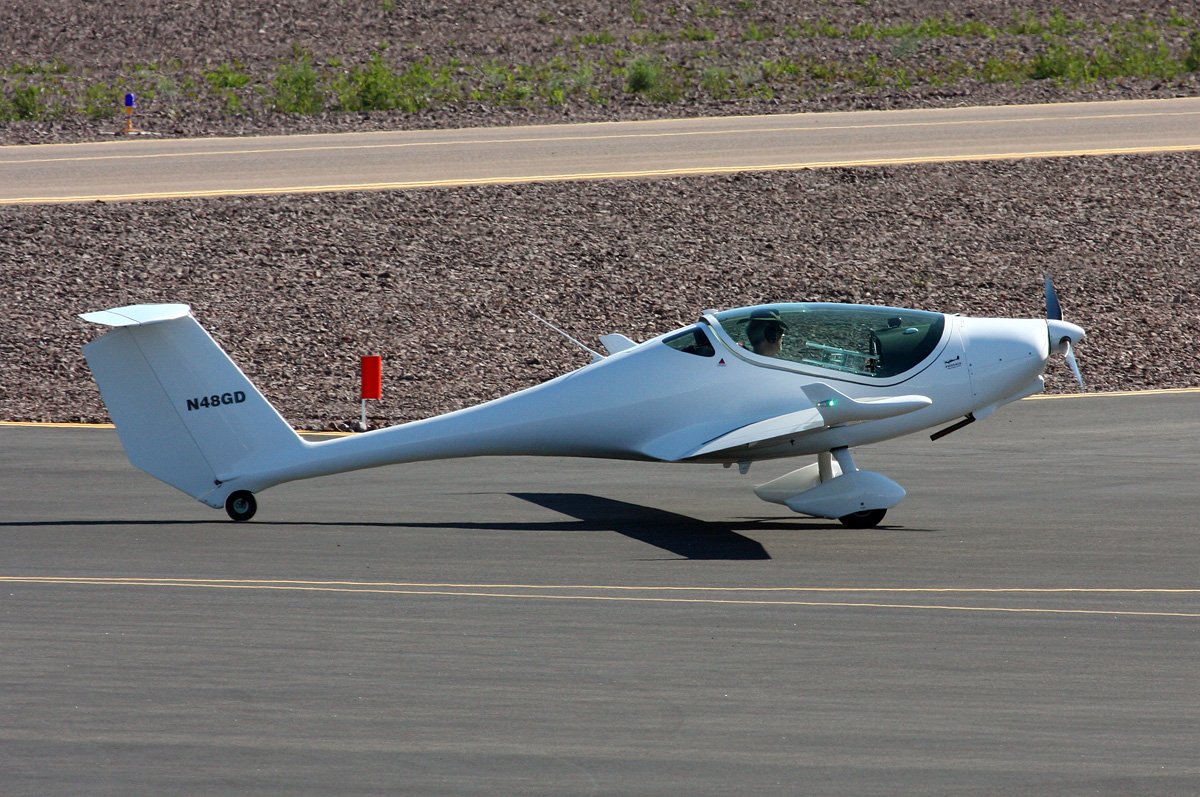
Design Origins and Development
The U-15 Phoenix emerged from the ashes of Urban Air's failed Lambada motorglider program. When Urban Air collapsed in 2010, designer Martin Stepanek, who had previously worked on the original UFM-13 Lambada, established Phoenix Air s.r.o. in the Czech Republic to continue development of the promising design. Stepanek's team refined the concept into a versatile motorglider that would comply with both European microlight regulations and US light-sport aircraft rules.
The Phoenix incorporated several innovative features that distinguished it from conventional motorgliders. The most notable was its convertible wing system, allowing pilots to remove the outer wing panels in just 60 seconds. With full wings extended, the aircraft spans 49 feet 3 inches and delivers exceptional soaring performance with glide ratios reaching 35:1. When the wingtips are removed, the wingspan reduces to approximately 34 feet, enabling faster cruise speeds and easier hangar storage.
Manufacturing and Production
Phoenix Air s.r.o. began production around 2013, with documented manufacturing of at least one example (VH-GHX, serial 21/U15) completed on May 23, 2013. The composite construction aircraft emerged from the Czech Republic facility as a special light-sport aircraft (S-LSA), targeting recreational pilots, flight training operations, and cross-country touring enthusiasts.
The company's brief tenure in the competitive motorglider market reflected the challenging economics of specialized aircraft production. Production rights eventually transferred to JMB Aircraft of Belgium, though exact timing and circumstances of this transition remain undocumented. The design lineage continued through other manufacturers, with Distar Air producing a variant designated D-13-15 Sundancer.
Technical Excellence and Performance
The U-15 Phoenix accommodates two occupants in side-by-side seating beneath a bubble canopy, providing excellent visibility for both powered flight and thermal soaring. The aircraft's empty weight ranges from 650 to 750 pounds, with a maximum gross weight of 1,320 pounds, yielding a useful load of 570 pounds for fuel, passengers, and equipment.
Engine options include several proven powerplants: the Rotax 912UL producing 80 horsepower, the more powerful Rotax 912ULS at 100 horsepower, the Jabiru 2200 delivering 85 horsepower, and the fuel-efficient HKS 700E rated at 60 horsepower. The Rotax engines, manufactured by Bombardier Rotax Ltd. in Austria, have powered thousands of light aircraft since the 1980s and provide the reliability essential for cross-country motorglider operations.
With Rotax 912 power, the Phoenix achieves cruise speeds between 115 and 150 mph, though pilots typically operate at 70 knots for optimal efficiency during cross-country flights. The aircraft's impressive range exceeds 900 miles, enabling eight-hour flights that rival traditional touring aircraft while maintaining the option to shut down the engine and soar when conditions permit.
Operational Challenges and Safety
The Phoenix's operational history includes a significant safety incident that highlighted the aircraft's limitations. On January 29, 2021, VH-GHX experienced in-flight structural failure during flight in Australia. The aircraft, powered by a Rotax 912 ULS with 301 hours total time and 325 airframe hours, encountered flutter when the pilot exceeded the never-exceed speed of 120 knots by just one knot.
The incident investigation revealed that the aircraft's design shared similarities with the original Urban Air Lambada, and the structural failure prompted successor companies to implement tail design revisions. Fortunately, the crew escaped injury, but the event underscored the critical importance of adhering to published speed limitations in this class of aircraft.
Innovation and Future Development
Beyond traditional powerplants, the Phoenix platform attracted attention for electric propulsion development. MGM COMPRO pursued an electric variant around 2014, featuring 34-kilogram battery packs and a projected cruise speed of 120 kilometers per hour with one-hour endurance. This early electric motorglider development preceded the current wave of electric aviation by nearly a decade.
The Phoenix also demonstrated its capabilities in competition, with Martin Stepanek's team achieving third place in NASA's Green Flight Challenge around 2011. This recognition highlighted the aircraft's efficiency and Stepanek's expertise in ultralight aircraft design, validating the Phoenix concept against international competition.
Current Status and Legacy
While Phoenix Air s.r.o. no longer manufactures the U-15, examples continue flying in private hands. Recent sales listings show 2013-model aircraft offered at approximately $159,000, reflecting the specialized nature and limited production of this motorglider type. The design's influence continues through JMB Aircraft's ownership of the type certificate and ongoing development by related manufacturers.
The Phoenix represents the evolution of European motorglider design into the light-sport aircraft category, combining traditional soaring capabilities with modern composite construction and regulatory compliance. Its convertible wing system and cross-country performance capabilities established benchmarks for future motorglider development, even as production challenges limited its commercial success.