
What Is an Unmanned Aircraft System?
An unmanned aircraft system (UAS), popularly known as a drone, is an aircraft operated without a pilot physically on board — flown either by a remote operator over a command-and-control link or autonomously along pre-programmed waypoints. The term "system" is deliberate: the flying aircraft is only one component, working alongside a ground control station, communication links, and human oversight. International bodies increasingly use the term RPAS (remotely piloted aircraft system) to stress that a responsible pilot remains in the loop even when not aboard. Under the Chicago Convention, pilotless aircraft have always been treated as aircraft, subject to national sovereignty and to rules that protect other air traffic.
The Range: Multirotor, Fixed-Wing, and Hybrid
UAS come in a remarkable range of forms. The most familiar are small multirotor designs — quadcopters and hexacopters — that use several rotors for vertical take-off, hovering, and precise low-speed maneuvering, at the cost of endurance. Fixed-wing UAS resemble conventional airplanes, trading hover for far greater range and endurance, and are favored for wide-area survey, mapping, and long-distance logistics. Single-rotor / helicopter-style designs offer efficient hover and heavier lift. A fast-growing middle ground is the hybrid VTOL aircraft, which lifts off vertically like a multirotor, then transitions to wing-borne cruise for airplane-like speed and range — an ideal profile for delivery and infrastructure inspection where runways are unavailable.
Commercial Use: Delivery, Agriculture, and Survey
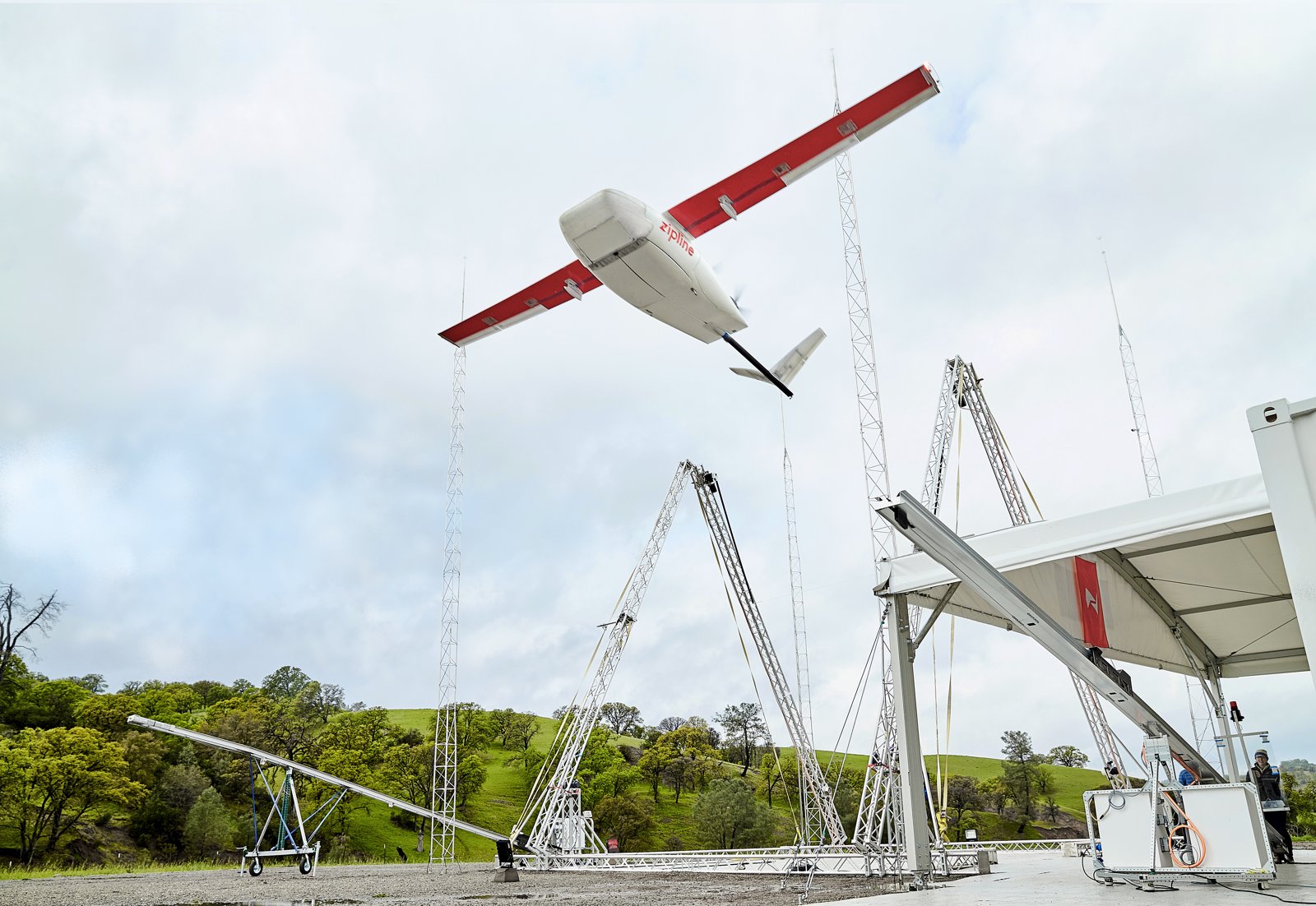
UAS have moved well beyond hobby flying into serious commercial infrastructure. In delivery, Amazon's Prime Air MK27-2 hexacopter, Alphabet's Wing, and Zipline (which flies fixed-wing aircraft to deliver blood, vaccines, and retail parcels) are building structured drone-logistics networks. In agriculture, heavy spray-and-spread platforms such as the DJI Agras series and XAG's large multirotors apply chemicals and seed with payloads of tens of kilograms, operating near or above the weights that separate small drones from full-scale aircraft. UAS also dominate aerial survey and inspection work — powerlines, pipelines, construction sites, real estate, and precision-agriculture scouting — where DJI in particular supplies a continuum of aircraft from sub-250-gram models to 100-kilogram machines.
FAA Registration Context
In the United States, commercial drone flights are conducted under Part 107, which requires operators to hold a Remote Pilot Certificate and covers unmanned aircraft weighing under 55 pounds. Recreational flyers operate under the limited-recreational exception, must pass the TRUST safety test, and must register drones over 250 grams through the FAA's DroneZone. Most drones must also broadcast Remote ID — a "digital license plate" — now under full enforcement. Crucially, larger and commercial UAS are not treated as gadgets: drones of 55 pounds or more, and type-certificated aircraft like Amazon's MK27-2, are registered under 14 CFR Part 47 and receive N-numbers in the civil aircraft registry, exactly like manned airplanes and helicopters. This is why registered UAS appear in aviation databases alongside conventional aircraft.
Why a Generic "Unmanned Aircraft (Other)" Category Exists
ICAO assigns short type designators (published in Doc 8643) that let controllers and flight-planning systems anticipate an aircraft's performance. But the number of drone models — from countless small manufacturers, plus custom and modified builds — vastly exceeds that of traditional aircraft, and most differ only subtly in performance or never file flight plans in controlled airspace. Assigning a unique ICAO code to every model would be impractical. Instead, a generic "unmanned aircraft (other)" catch-all (alongside fallbacks such as ICAO's ZZZZ) lets a registered drone be represented as an unmanned aircraft of a broad performance class without waiting for a bespoke code. On AviatorDB, this UASX category page groups registered unmanned aircraft that lack a brand-specific ICAO type designator, so those records still link to a useful, informative landing page.