
Military Dominance in Training
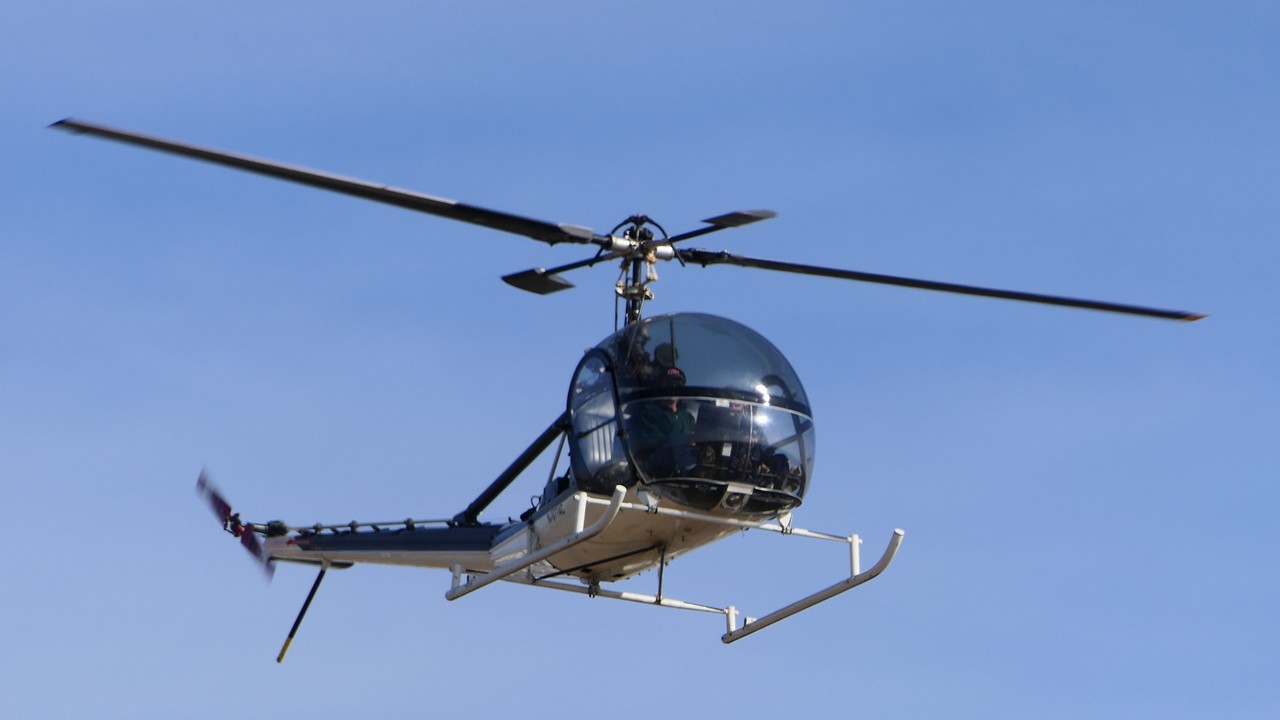
The UH-12B achieved remarkable success in military service, primarily through its adoption by the United States Army as the H-23B beginning in 1951. The Army procured 216 H-23B helicopters specifically for the Primary Flying School at Fort Wolters, where they became the backbone of rotorcraft pilot training. An additional 237 units served various utility roles throughout Army aviation units, establishing the type as the standard training platform for an entire generation of military helicopter pilots.
The United States Navy simultaneously adopted the design as the HTE-2, distinguished by its wheeled undercarriage configuration rather than the standard skid gear. This variant served naval training requirements and demonstrated the aircraft's versatility across service branches. International military sales proved equally robust, with more than 300 UH-12B helicopters exported to countries including Argentina, Canada, Chile, Colombia, Great Britain, Guatemala, Japan, Morocco, Mexico, Netherlands, Peru, and Uruguay.
The Manufacturer and Designer
Hiller Aircraft Corporation originated from the ambitious vision of Stanley Hiller Jr., who founded Hiller Industries in 1942 at the remarkable age of 18. The company's Aircraft Division, initially established as United Helicopters in 1947, reverted to the Hiller Helicopters name by 1951 during the UH-12B's production period. Stanley Hiller Jr. had already demonstrated his engineering prowess with the XH-44 helicopter in 1944, which featured innovative coaxial contra-rotating rotors and became the first efficient American helicopter of this configuration.
The company's corporate evolution reflected the dynamic aerospace industry of the era. Hiller eventually merged with Fairchild to form Fairchild Hiller, which continued helicopter development with aircraft like the FH-1100 between 1963 and 1974, producing 254 units before facing bankruptcy in the 1980s. In a remarkable revival, the Hiller name returned to aviation in 2009 when Hiller (China) Aircraft Manufacturing Company established operations as a joint venture with Zhangjiakou Chahar General Aviation Company for UH-12 parts production.
Engine and Technical Innovation
The Franklin 6V4-200-C33 engine provided 200 horsepower of reliable power for the UH-12B, representing the cutting-edge of light aircraft powerplants during the early 1950s. Franklin Aircraft Engines built these six-cylinder units specifically for aviation applications, delivering the robust performance required for military training operations and utility missions. The engine enabled significant improvements in maximum takeoff weight compared to earlier variants, enhancing the aircraft's operational flexibility.
Technical refinements distinguished the UH-12B from its predecessors and contemporaries. The helicopter featured all-metal rotor blades that improved durability and reduced maintenance requirements compared to fabric-covered alternatives. The transmission system, a critical component for helicopter reliability, offered enhanced service intervals that reduced operational costs for military operators. Later variants would upgrade to more powerful engines, including the Lycoming VO-435-A1C producing 250 horsepower and the VO-540 generating 320 horsepower.
Commercial Success and Legacy
Commercial sales of the UH-12B commenced in 1952, building upon the success of the Model 360's historic transcontinental flight during summer 1949. This pioneering journey demonstrated the practical utility of light helicopters for civilian operations and helped establish market confidence in rotorcraft reliability. The aircraft found applications across numerous civilian roles, from utility transport to private flying, contributing significantly to the overall production total.
The UH-12 family's production exceeded 2,000 units across all variants, representing one of the most successful American helicopter programs of the 1950s. Manufacturing continued through at least 1963, encompassing developments through the UH-12E and civil Hiller 12L-4 variants. The UH-12B's influence extended beyond direct production numbers, establishing design principles and operational procedures that influenced subsequent helicopter development.
Preserved Heritage
Today, the UH-12B's legacy lives on through carefully preserved museum examples and the continued operation of later variants. The Hiller Aviation Museum in San Carlos, California, maintains a UH-12B in its collection, donated by Stanley Hiller himself and displayed since the museum's opening in 1998. This aircraft serves as a testament to the innovative spirit that characterized American aerospace development during the early jet age.
The design principles pioneered in the UH-12B influenced later helicopter development, including derivatives like the Schweizer Model 300 and 330 series that continue flying today. The aircraft's role in establishing standardized helicopter training procedures proved equally significant, creating operational frameworks that military aviation still employs in modern rotorcraft instruction.