
Development and Design
Raymond E. Umbaugh founded his aircraft corporation in 1957 after building single-seat Bensen Gyrocopters, quickly recognizing the market potential for a certified two-seat gyroplane. His design team created the prototype U-18 in 1958, with the aircraft making its maiden flight in August 1959 at Bartow Air Base, Florida. Chief pilot Ken Hayden and former Pitcairn test pilot Slim Soule conducted the initial flight testing program, validating the aircraft's unique jump-start capability that allowed pilots to pre-rotate the rotor system before takeoff.
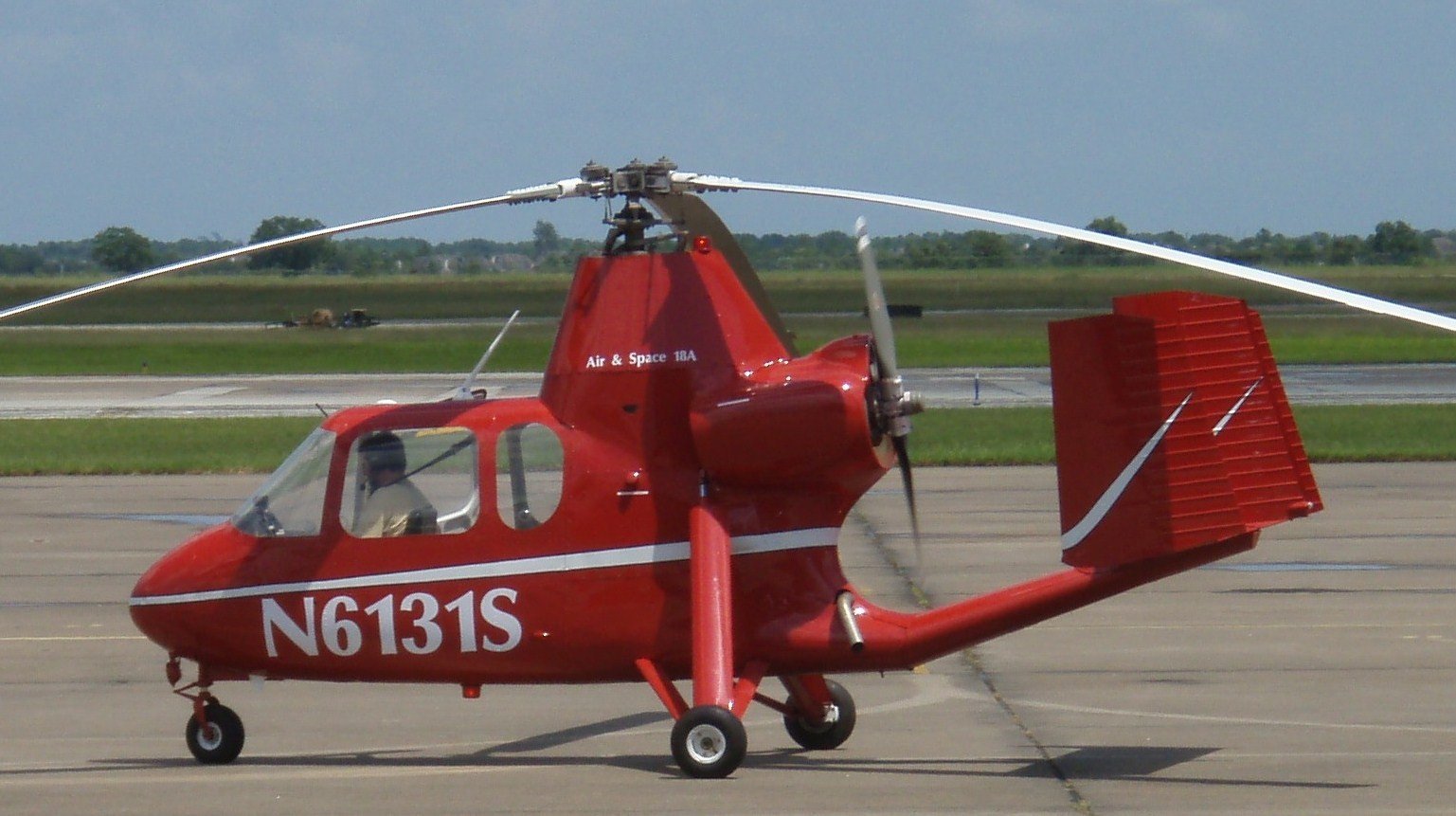
The U-18's design evolved significantly during development, beginning with a conventional single vertical stabilizer before progressing through a V-tail configuration to its final triple-tail arrangement. This distinctive empennage featured two fixed fins flanking a central movable rudder mounted on a low-set horizontal stabilizer, providing enhanced directional control during autorotative flight.
Production Challenges
Umbaugh's ambitious production plans called for manufacturing 10,000 aircraft priced at $10,000 each, contingent on achieving high-volume economics. However, the company faced immediate production difficulties that would plague the program throughout its brief existence. In 1960, Fairchild Engine and Airplane Corporation of Hagerstown, Maryland contracted to build five development airframes designated as Flymobil, but this partnership dissolved in 1962 when Fairchild withdrew from the project.
The FAA granted type certificate 1H17 in September 1961, making the U-18 one of just three gyroplanes to achieve full certification. Despite this regulatory milestone, Umbaugh Aircraft Corporation ceased operations in 1962, overwhelmed by production complexities and mounting dealer pressure for aircraft deliveries.
Air & Space Manufacturing Era
Former Umbaugh dealers formed Air & Space Manufacturing Inc. in 1964, establishing operations in Muncie, Indiana to continue production as the 18A variant. The company received its production certificate in early 1965 and delivered approximately 67 aircraft over the next two years, though registration records suggest between 99 and 110 aircraft may have been assigned tail numbers.
Production models incorporated several improvements over the prototype, including composite-reinforced wooden rotor blades replacing the original all-wood construction. The 27.3-gallon fuel system provided a range of 360 miles at cruise power settings, while the robust all-metal fuselage could accommodate a maximum takeoff weight of 1,800 pounds.
Technical Innovation
The U-18's most significant innovation was its clutch-actuated jump-start system, allowing pilots to engage the Lycoming O-360-A1D engine to pre-rotate the 35-foot rotor disk before disengaging for normal pusher propeller operation. This 180-horsepower horizontally-opposed engine provided exceptional performance, enabling climb rates of 1,050 feet per minute and a service ceiling of 17,000 feet.
The tandem seating arrangement optimized weight and balance while maintaining excellent visibility for both occupants. At 25 feet in length with an 11-foot 6-inch height, the aircraft's compact dimensions belied its impressive performance envelope and 962-square-foot rotor disk area.
Commercial Failure and Legacy
Despite its technical achievements, the U-18 program suffered from chronic undercapitalization and unrealistic market projections. Air & Space Manufacturing declared bankruptcy in 1966, effectively ending series production after fewer than 75 total aircraft had been completed across all variants.
Don Farrington of Farrington Aircraft Corporation in Paducah, Kentucky acquired the program assets, focusing on remanufacturing existing airframes with upgraded components including modern composite rotor blades. However, without rights to the original type certificate, no significant revival materialized.
Current Status
Fewer than 10 airworthy examples remain active today, with most survivors relegated to static display or requiring extensive restoration. Notable preserved aircraft include G-BVWL (constructor number 23224, built in 1966) at The Helicopter Museum, representing one of the final production examples.
The U-18's legacy lies not in commercial success but in its demonstration of advanced gyroplane technology during the post-World War II revival of autogyro interest. Its innovative jump-start system and full certification status marked significant technical achievements that influenced subsequent rotorcraft development, even as market forces prevented widespread adoption of this unique aircraft type.