
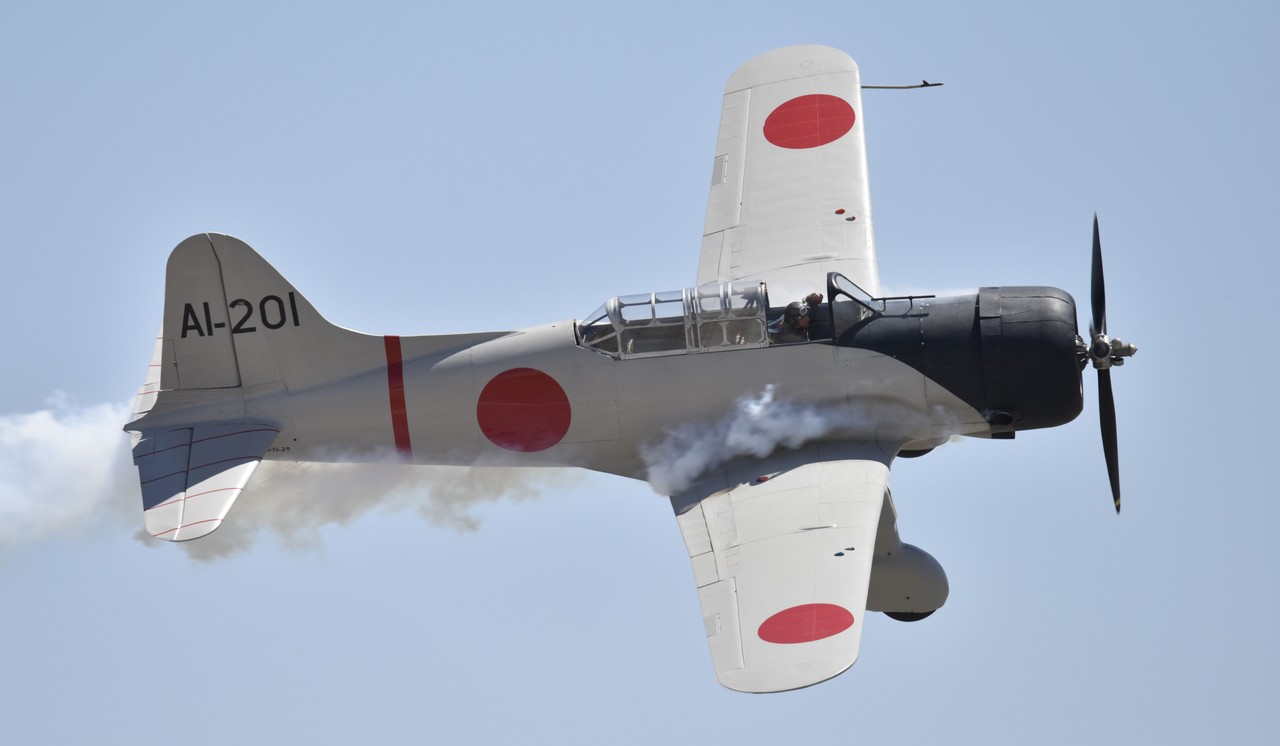
Training the Greatest Generation
The BT-13 Valiant became the backbone of American pilot training during World War II, with nearly 10,000 B-model variants rolling off the Vultee production line in Downey, California during 1944 alone. The aircraft's significance cannot be overstated—it trained more military pilots than any other basic trainer, serving as the crucial second phase in the three-stage pilot training program that transformed civilian volunteers into combat aviators.
Military Dominance
By war's end, 10,375 BT-13s and BT-15s had been accepted by the US Army Air Forces, far outnumbering all other basic trainer types combined. The aircraft served multiple branches under different designations: the Army Air Forces operated the BT-13 and BT-15, while the Navy, Marines, and Coast Guard used the SNV-1 and SNV-2 variants. The trainer's ruggedness and forgiving flight characteristics made it ideal for transforming nervous students into confident pilots ready for advanced training.
The aircraft remained in active service from 1940 to 1948, though both services began replacing it with the North American AT-6 before the war's end. The Navy declared the SNV obsolete in May 1945, while the Air Force withdrew all remaining BT-13s from service by 1948.
Vultee Aircraft Corporation
Vultee Aircraft Corporation, founded by aviation pioneer Gerard Vultee, operated as an independent manufacturer until merging with Consolidated Aircraft in 1943 to form Consolidated Vultee Aircraft Corporation (later Convair). The company's chief designer, Richard Palmer, began developing the BT-13 concept in 1938, initially designing a fighter before adapting the design to meet a US Army Air Corps trainer competition with substantial promised orders.
Engineering Excellence
Palmer's prototype V-51 featured innovative elements including an enclosed tandem cockpit, integral wing fuel tanks, hydraulic flap operation, and retractable landing gear. However, the production BT-13 simplified these features for reliability and cost reduction, incorporating fixed landing gear and a manual crank-and-cable flap system. The all-metal fuselage contrasted with fabric-covered control surfaces, while a two-position Hamilton Standard variable-pitch propeller provided optimal performance across flight regimes.
The standard BT-13A and BT-13B variants used the reliable Pratt & Whitney R-985 Wasp Junior radial engine producing 450 horsepower. When Pratt & Whitney engines became scarce early in production, Vultee manufactured 1,693 aircraft with Wright R-975 engines, designated as BT-15s, between 1941 and 1942.
The "Vultee Vibrator"
Pilots nicknamed the BT-13 the "Vultee Vibrator," referencing the aircraft's characteristic vibration during flight operations. Despite this quirk, the Valiant earned respect for its stability and predictable handling characteristics. The aircraft could reach a maximum speed of 182 miles per hour, climb to 10,000 feet in 9.2 minutes, and operate effectively up to 21,000 feet. With 120 gallons of fuel capacity, the BT-13 achieved a maximum range of 725 miles, sufficient for extended training missions.
The aircraft's forgiving nature proved essential for training inexperienced pilots, though it could reach a maximum diving speed of 230 miles per hour when necessary. This performance envelope provided students with realistic preparation for the higher-performance aircraft they would encounter in advanced training and combat operations.
Specialized Missions
Beyond basic pilot training, the BT-13 served specialized roles. Between September and December 1942, Tinker Air Depot modified 40 BT-13s for target-towing duties, equipping them to carry large banner targets for aerial gunnery practice by fighter pilots and gunners.
Surviving Legacy
Today, numerous BT-13 Valiants survive in museums and private collections worldwide. The Planes of Fame Air Museum in Chino, California, maintains a flyable BT-13B manufactured in January 1944, originally delivered to Oscoda Army Air Field, Michigan, and purchased as surplus for $700 in 1951. March Field Air Museum displays a BT-13A that served at Cochran Army Air Field in Georgia before being wrecked in 1943.
The Commemorative Air Force operates multiple BT-13s at airshows, while the National Air and Space Museum preserves a BT-13A in its collection. These surviving aircraft represent one of aviation's most successful training programs, reminding visitors of the thousands of young Americans who learned to fly in the reliable Valiant before advancing to fighters, bombers, and transport aircraft that won World War II.