
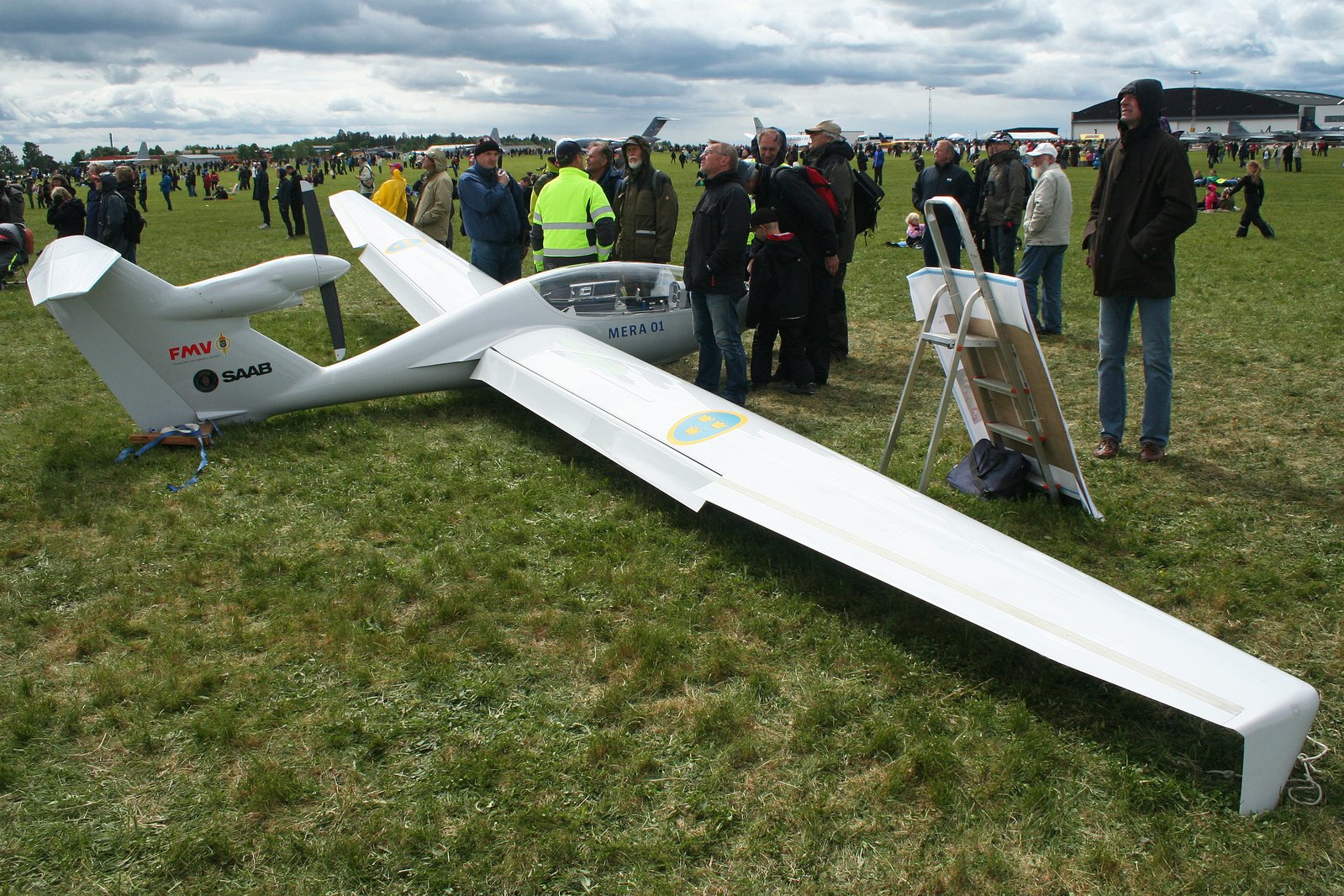
Design Genesis
The Windex emerged from the creative partnership of Swedish designers Undén and Ridder, who formalized their concept in 1981 to meet JAR 22 aerobatic category requirements. Their ambitious goal was creating a self-launching sailplane that would liberate glider pilots from the constraints of ground crews and tow aircraft while maintaining the performance characteristics of purpose-built sailplanes.
Development and Testing
Construction of the Windex 1100 prototype began in January 1982, with the aircraft receiving registration SE-XSD. The maiden flight occurred on March 15, 1985, initially using lead weights to simulate the engine installation. Summer 1985 marked the beginning of powered flight testing with a 22-horsepower Limbach engine mounted behind the cockpit in an innovative fin-mounted configuration.
The prototype's 36-foot wingspan featured hot-wire shaped construction, but engineers recognized the need for improved performance. This led to the Windex 1200 production prototype in 1989, which incorporated significant design refinements including a larger 39-foot wingspan with Nomex honeycomb molded wings and a relocated tail plane moved from mid-fin to T-configuration for enhanced elevator efficiency.
Production History
RADAB launched kit production in 1992, with the first production Windex 1200 taking flight in 1996. Approximately 40 kits found homes with amateur builders across four countries: Sweden, Costa Rica, France, and the United States. This international distribution demonstrated the design's appeal to recreational aviation enthusiasts seeking high-performance aircraft they could build themselves.
The production Windex 1200 C offered builders two engine options: a 25-horsepower RADAB powerplant utilizing three chain-saw cylinders arranged in-line, or the 20-horsepower König SC-430 three-cylinder engine. Both engines were specifically selected for their lightweight characteristics and suitability for amateur installation.
Technical Innovation
The Windex's most distinctive feature was its retractable engine installation, allowing the aircraft to function as a pure sailplane when the engine was shut down and stowed. The variable-pitch propeller system enabled efficient power management across different flight phases, from initial launch to sustained cruise flight at 130 mph.
The aircraft's 39-foot 8.3-inch wingspan on the final production variant provided excellent soaring characteristics, while the robust airframe construction allowed for full aerobatic capability. Engineers stressed the structure to handle the demanding maneuvers required for JAR 22 A certification, giving pilots confidence in performing loops, rolls, and other aerobatic sequences.
Manufacturer Legacy
RADAB, the original Swedish manufacturer, represented the innovative spirit of Scandinavian aviation design during the 1980s and 1990s. When production transitioned to the newly formed WindexAir AB in 1999, it marked the final chapter in the aircraft's manufacturing history, with production ending in the late 1990s after achieving its modest but significant production run.
Pilot Experience
The Windex delivered on its promise of providing "maximum freedom of the skies with minimum trouble," as designers intended. Pilots appreciated the aircraft's dual personality: capable soaring performance when thermalling or ridge flying, combined with reliable self-launch capability that eliminated dependence on ground support equipment.
The single-seat cockpit provided an intimate flying experience, while the 130 mph cruise speed at 50 percent power made cross-country flights practical and enjoyable. The combination of aerobatic capability and touring efficiency attracted pilots seeking versatile performance from their aircraft.
Current Status
The Windex maintains recognition in official aviation databases, including FAA Aircraft Type Designators and ICAO aircraft type registry, confirming its formal certification status. While specific numbers of airworthy examples remain undocumented, the aircraft represents an important milestone in amateur-built aviation, demonstrating that small-scale manufacturers could successfully develop sophisticated self-launching sailplanes for the recreational market.
The Windex's legacy lies in proving that innovative design could overcome the traditional limitations of gliding, creating an aircraft that expanded possibilities for recreational pilots while maintaining the pure flying experience that attracts aviators to sailplane flight.