
Development and Design Philosophy
The ZA-6 Sanka emerged from Aerokopter's ambitious vision to create an affordable light helicopter using unconventional powerplant solutions. Founded on December 14, 1999, by I.V. Polituchy, A.N. Zapishny, and A.I. Polituchy in Kharkiv, Ukraine, Aerokopter conducted extensive market research before settling on specifications for a two-seat helicopter with an airborne weight of 650-700 kilograms. The aircraft's nickname "Sanka" honored the company's chief designer, who tragically died in a motor hang-glider accident during the development period.
The design team's most significant innovation lay in adapting automotive engines for helicopter use, specifically selecting the 119-kilowatt Subaru EJ22 flat-four engine. This non-type-certified powerplant, originally designed for automotive applications, provided 160 horsepower while dramatically reducing acquisition and maintenance costs compared to traditional aircraft engines. The four-cylinder, air-cooled, four-stroke engine configuration proved well-suited to the helicopter's lightweight design philosophy.
Technical Innovation and Configuration
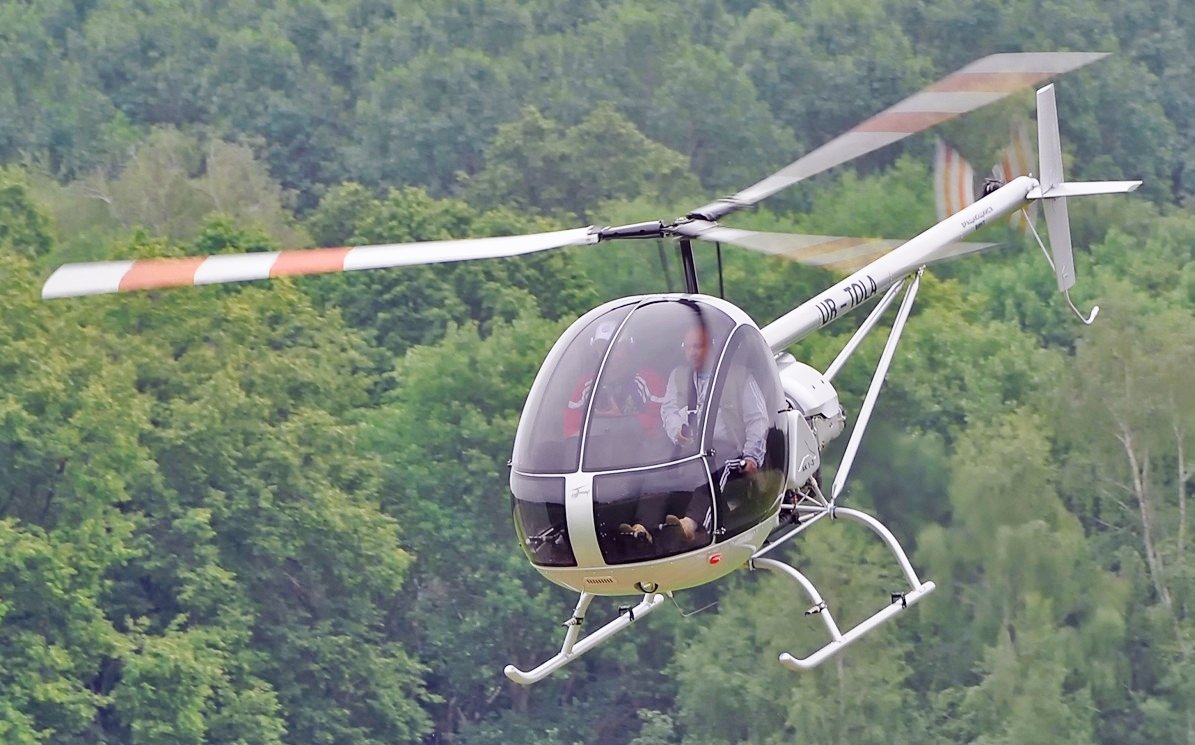
The ZA-6's most distinctive feature was its five-blade main rotor system, unusual for aircraft in this weight category and providing exceptional agility for such a small helicopter. The conventional pod-and-boom configuration housed two occupants in side-by-side seating within an enclosed cockpit, while twin skids provided ground handling capability. Construction utilized a combination of metal and composite materials, with manual flight controls keeping complexity and weight to a minimum.
With an empty weight of 390 kilograms and 80-liter fuel capacity, the ZA-6 achieved a maximum speed of 190 kilometers per hour and normal range of 500 kilometers. The two-blade tail rotor, mounted on the port side of the boom, provided anti-torque control in the conventional manner. This configuration represented a pragmatic approach to light helicopter design, balancing performance with manufacturing costs.
Production and Certification
Aerокопter began production in 2001 following the successful first flight, initially focusing on the Ukrainian market. The company later developed the AK1-3 variant, which featured a refined three-blade rotor system and utilized the 156-horsepower Subaru EJ25 automotive engine. This variant achieved a significant milestone on June 30, 2006, when it received Ukrainian type certification, validating the design's airworthiness and opening broader market opportunities.
By December 2020, Aerокопter had delivered 102 helicopters across all AK1 series variants, demonstrating sustained market demand for affordable light helicopters. Production took place at the company's Kharkiv facility until 2009, when DB Aercopters was acquired by the Perla Group's Perla Aviation division. The new owners announced plans to relocate assembly operations to the United Arab Emirates, though the extent of this relocation remains unclear.
International Operations and Variants
The ZA-6 and its derivatives found operators beyond Ukraine's borders, with the Ukraine AeroClub serving as a notable early customer. International interest materialized in 2009 when one AK1-3 variant received Canadian registration, operating under Transport Canada authority until 2015. This same aircraft, serial number 1001 from the 2008 production year, was subsequently exported to the United States and registered with the Federal Aviation Administration in January 2018 under the Special Certificate of Airworthiness Experimental-Exhibition category.
Market expansion led to the development of specialized variants, including the SAFAT 02 version marketed in certain regions, with 24 units assembled by November 2015. Russian interest in the design resulted in the "Orlan" variant, developed in Perm using the AK1-3's power train and frame but incorporating a redesigned cockpit. Approximately five Orlan helicopters had been constructed by late 2017, demonstrating the design's adaptability to different market requirements.
Legacy and Current Status
The ZA-6 Sanka represents a significant achievement in post-Soviet aviation development, marking Ukraine's entry into domestic helicopter manufacturing. The aircraft's success validated the concept of utilizing automotive engines in light rotorcraft applications, providing a cost-effective alternative to traditional aviation powerplants. This approach influenced subsequent light helicopter developments and demonstrated the viability of smaller manufacturers competing in specialized market segments.
While comprehensive data on current operational status remains limited, the delivery of 102 aircraft over nearly two decades indicates sustained market acceptance of the design concept. The ZA-6's legacy extends beyond its production numbers, representing Ukrainian aerospace capability and innovative engineering solutions in the challenging light helicopter market. The aircraft's practical approach to design and manufacturing continues to influence contemporary light rotorcraft development, particularly in markets where operating costs remain a primary consideration.