
Strategic Transport Revolution
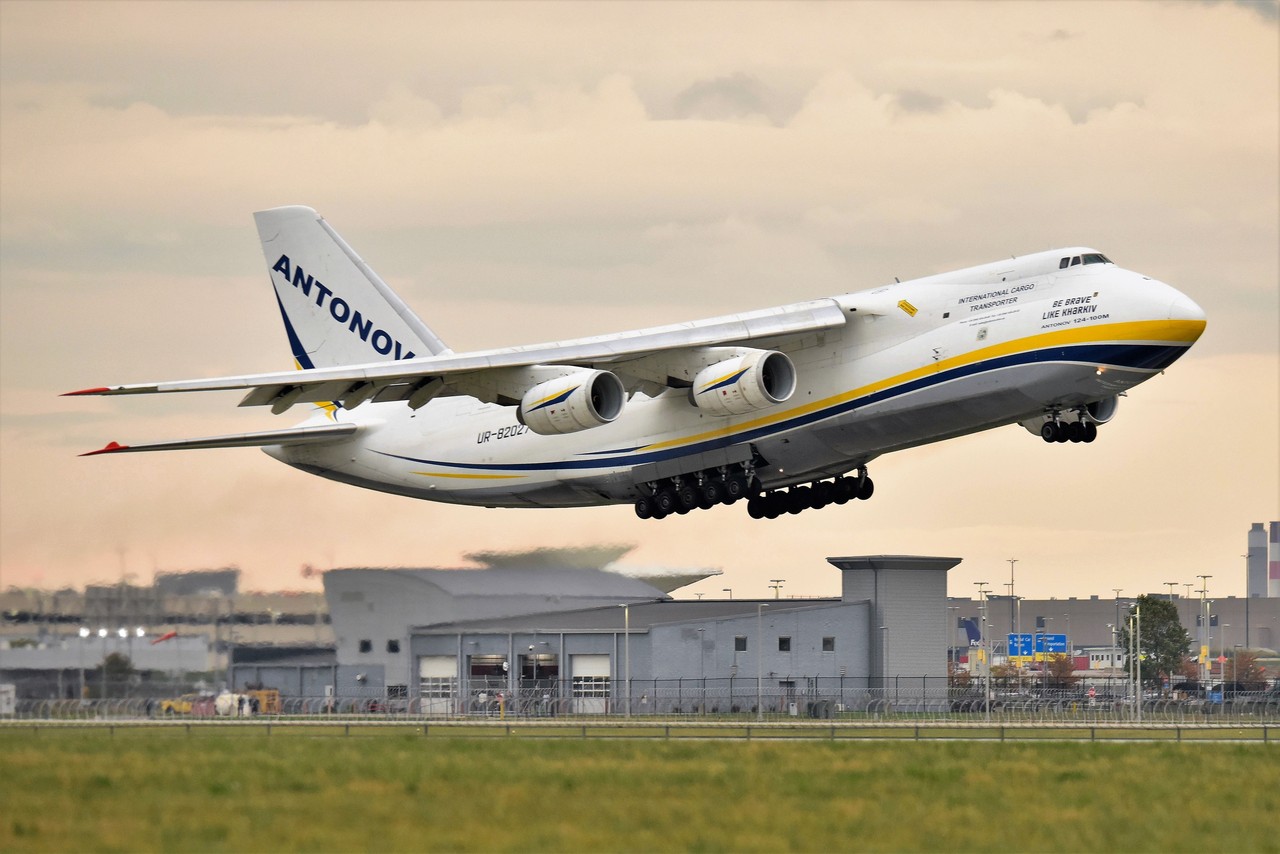
The An-124 transformed heavy airlift capabilities when it entered Soviet Air Forces service in January 1986. With its 150-tonne cargo capacity, the aircraft could transport main battle tanks, industrial equipment, and oversized loads that previously required disassembly or sea transport. By 2019, 26 civilian An-124s remained operational worldwide, dominating the commercial outsized cargo market alongside military variants still serving the Russian Air Force.
Cold War Origins
Design work began in 1971 under the leadership of legendary aircraft designer Oleg Antonov, with Viktor Tolmachev serving as Chief Engineer. Initially codenamed Izdeliye 400 (Product 400), the project addressed critical shortfalls in Soviet Military Transport Aviation's ability to move heavy equipment beyond the capabilities of the earlier An-22 turboprop transport. The design team established ambitious goals: exceed the payload capacity of the American C-5 Galaxy while incorporating advanced materials and cargo handling systems.
Construction of manufacturing facilities commenced in 1973, with final assembly lines established at two locations: the Ulyanovsk Aviation Industrial Complex in Russia and Kyiv Aviation Plant AVIANT in Ukraine. Components flowed from over 100 factories across the Eastern Bloc, representing one of the largest industrial collaborations in Soviet aerospace history.
The Antonov Legacy
The Antonov Design Bureau, founded in 1946 in Novosibirsk before relocating to Kyiv in 1952, had already established itself as the premier Soviet transport aircraft manufacturer. Under Oleg Antonov's leadership, the bureau produced approximately 22,000 aircraft using the distinctive "An-" prefix, many still operating in former Soviet states and developing countries decades later. The An-124 represented the pinnacle of this design philosophy: maximum payload, rugged construction, and operational flexibility.
Following the Soviet collapse, Antonov pursued Western certification, achieving commercial approval on December 30, 1992. This certification opened international markets, though geopolitical tensions between Russia and Ukraine eventually complicated production resumption efforts that collapsed by 2014.
Engineering Excellence
Four Lotarev D-18T turbofan engines power the An-124, each high-bypass turbofan manufactured by Ukraine's Ivchenko-Progress. These engines provide the massive thrust required to lift maximum takeoff weights of 392 tonnes while maintaining fuel efficiency during long-range missions. The aircraft's innovative design incorporated lightweight carbon fiber composites and titanium alloys, advanced materials that reduced structural weight while maintaining strength.
The cargo hold measures 36 meters long, 6.4 meters wide, and 4.4 meters high, accessible through both nose and rear cargo doors. Built-in freight handling equipment includes overhead cranes and a computerized loading system, eliminating the need for ground support equipment at remote airfields. Drive-on ramps accommodate wheeled vehicles up to the size of main battle tanks.
Operational Capabilities
A typical crew of six operates the An-124, including two pilots, flight engineer, navigator, and loadmasters. The aircraft cruises at 465-530 mph with a maximum range of 8,700 miles when carrying full payload, enabling intercontinental transport missions without intermediate stops. This combination of speed, range, and payload capacity revolutionized strategic airlift operations.
The An-124's impressive specifications include a length of 69.1 meters, wingspan of 73.3 meters, and height of 21.08 meters. These dimensions accommodate cargo loads impossible for smaller transports while maintaining acceptable ground handling characteristics at international airports.
Production and Service
Production commenced in 1982 with the first aircraft rolling out for initial flight testing. Manufacturing continued through 2004, with final assembly activities extending to approximately 2014. Total production reached exactly 55 aircraft, split between military and eventual commercial operators.
The An-124 made its international debut at the 1985 Paris Air Show, where Western observers first witnessed its impressive capabilities. NATO assigned the reporting name "Condor" to the new transport, recognizing its strategic significance during the final years of the Cold War.
Commercial Success
Following certification for commercial operations, several airlines adopted the An-124 for specialized heavy cargo missions. Volga-Dnepr Airlines of Russia and Antonov Airlines of Ukraine became the primary commercial operators, often utilizing refurbished ex-military aircraft. These operators dominate the global market for outsized cargo transport, moving everything from industrial equipment to humanitarian relief supplies.
Current Status
As of recent assessments, the An-124 fleet remains active despite production cessation. Russian military variants continue receiving upgrades, with three aircraft undergoing modernization at Aviastar-SP between 2017-2018. However, political tensions between Russia and Ukraine effectively ended prospects for resumed production, as the program required cooperation between manufacturers in both countries.
The An-124's legacy endures as a symbol of Soviet engineering achievement and continues serving critical transport missions worldwide, maintaining its position as the largest production military transport aircraft ever built.