
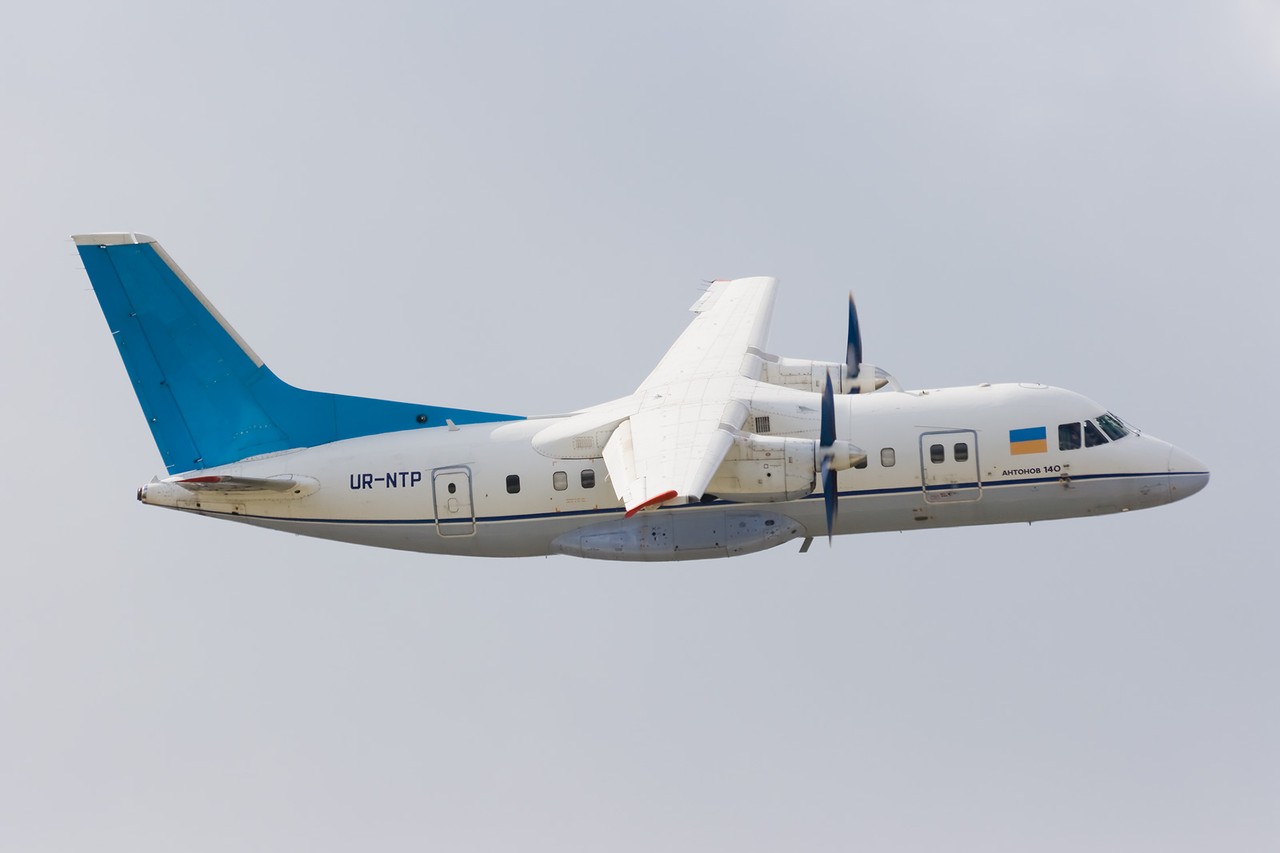
Development and Design
Antonov began developing the An-140 in 1993 as a modern successor to their highly successful An-24 regional transport. The design team, led by Antonov's experienced engineers, focused on creating an aircraft capable of autonomous operation from poorly-equipped airfields in harsh climatic conditions while maintaining high operational efficiency. The prototype, designated S/N 01-03, completed its maiden flight on December 26, 1997, with test pilots Y.A. Galunenko as captain and A.K. Khrustitskyi as co-pilot.
The An-140's conventional high-wing configuration incorporated modern systems while retaining the rugged operational characteristics that made earlier Antonov designs successful in remote regions. The aircraft was engineered to operate from short, unprepared airstrips and snow-covered runways, making it ideal for serving underdeveloped areas lacking conventional airport infrastructure.
Production and International Partnerships
Production of the An-140 began in 1999 at three separate facilities through international licensing agreements. The Kharkiv Aircraft Manufacturing Company in Ukraine produced the first production aircraft, which flew on October 11, 1999. Ukrainian production continued until 2005, yielding 11 aircraft before political tensions with Russia disrupted operations.
Iran's HESA facility in Isfahan became the most prolific producer, manufacturing the IrAn-140 variant from 2000 to 2015. The first Iranian-built aircraft completed its maiden flight on February 7, 2001. Iran originally planned to produce 100 aircraft total, with the first 20 designated for government border patrol and surveillance duties. By November 2010, 14 IrAn-140 aircraft had been completed, with the initial six entering commercial service on February 19, 2011.
Russia's Aviacor JSC facility in Samara launched production in 2005, with their first aircraft taking off on August 2, 2005. However, Russian orders were canceled following the 2014 annexation of Crimea, effectively ending that production line.
Technical Specifications and Performance
The An-140 utilized two Motor-Sich AI-30 series 1 turboprop engines, license-built versions of the Klimov TV3-117VMA-SBM1, each generating 1,838 kW (2,465 hp). Alternative powerplant options included Pratt & Whitney Canada PW127A turboprops driving Hamilton Sundstrand 247F propellers, providing customers flexibility in engine selection based on operational requirements and political considerations.
With a maximum landing weight of 19,100 kilograms and fuel capacity of 4,370 kilograms, the aircraft achieved a cruising speed between 520-575 km/h and maximum range of 2,100 kilometers. The standard passenger configuration accommodated 52 travelers with a crew of two or three, including captain, co-pilot, and flight engineer when required.
Operational Service
The An-140 entered commercial service in 2002, primarily with regional carriers seeking modern replacements for aging Soviet-era aircraft. Iranian operators, including Iran Asseman and Iran Air, became the largest commercial users of the type through their IrAn-140 variants. Russian military forces operated 7 aircraft across the Aerospace Forces and Naval Aviation for transport and personnel duties rather than combat missions.
By December 2022, Yakutia Airlines remained one of the few active commercial operators, maintaining 2 aircraft in service. The limited commercial success reflected both the aircraft's technical challenges and the geopolitical complications surrounding its international production arrangements.
Safety Record and Challenges
The An-140's operational history was marred by safety concerns, with five accidents resulting in four hull losses and 111 fatalities since entering service. The most devastating incident occurred on December 23, 2002, when Aeromist Kharkiv Flight 2137 crashed into a mountain while approaching Isfahan, Iran, killing all 44 passengers and crew aboard.
These accidents, combined with production difficulties and geopolitical tensions, severely limited the aircraft's market acceptance and contributed to its early production termination.
Legacy and Current Status
Of the 33 total An-140 and IrAn-140 aircraft produced between 1999 and 2015, only 9 remained in active service as of December 2022, with 20 stored and 4 lost in accidents. The program's limited success highlighted the challenges facing former Soviet aerospace manufacturers in competing with established Western producers in the post-Cold War era.
The An-140 represents the final chapter of Antonov's regional airliner development before the company's operations were severely disrupted by ongoing conflicts in Ukraine. While it failed to achieve commercial success, the aircraft demonstrated Ukraine's continued capability to design and manufacture modern transport aircraft under increasingly difficult circumstances.