
Combat Dominance and Global Service
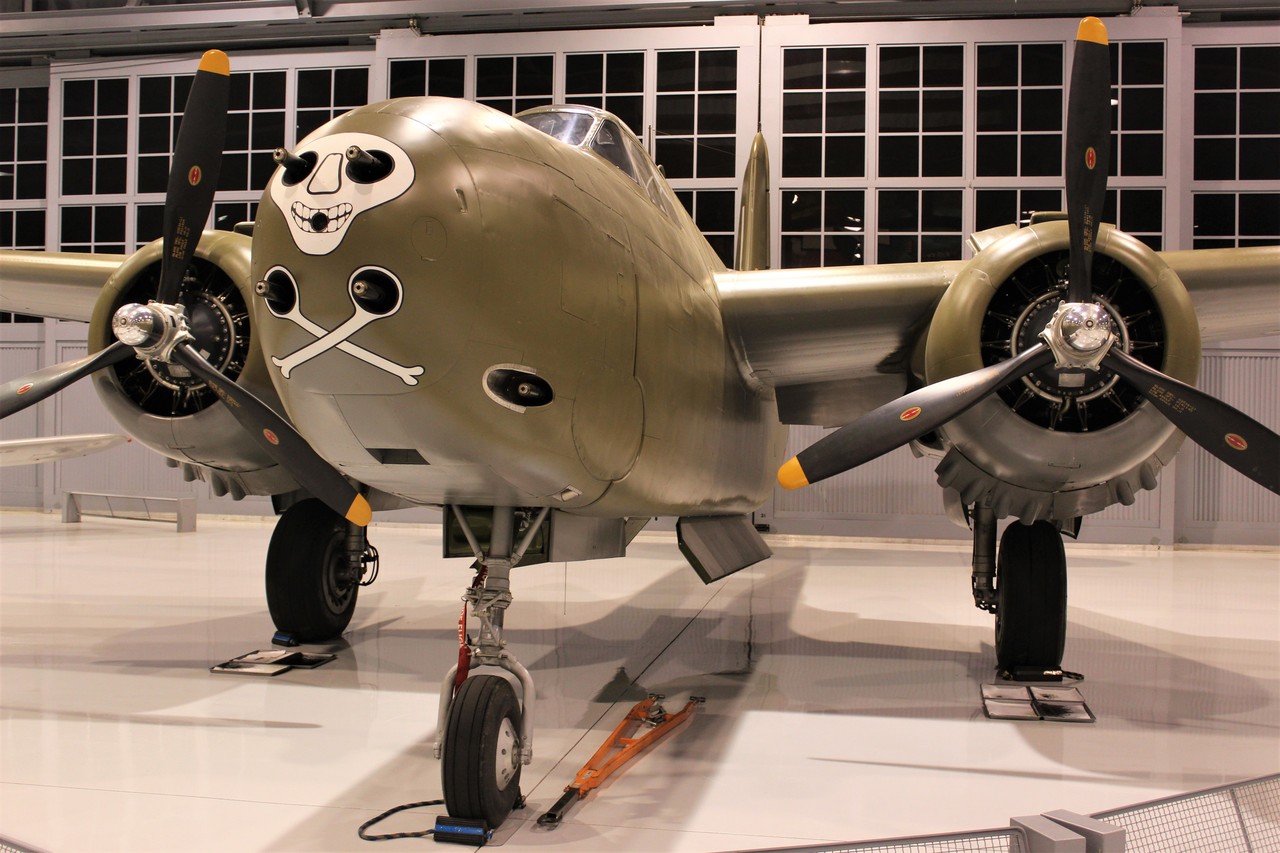
The A-20 Havoc achieved remarkable operational success during World War II, with more than one-third of all 7,478 aircraft built serving with Soviet forces alone. The aircraft saw action in every theater of the global conflict, from the Pacific islands to the European continent, North Africa, and the Eastern Front. Its exceptional versatility allowed Allied forces to deploy the Havoc in roles ranging from medium bombing and ground attack to night fighting and photographic reconnaissance.
The Royal Air Force operated the aircraft under two designations: "Boston" when configured as a medium bomber and "Havoc" when adapted for night fighting duties. The aircraft's reputation for bringing crews home despite severe battle damage made it particularly valued by combat airmen. Soviet pilots appreciated the type's ruggedness, while American crews praised its reliability across diverse mission profiles.
Manufacturing Innovation and Production Scale
Douglas Aircraft Company revolutionized production techniques specifically for the A-20, creating an ingenious manufacturing system at their Santa Monica facility. The company designed a mechanized production line stretching over a mile long—6,100 feet—that was cleverly looped back and forth to fit within a building only 700 feet in length. This innovative approach reduced manufacturing man-hours by 50 percent for some operations while tripling overall production capacity.
Production occurred at multiple facilities from 1939 through September 1944. Douglas manufactured 7,098 aircraft at their El Segundo, Santa Monica, and Long Beach plants, while Boeing contributed an additional 380 aircraft from their Seattle facility. The most successful variant proved to be the A-20G, with 2,850 examples built—more than any other single model.
Douglas Aircraft Legacy
Douglas Aircraft Company established itself as a premier military aircraft manufacturer through designs like the A-20 Havoc. The company's engineering excellence extended beyond the Havoc to include the legendary C-47 transport and SBD Dauntless dive bomber. Douglas merged with McDonnell Aircraft Corporation in 1967 to form McDonnell Douglas, which subsequently merged with Boeing in 1997. The Douglas name, once synonymous with aviation innovation, no longer exists as an independent entity.
The company's approach to the A-20 program demonstrated remarkable adaptability, producing variants tailored to specific operational requirements. From the original DB-7 ordered by France to the heavily armed A-20G ground-attack variant, Douglas engineers consistently modified the basic design to meet evolving combat needs.
Wright R-2600 Powerplant Excellence
Twin Wright R-2600 "Double Cyclone" radial engines powered the A-20 throughout its production life, with power output increasing significantly across variants. Early DB-7 models produced 1,200 horsepower per engine, while the A-20A delivered 1,600 horsepower each from its R-2600-11 engines. Later variants, including the prolific A-20G, generated 1,700 horsepower per engine, providing the performance necessary for diverse combat missions.
These air-cooled, nine-cylinder radial engines manufactured by Wright Aeronautical Corporation proved exceptionally reliable in combat conditions. The engine's robust design complemented the airframe's reputation for durability, contributing to the aircraft's ability to sustain battle damage and return crews safely to base.
Operational Characteristics and Combat Performance
Pilots found the A-20 free of adverse handling characteristics, making it suitable for crews with varying experience levels. The aircraft's three-person crew typically included a pilot, navigator/bombardier, and gunner, though specific crew configurations varied by mission and variant. The A-20A entered service in spring 1941, establishing operational procedures that would serve throughout the war.
Combat-loaded, the aircraft weighed 27,200 pounds and maintained a maximum speed of 339 mph—impressive performance for a multi-role combat aircraft. The A-20G variant featured particularly heavy forward-firing armament, with four 20mm M2 cannon carrying 60 rounds per gun and two 0.50-inch machine guns with 350 rounds each, all mounted in a solid nose configuration optimized for ground attack missions.
International Operations and Variants
Beyond American and Soviet service, the A-20 operated with air forces of Britain, Australia, South Africa, France, the Netherlands, and Brazil. The Royal Australian Air Force received nine A-20As in 1943 and additional A-20G variants in 1944. French forces originally ordered the type as the DB-7, though only approximately 60 aircraft were delivered before France's fall in May 1940.
Production variants reflected this international demand, with specific models tailored to different operators' requirements. The A-20K, powered by R-2600-29 engines, saw 90 examples delivered to the United Kingdom as the Boston V. Meanwhile, 46 F-3A reconnaissance variants were created by modifying A-20J and A-20K airframes with K-19B cameras and specialized equipment.
Preservation and Modern Legacy
Today, at least one A-20 Havoc remains airworthy, operated by the Lewis Air Legends Foundation. This restored example, bearing tail number N747HS, flies with original Wright R-2600-A5B engines, providing modern audiences with demonstrations of this historically significant aircraft's capabilities.
The A-20's legacy extends beyond mere statistics to represent innovative manufacturing techniques, international cooperation during wartime, and adaptable aircraft design. Its service across multiple Allied air forces and successful operation in nearly every combat theater of World War II established the Havoc as one of the conflict's most important and versatile light bombers.