
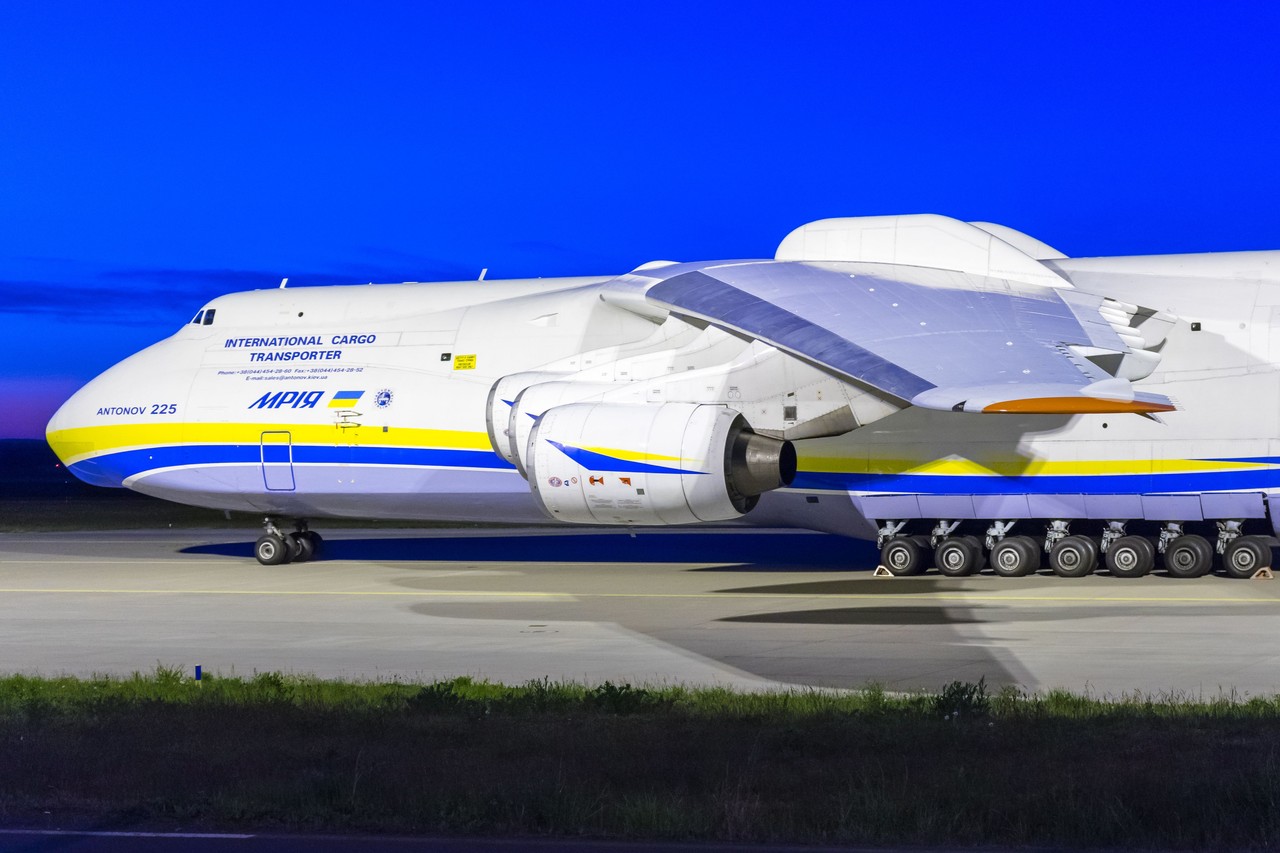
The Giant of the Skies
Only one Antonov An-225 Mriya ever reached operational status, yet it fundamentally transformed the global heavy-lift cargo industry. From 2001 until its destruction in February 2022, the sole aircraft operated by Antonov Airlines handled unique transport missions that no other aircraft could accomplish, moving everything from space hardware to massive industrial components across continents.
Origins in the Space Race
The An-225 emerged from Soviet space ambitions in the 1980s. The Antonov Design Bureau, led by General Designer Petro Balabuyev, developed the aircraft specifically to transport the Buran space shuttle and Energia rocket components. Built at Antonov facilities in Kyiv, Ukraine, with wings manufactured by the state-owned Uzbekistan company Valerii, the project represented an engineering challenge of unprecedented scale.
Designers extended the proven An-124 design by 15 meters fore and aft, added two additional engines, and enlarged the vertical and horizontal stabilizers to handle top-heavy payloads. The aircraft featured no rear cargo door to reduce structural weight, instead relying on nose loading and external carriage capabilities. Its 32-wheel landing gear system, with 20 steerable wheels, distributed the massive weight across unprepared runways.
Record-Breaking Specifications
The An-225's six ZMKB Progress Lotarev D-18T turbofan engines, each producing 51,590 pounds of thrust, enabled a maximum payload of 250 tonnes. The aircraft achieved a maximum speed of 528 mph at 36,000 feet and possessed a range of 9,569 miles with full fuel loading. Its cargo hold could accommodate single pieces weighing up to 200 tonnes, capabilities that remained unmatched in commercial aviation.
The complex landing gear arrangement included four nose wheels and 28 main gear wheels arranged in two 14-wheel bogies, with sophisticated steering systems enabling operations at airports with limited maneuvering space.
International Debut and Commercial Service
The An-225 made its international debut at the 1989 Paris Air Show, dramatically appearing with the Buran space shuttle mounted on its back. This demonstration at Paris, followed by appearances at Farnborough 1990, established the aircraft as an aviation icon and engineering marvel.
After the Soviet space program ended, the aircraft entered storage from 1994 to 2001. During this period, its engines were removed for use in An-124 aircraft. Antonov Airlines restored and recertified the aircraft in 2001, launching its commercial cargo career under the leadership of chief pilot Dmytro Antonov.
The Antonov Legacy
Antonov State Company, founded in 1946 at the Novosibirsk Aircraft Production Association under Oleg Antonov's leadership, specialized in large aircraft capable of operating from unprepared runways. The company underwent reorganization in July 2017 when Ukraine's state-owned Ukroboronprom created the Ukrainian Aircraft Company, consolidating Antonov assets with other enterprises.
A second An-225 began production in the late 1980s, reaching approximately 70 percent completion by 2009 before work ceased. This unfinished airframe became central to reconstruction plans following the operational aircraft's destruction.
Destruction and Reconstruction Efforts
The An-225 completed its final mission on February 5, 2022, flying from Billund, Denmark, to Hostomel Airport near Kyiv in 2 hours and 5 minutes, landing at 17:30 EET for scheduled maintenance. Eighteen days later, on February 24, 2022, Russian forces attacked Hostomel Airport during the opening hours of their invasion of Ukraine.
The aircraft was destroyed on the ground during the Battle of Antonov Airport. Ukrainian forces retook the facility on April 2, 2022, with chief pilot Dmytro Antonov documenting the extensive damage through YouTube videos that reached international audiences.
Phoenix from the Ashes
Antonov State Company, led by CEO Yevhen Havrylov and engineer Sergii Bychkov, immediately announced reconstruction plans using components from the destroyed aircraft and the 70 percent complete second airframe. As of recent reports, the new aircraft has reached 30 percent assembly completion at an undisclosed location, with total reconstruction costs estimated at $500 million.
The project represents more than aircraft construction—it embodies Ukrainian resilience and the preservation of aerospace heritage. The name "Mriya," meaning "dream" in Ukrainian, has transcended aviation to become a symbol of national determination and technological capability.
Lasting Impact
While 24 An-124 aircraft continue operating in similar heavy-lift roles, none match the An-225's unique capabilities. The aircraft's destruction eliminated the world's only capability for certain outsized cargo missions, creating a gap in global logistics that may persist until reconstruction completion. The An-225's legacy extends beyond its technical achievements to represent the pinnacle of 20th-century cargo aircraft design and the enduring human drive to overcome engineering limitations.