
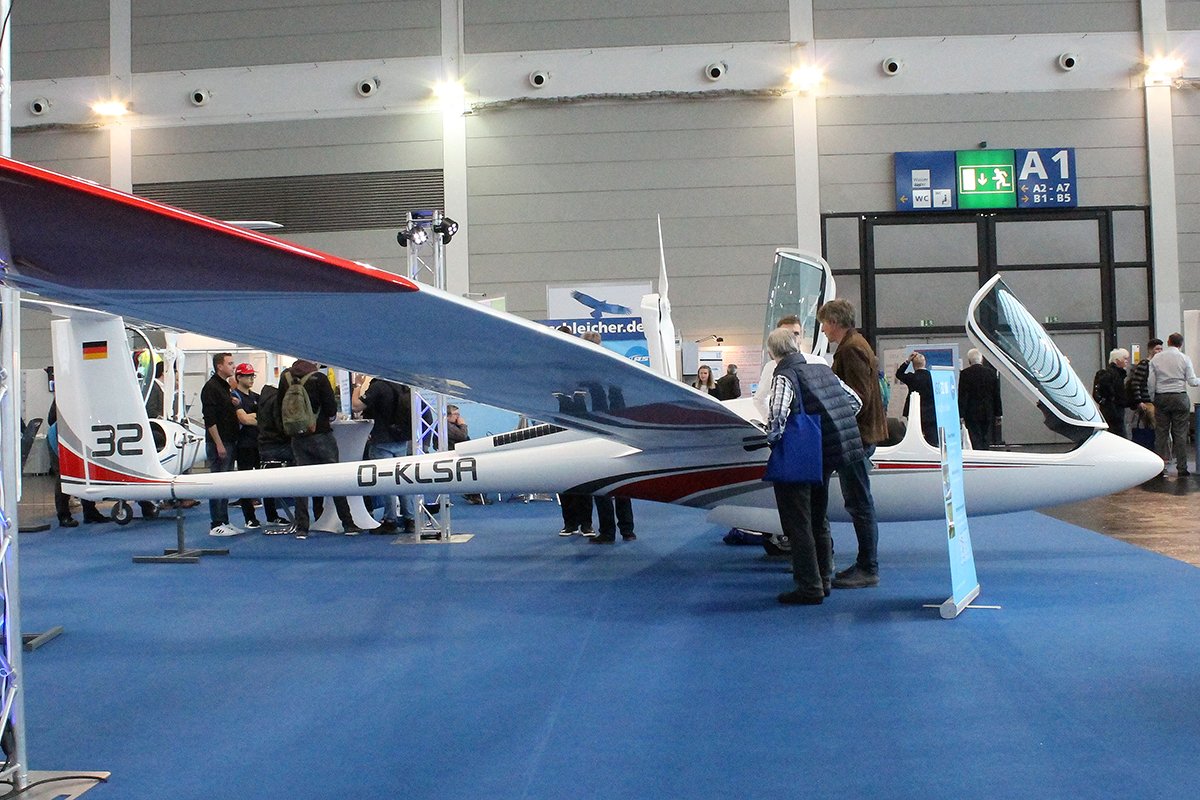
Design and Development
Michael Greiner spearheaded the ASG-32Mi's development after Alexander Schleicher announced the project in April 2013, targeting the FAI 20-meter Two-Seater Class market. The company identified a significant gap between their ASK 21 trainer and the larger ASH 30 Open Class two-seater, prompting the creation of this intermediate-performance aircraft. Greiner piloted the prototype's maiden flight on 31 May 2014 at Poppenhausen, Germany, with company CEO Peter Kremer serving as co-pilot for this milestone flight.
The ASG-32Mi incorporates several innovative design features that distinguish it from conventional motor gliders. A fully retractable and steerable tail wheel eliminates the aerodynamic penalties typically associated with steerable tail wheels, while the Schleicher control mixer system provides enhanced maneuverability with improved aileron effectiveness. The aircraft's landing flaps extend to +50 degrees, facilitating precise approach control in challenging conditions.
Structural safety received particular attention during development, with the fuselage designed to meet enhanced crashworthiness requirements of 9g acceleration. This represents a significant improvement over earlier sailplane designs and reflects modern safety standards in recreational aviation.
Engine and Performance
The ASG-32Mi employs the Austro Engine IAE 50R-AA single rotor Wankel engine, producing 41 kW (55 horsepower) through electronic fuel injection for optimal operating comfort and efficient power delivery. This quiet-running rotary engine had already proven its reliability in over 500 Schleicher sailplanes by the time of the ASG-32Mi's introduction, providing operators with confidence in the powerplant's durability.
With its 20-meter wingspan and wing area of 15.7 square meters, the aircraft achieves a maximum glide ratio of 52:1 and maintains a minimum sink rate of just 0.6 meters per second. The variable wing loading ranges from 33.8 kg/m² with a single 70-kg pilot to 54.1 kg/m² at maximum weight, allowing versatility in different flight conditions. Maximum speed reaches 180 km/h with the propeller extended, while the never-exceed speed is rated at 270 km/h.
Fuel capacity includes a standard 14-liter tank with an optional 44-liter capacity for extended cross-country flights. The aircraft's 9.07-meter length and 1.7-meter height house a cockpit width of 0.73 meters, providing adequate space for two pilots up to 120 kg each.
Manufacturing and Certification
Alexander Schleicher Segelflugzeugbau, the German sailplane manufacturer, brought the ASG-32 series into production in 2015 following successful flight testing. The company obtained EASA Type Certificate approval on 11 February 2016 for both the pure sailplane ASG-32 and the motor glider ASG-32Mi variant, clearing the way for commercial deliveries.
The ASG-32 family encompasses three distinct variants serving different market segments. The base ASG-32 functions as a pure sailplane without engine installation, while the ASG-32Mi provides self-launching capability through its retractable Austro engine. The ASG-32 El represents the newest variant with electric propulsion, offering an expected 100-kilometer sustaining flight range under battery power.
Operational Characteristics
Pilots appreciate the ASG-32Mi's combination of high-performance soaring capability with practical self-launching convenience. The aircraft serves both recreational cross-country flying and competitive soaring applications, appealing to club pilots and ambitious competition aviators alike. Its high wing loading capacity enables pilots to carry sufficient equipment for extended glider touring expeditions.
Standard equipment enhances operational convenience through in-flight adjustable rudder pedals, anti-fogging air vents, integrated bug wiper garages in the fuselage sides, and LED anti-collision strobe lighting. These features reflect modern expectations for comfort and safety in recreational aviation.
The aircraft's load factor ratings of +5.3/-2.65 g provide adequate margins for typical soaring maneuvers while maintaining structural integrity under challenging conditions. Flight hours accumulated by individual aircraft demonstrate the type's durability, with one 2017 example recording 850 total flight hours including 66 engine hours.
Current Status and Legacy
Production continues today at Alexander Schleicher's German facility, with the ASG-32Mi representing the company's current-generation two-seat motor glider technology. The aircraft occupies an important niche in the soaring community, bridging the gap between training aircraft and high-performance competition sailplanes that originally motivated its development.
The ASG-32Mi exemplifies the evolution of motor glider design, incorporating modern engine technology, enhanced safety features, and refined aerodynamics into a package that serves both training and advanced soaring applications. Its success validates the market demand for intermediate-performance sailplanes with self-launching capability.