
Revolutionary Electric Propulsion
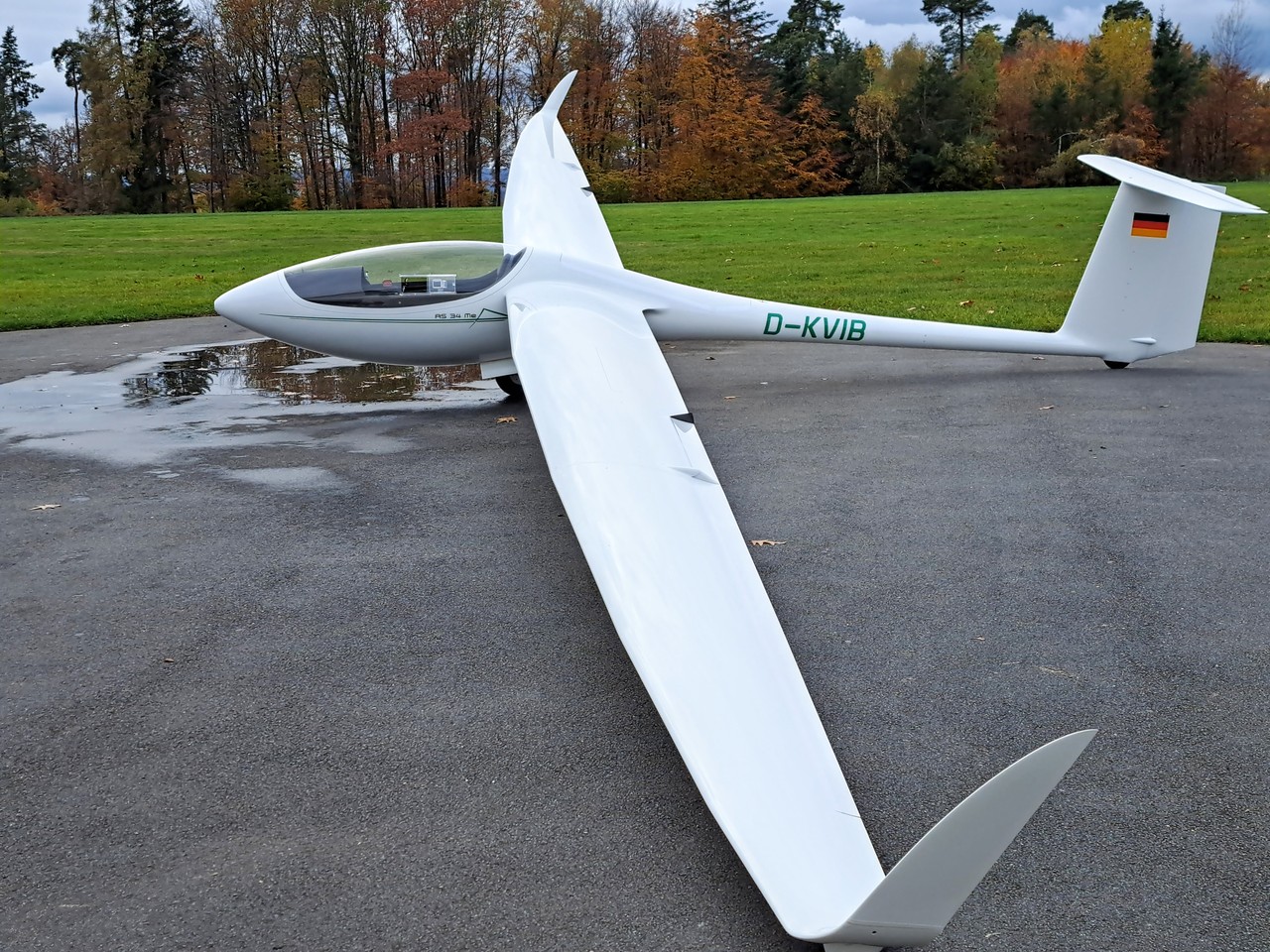
The AS-34Me emerged from Alexander Schleicher's ambitious goal to create the first certified electric self-launching glider capable of serious competition flying. The aircraft combines design elements from two proven Schleicher models: the cockpit and latest-generation winglets from the AS 33, paired with the unflapped wing design of the ASW 28. This hybrid approach allowed engineers to focus on integrating electric propulsion without compromising the aircraft's fundamental soaring characteristics.
Test pilot Dipl.-Ing. Paul Anklam conducted the maiden self-launch demonstration at Huhnrain airfield, achieving a takeoff run of just 220 meters and sustaining a climb rate exceeding 3 meters per second. These performance figures validated the design team's calculations and proved that electric propulsion could match traditional self-launching systems.
Advanced Electric System
The heart of the AS-34Me lies in its sophisticated electric propulsion system. The EMRAX motor, manufactured by the Slovenian company EMRAX d.o.o., delivers 35 kW maximum power for two-minute intervals and 25 kW continuous output. This power enables the aircraft to achieve an initial climb rate of 3.7 meters per second, then maintain 2.5 meters per second while climbing to 2,200 meters altitude from a 600-meter takeoff run at maximum gross weight of 575 kilograms.
The wing-mounted lithium-ion battery system stores 8.6 kWh of energy using 18650-format cells housed in protective metal shells. This configuration provides a 125-kilometer range in climb-and-glide operations, sufficient for meaningful cross-country flights or extended local soaring sessions. The batteries automatically charge the aircraft's avionics system, eliminating the need for separate power sources.
Schleicher developed the three-blade propeller in-house, optimizing it specifically for the EMRAX motor combination. The entire propulsion system retracts completely into the fuselage, maintaining the clean aerodynamic lines essential for high-performance soaring. Engineers achieved vibration-free operation with no power loss at altitude, addressing common concerns about electric aircraft performance.
The Manufacturer's Legacy
Alexander Schleicher GmbH & Co. KG has operated continuously since 1927, accumulating 95 years of glider manufacturing expertise by 2022. The company pioneered numerous innovations in sailplane design, working with leading engineers to advance the sport from traditional designs to cutting-edge electric models like the AS-34Me and ASG 32 El. Based at their Poppenhausen facility adjacent to the Huhnrain company airfield, Schleicher maintains the ability to conduct all flight testing and certification work on-site.
The company's decision to pursue electric self-launching technology reflects their commitment to advancing gliding's appeal to new generations of pilots. By eliminating fuel odors, exhaust emissions, and complex engine maintenance requirements, electric propulsion addresses many factors that previously deterred potential glider pilots.
Design Philosophy and Performance
Schleicher designed the AS-34Me specifically for simplicity and pilot enjoyment while maintaining competition capability in both Standard and 18-meter classes. The aircraft features wingtip wheels for easy ground handling, enabling single-person rigging operations that reduce the logistical burden of glider ownership. The retractable monowheel landing gear and effective three-blade airbrakes provide conventional glider handling characteristics.
With its 18-meter wingspan spanning an aspect ratio of 27.3 across 11.9 square meters of wing area, the AS-34Me achieves the high lift-to-drag ratios essential for competitive soaring. The 387-kilogram empty weight allows for a useful load of 188 kilograms at maximum gross weight, accommodating pilots of varying sizes while maintaining optimal performance.
Certification and Current Operations
The AS-34Me achieved EASA type certification by late 2022, with the prototype upgraded to full production standard following approval. This certification milestone established the aircraft alongside the AS 33 Me as the world's first certified 18-meter electric self-launching gliders, marking a significant advancement in sustainable aviation technology.
At least one production example operates in Australia, where VH-GJX is registered to owner Nigel Eric Holmes in New South Wales. The aircraft serves private gliding enthusiasts and clubs seeking the operational advantages of electric propulsion combined with serious cross-country and competition capabilities.
Future of Electric Soaring
The AS-34Me represents more than technological advancement; it embodies a fundamental shift toward sustainable recreational aviation. By proving that electric propulsion can deliver the performance and reliability demanded by serious glider pilots, the aircraft opens new possibilities for the sport's growth and environmental responsibility. The 125-kilometer range supports meaningful cross-country flights while the sustainer capability allows pilots to extend flights when thermals weaken, potentially completing the final 50 kilometers under electric power when atmospheric conditions deteriorate.