
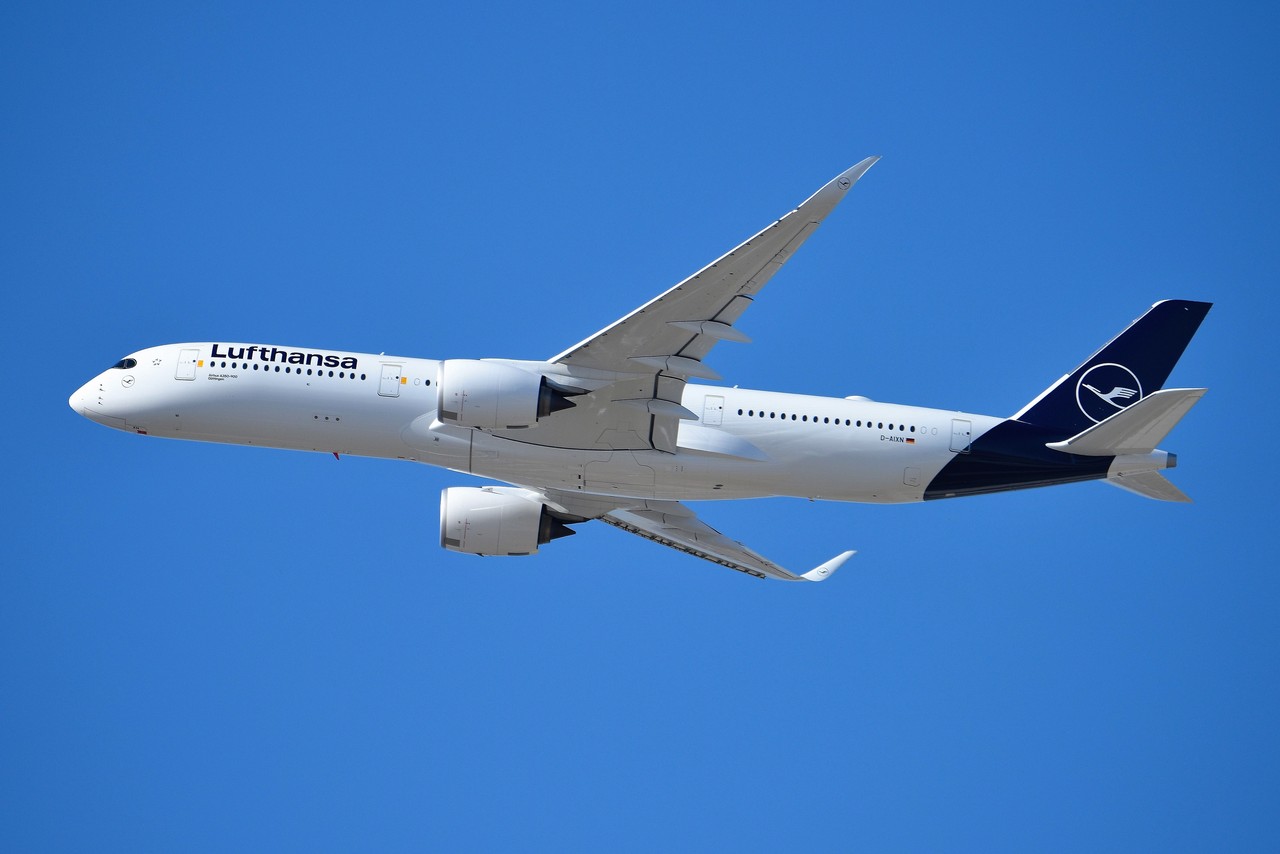
Development and Design Innovation
The A350-900 emerged from Airbus's determination to compete directly with Boeing's next-generation aircraft programs. Launched officially on October 6, 2005, the program represented a fundamental departure from previous Airbus designs, abandoning aluminum construction in favor of a carbon fiber fuselage—a bold engineering decision that would define the aircraft's performance characteristics. Unlike the original A350 concept that heavily borrowed from the A330, the final design featured entirely new aerodynamics, including distinctive "sharklet" winglets that gave the aircraft its modern profile.
Assembly of the first fuselage began on December 23, 2011, in Toulouse, marking the transition from design to physical reality. The manufacturing process itself demonstrated international cooperation on an unprecedented scale, with Airbus constructing 10 new factories across Western Europe and the United States specifically for A350 components. The first fuselage barrel emerged from Illescas, Spain, in late 2010, while a dedicated composite rudder facility opened in China in early 2011.
The Rolls-Royce Partnership
In a departure from typical Airbus practice of offering multiple engine options, the A350 program selected Rolls-Royce as the exclusive powerplant supplier. The British manufacturer developed the Trent XWB specifically for this aircraft, creating engines capable of delivering 97,000 pounds of thrust each. This high-bypass turbofan represented Rolls-Royce's most advanced commercial engine technology, incorporating design elements that would maximize the A350's fuel efficiency and environmental performance.
The first aircraft received its Trent XWB engines and Honeywell auxiliary power unit on March 26, 2013, completing a critical milestone in the test program. The exclusive engine partnership streamlined certification and maintenance training while ensuring optimal integration between airframe and powerplant.
Flight Testing and Certification
The prototype A350-900, designated MSN001 with tail number F-WXWB, emerged from Toulouse's paint shop on May 13, 2013, wearing Airbus's distinctive carbon black and white livery. Following extensive ground testing, the aircraft conducted its maiden flight in June 2013, beginning an intensive 2,500-hour flight test program compressed from the original 15-month schedule to just 12 months due to development delays.
European Aviation Safety Agency certification came in September 2014, validating the aircraft's airworthiness for commercial operations. This relatively rapid certification process reflected both the thorough design work and the urgency Airbus felt to begin competing with Boeing's 787, which had already entered service despite its own development challenges.
Commercial Launch and Early Operations
Qatar Airways, long a supporter of advanced aircraft technology, became the A350-900's launch customer. The airline took delivery of its first aircraft on December 22, 2014, and operated the inaugural commercial flight on January 15, 2015, between Doha and Frankfurt. This route showcased the aircraft's intended mission: long-haul international service connecting major business centers with superior fuel efficiency compared to previous-generation wide-bodies.
The aircraft's 314-passenger capacity in three-class configuration and range exceeding 8,100 nautical miles made it ideal for premium international routes. Airlines quickly recognized these capabilities, with Singapore Airlines, Cathay Pacific, and Ethiopian Airlines placing substantial orders. United Airlines demonstrated American carrier confidence by ordering 25 aircraft with options for 50 additional units on March 10, 2010.
Manufacturing Excellence
Airbus constructed a dedicated Final Assembly Line in Toulouse specifically for the A350 program, breaking ground on January 13, 2009. The facility was designed to employ approximately 1,500 people and achieve a production rate of 10 aircraft per month by 2018, reflecting Airbus's confidence in market demand. This production capacity represented a significant investment in advanced manufacturing techniques required for composite aircraft construction.
The international supply chain supporting A350 production demonstrated the globalization of modern aircraft manufacturing. Components arrived in Toulouse from facilities across three continents, with final assembly requiring precise coordination of carbon fiber fuselage sections, wing assemblies, and advanced avionics systems.
Market Impact and Legacy
The A350-900's commercial success fundamentally altered airline fleet planning strategies. Emirates, traditionally a strong Airbus customer, cancelled 39 A380 orders in favor of A350 and A330neo aircraft, recognizing the superior economics of twin-engine operations over four-engine designs. This shift reflected broader industry trends toward fuel efficiency and operational flexibility.
By 2024, Emirates had begun taking delivery of its first A350s, with 65 aircraft on order, demonstrating the type's continued market relevance nearly a decade after entering service. Thai Airways, Ethiopian Airlines, and numerous other carriers integrated the aircraft into their long-haul networks, validating Airbus's design decisions and market strategy.
The A350-900 remains in active production as of 2026, continuing to challenge Boeing's dominance in the wide-body market while establishing new standards for fuel efficiency and passenger comfort in international aviation.