
The Training Revolution
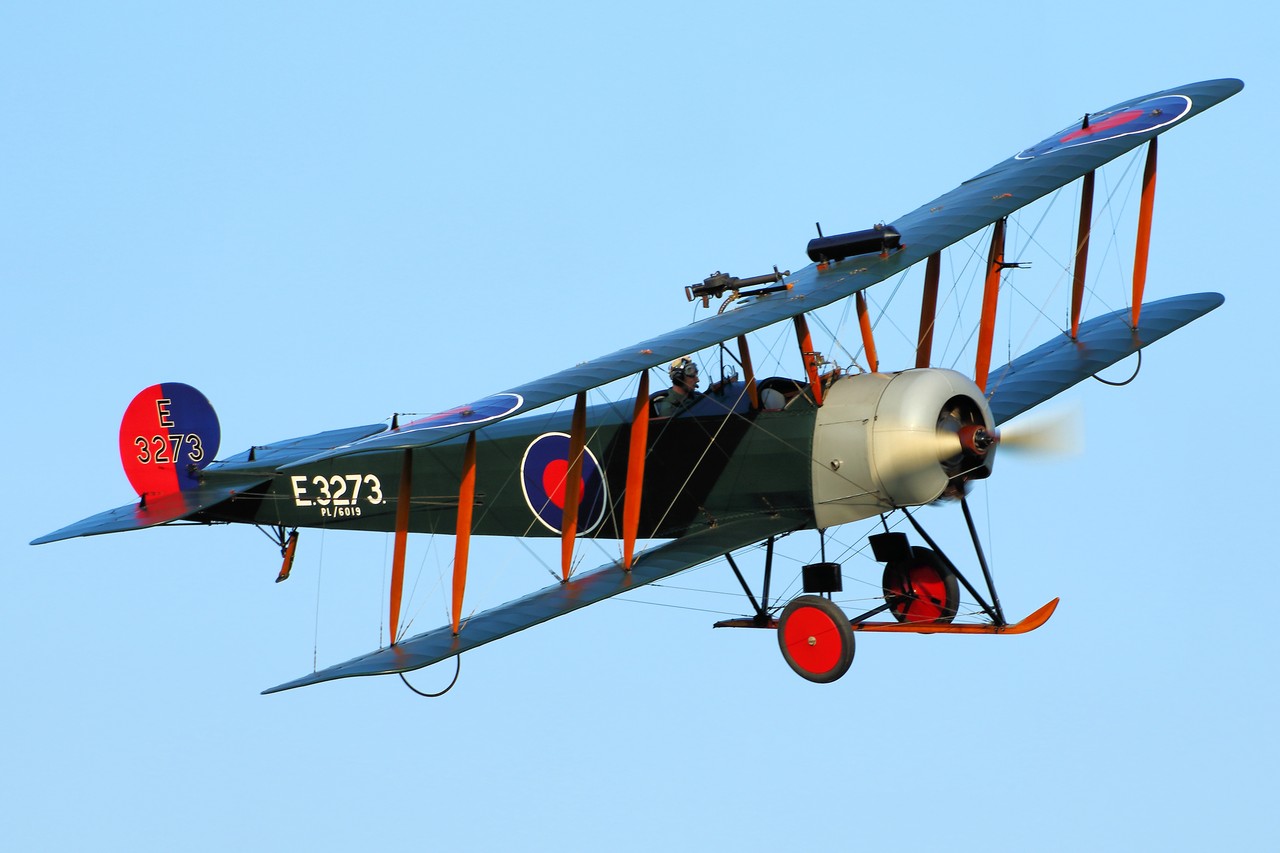
The Avro 504's impact on aviation training cannot be overstated. During World War I, the Royal Flying Corps and Royal Naval Air Service relied heavily on the 504K variant, with 8,340 units produced by war's end in 1918. The aircraft's forgiving flight characteristics and dual-control configuration made it the primary trainer for British Commonwealth pilots, establishing training methodologies still used today.
Combat Pioneer
Beyond its training role, the Avro 504 achieved several aviation firsts that shaped military doctrine. On November 21, 1914, three Royal Naval Air Service 504s launched the first British strategic bombing raid, targeting Zeppelin manufacturing facilities at Friedrichshafen, Germany. Flying from Belfort, France, each aircraft carried four 20-pound bombs. Despite losing one aircraft with crew members Second Lieutenant Vincent Waterfall and Lieutenant Charles George Gordon Bayly, the mission successfully destroyed a hydrogen production plant.
The 504 also recorded the dubious honor of being the first British aircraft shot down in combat on August 22, 1914, while simultaneously pioneering ground attack tactics that would define close air support operations.
Global Service
Production continued across multiple continents through licensed manufacturing agreements. Beyond Avro's primary facilities in the United Kingdom, the 504 was built in Canada, Denmark, Belgium, Siam (Thailand), and Japan. Post-war variants like the radial-engined 504N, produced from 1925 to 1932, equipped Royal Air Force training schools until 1933 and served with air forces in Belgium, Brazil, Chile, Denmark, Greece, Siam, and South Africa.
The Royal Canadian Air Force operated numerous examples, including aircraft H9666, converted to 504N configuration on June 29, 1927. Chinese operators adapted their 504s for unconventional warfare, dropping hand grenades and mortar shells on warlord forces during internal conflicts.
A.V. Roe's Legacy
Alliott Verdon Roe founded A.V. Roe and Company in 1910, building upon his pioneering work that began with homemade aircraft in 1907. The company operated independently until 1928, when it merged with Siddeley-Deasy to form Armstrong Whitworth. Through subsequent acquisitions, Avro became part of the Hawker Siddeley Group in 1935, eventually evolving into British Aerospace and ultimately BAE Systems, which continues operations today.
Technical Innovation
The 504's adaptability proved crucial during wartime engine shortages. While early models used the 80-horsepower Gnome Lambda seven-cylinder rotary engine, modified engine bearers allowed installation of various powerplants including the Armstrong Siddeley Lynx radial (150-200 horsepower), Bristol Lucifer, and Armstrong Siddeley Genet Major producing 140 horsepower.
The aircraft's two-bay wooden biplane structure featured a square-section fuselage measuring 29 feet 5 inches in length with a wingspan of 35 feet 9 inches. Maximum speed reached approximately 100 miles per hour, sufficient for training operations and light reconnaissance missions.
Modern Replicas
Today's Avro 504 replicas preserve this significant aviation heritage through careful reconstruction efforts. Old Rhinebeck Aerodrome in Red Hook, New York, maintains an airworthy 504K replica that has performed regularly since 1971. Blue Swallow Aircraft in Earlysville, Virginia, specializes in building and restoring 504 replicas and related variants.
Pur Sang Aero Historic of Parana, Argentina, completed a notable 2010 replica now owned by Eric Verdon-Roe, grandson of the original designer. These modern replicas often utilize contemporary powerplants like the Rotec R3600 150-horsepower radial engine while maintaining authentic appearance and flight characteristics.
Museum Preservation
Several original aircraft survive in museums worldwide. The Canada Aviation and Space Museum in Ottawa displays 504K serial D8971/G-CYCK, built in 1918 by Grahame-White Aviation and later serving with the Royal Canadian Air Force from 1961 to 1968. The last serviceable RCAF example, serial number 48, was eventually transferred to Toronto Technical School for instructional purposes.
Historical Significance
As the most-produced military aircraft of World War I, the Avro 504 influenced aviation development far beyond British shores. Its design principles influenced later aircraft including the Soviet Polikarpov Po-2, which became history's most-produced biplane. The 504's versatility in roles ranging from elementary training to naval aviation operations, including the first catapult launch of variant 504H in 1917, established operational concepts that remain relevant in modern military aviation.
The continuing presence of flying replicas ensures that this pivotal aircraft's contribution to aviation history remains visible to new generations of aviation enthusiasts.