
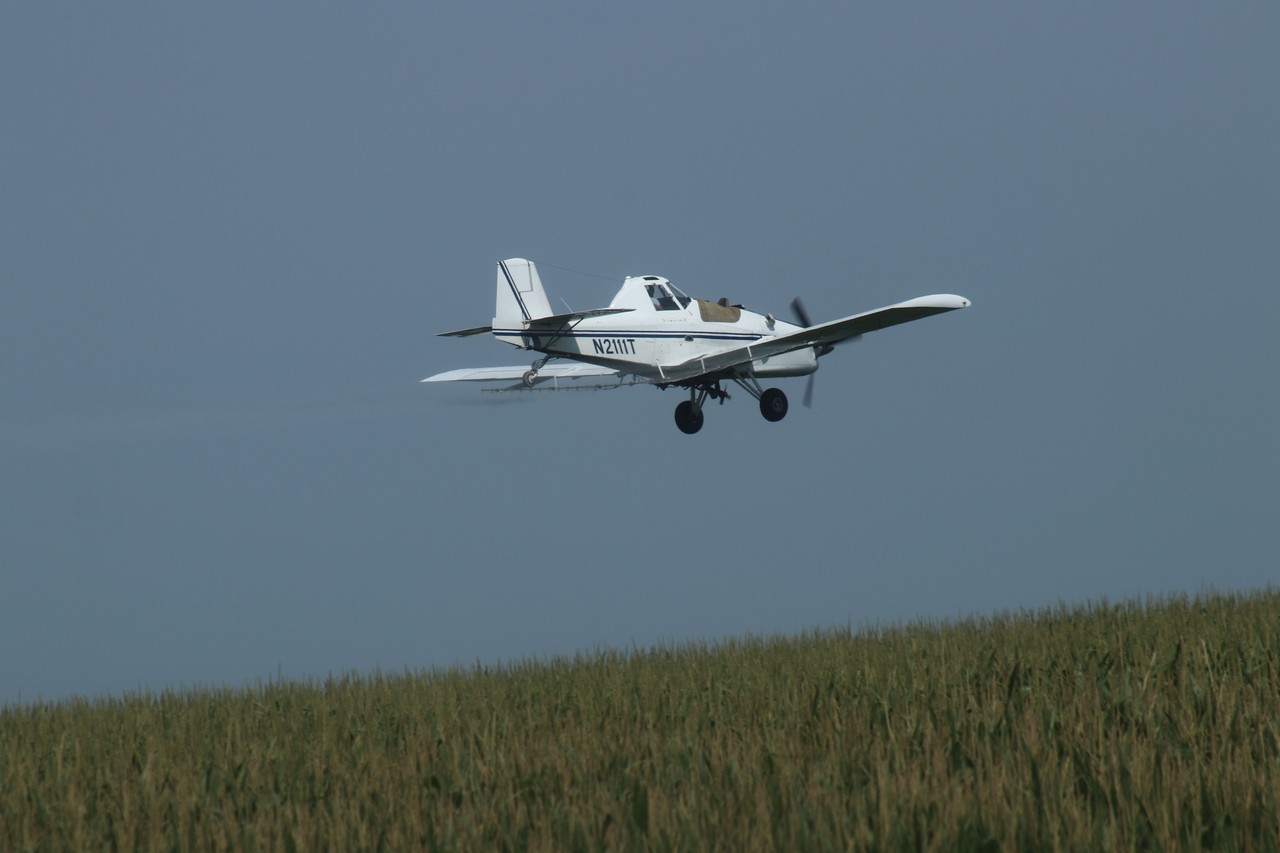
Agricultural Aviation Revolution
The S-2R-T660 emerged as part of the broader Thrush family's evolution, which by July 2001 had delivered over 2,500 aircraft to operators in 80 countries worldwide. This particular variant represented the culmination of decades of refinement in agricultural aviation, combining the proven Thrush airframe with modern turboprop technology to create what became known as the "Hush Thrush" for its significantly quieter operation compared to radial-powered predecessors.
The Manufacturer's Journey
Ayres Corporation was founded by Frederick Ayres, himself an agricultural aircraft operator who understood the practical demands of crop-dusting operations. The company acquired the Thrush type certificate and production facilities from Rockwell International on November 28, 1977, marking the beginning of a new chapter in Thrush development. Ayres initially specialized in turboprop conversions of existing Thrush Commander airframes, incorporating approximately 45 modifications developed in collaboration with Rockwell International.
Starting turboprop Thrush production in 1979, Ayres emphasized practical improvements including larger hoppers, air conditioning systems, and enhanced corrosion protection. The company operated successfully until June 30, 2003, when Thrush Aircraft acquired its assets and continued production, ensuring the Thrush lineage would persist into the modern era.
Design Heritage
The Thrush lineage traces back to Leland Snow's original design, with the prototype S-1 first flying on August 17, 1953. Snow's design philosophy centered on creating a robust, purpose-built agricultural aircraft featuring a corrosion-proofed tubular fuselage for easy cleaning and an energy-absorbing structure for enhanced crash protection—critical considerations given the low-altitude, obstacle-rich environment of agricultural operations.
The S-2R prototype that flew on September 9, 1975, introduced several innovations that would carry forward to the T660 variant. These included fully-enclosed cockpits for pilot comfort and safety, electric flaps for improved field performance, and enlarged hoppers capable of holding up to 2,273 liters of chemicals or seed.
Turboprop Technology Integration
The S-2R-T660's defining characteristic is its Pratt & Whitney Canada PT6A-60AG turboprop engine, producing 783 kW (1,050 shp). An optional upgrade to the PT6A-65AG provides 918 kW (1,230 shp) for operators requiring maximum performance. The first three T660 aircraft featured the standard PT6A-60AG, while the fourth aircraft introduced the more powerful option.
This turboprop installation offered significant advantages over traditional radial engines. The PT6A's lighter weight enabled a 454-kilogram payload increase while reducing operating costs through improved fuel efficiency and parts availability. The engine's multi-fuel capability allowed operation on turbine fuel, aviation gasoline, or diesel, providing operational flexibility crucial for remote agricultural operations.
Operational Excellence
The T660's design enables short-field operations from runways as short as 800 meters, essential for agricultural strips often located near working farms. The aircraft's conventional low-wing, taildragger configuration provides excellent ground clearance for the large hopper while maintaining structural integrity during the demanding load cycles typical of agricultural work.
Standard configuration features single-seat operation, though optional two-seat variants accommodate mechanics, flagmen, or training requirements. The enclosed cockpit design marked a significant comfort improvement over earlier open-cockpit agricultural aircraft, while the turboprop's reduced vibration and noise levels—earning the "Hush Thrush" nickname—improved pilot working conditions during long operational days.
Global Service Record
The Thrush series, including the T660 variant, established a strong international presence with operators across six continents. Australia received its first Turbo Thrush in late 1979, while New Zealand operations included aircraft like the S2R-T34 registered ZK-WBQ in 1994. The aircraft's versatility extends beyond traditional crop-dusting to include seeding, fertilizing, and fire-fighting operations.
Unlike many aircraft that transition between military and civilian roles, the Thrush series maintained exclusive focus on agricultural applications. This specialization allowed continuous refinement of features specifically beneficial to aerial application work, contributing to the type's dominance in its market sector.
Continuing Legacy
When Thrush Aircraft resumed production in December 2003 with aircraft T34-273 (registration N550AG), it demonstrated the enduring viability of the Thrush concept. The S-2R-T660 represents more than six decades of continuous development since Leland Snow's original 1953 design, embodying the successful transition from radial to turboprop power that characterized agricultural aviation's modernization.
Today, dozens of T660 aircraft continue operating worldwide, testament to their robust construction and practical design. Aircraft like serial number T660-154DC remain active in agricultural service, proving the type's longevity and ongoing relevance in modern precision agriculture operations. The T660's combination of proven reliability, turboprop efficiency, and specialized agricultural capabilities ensures its continued importance in feeding the world's growing population.