
Commercial Success and Market Impact
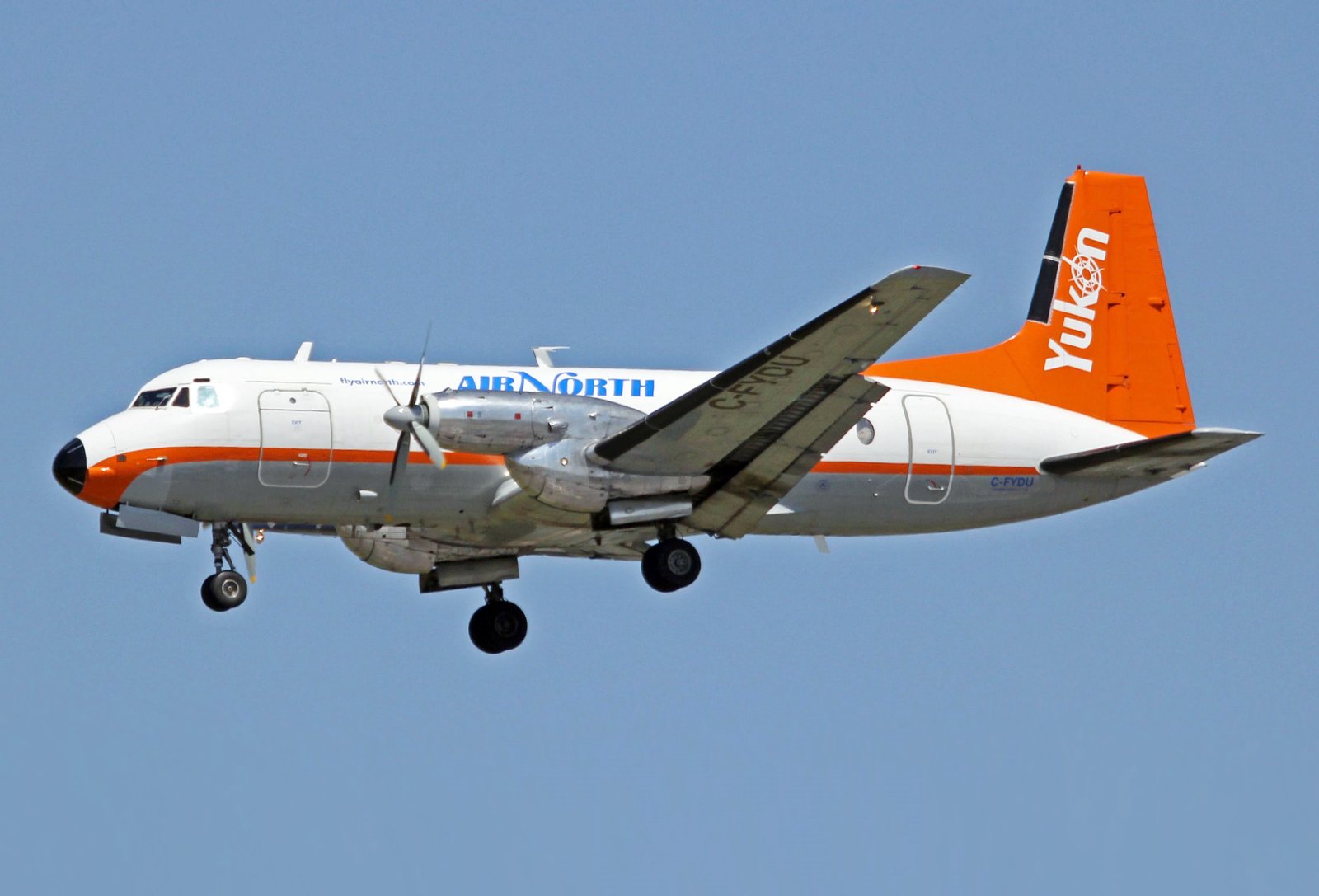
The HS-748 carved out a significant niche in the regional aviation market during the 1960s and 1970s, when airlines needed reliable aircraft to serve secondary routes that were too small for larger jets but required more capacity than light twins. Its rugged design and exceptional short-field performance allowed operators to serve airports with challenging conditions, making it particularly valuable in developing markets across Africa, Asia, and South America. The first delivery to Aerolíneas Argentinas on January 18, 1962, marked the beginning of a production run that would span 27 years and produce 382 aircraft.
Military Service Excellence
The Royal Air Force recognized the civilian 748's potential and ordered a specialized military variant in April 1963. The resulting Andover C.1 featured a dramatically redesigned rear fuselage with cargo doors, a loading ramp, and innovative 'kneeling' main landing gear that lowered the aircraft's tail for easier loading. The first military variant flew on July 9, 1965, with deliveries beginning to No. 46 Squadron RAF at RAF Abingdon in June 1966. All 31 Andover C.1 aircraft were distributed among Transport Command squadrons, including No. 52 Squadron at RAF Seletar in Singapore and No. 84 Squadron at RAF Sharjah in the Persian Gulf.
The Andover's military configuration could transport 52 troops, 40 paratroopers, or 24 stretcher cases with medical attendants. Its payload capacity of 14,365 pounds and ability to operate from rough airstrips made it invaluable for tactical airlift operations in remote locations throughout the British Empire's remaining territories.
Hawker Siddeley Heritage
The aircraft emerged from the historic Avro company, founded in 1910 by aviation pioneer Edwin Alliott Verdon Roe and his brother Humphrey. Following a complex series of mergers beginning in 1920 with Crossley Motors, then Armstrong Siddeley in 1928, and finally Hawker in 1935, the company became Hawker Siddeley Aircraft. The Avro name disappeared entirely in July 1963 when absorbed into the parent company, though it was briefly revived in 1993. This legacy manufacturer had previously produced the legendary Avro Lancaster bomber and the nuclear-capable Vulcan bomber, making the 748 their final major commercial aircraft program.
Engineering Excellence
The HS-748's success stemmed largely from its powerplant selection: the proven Rolls-Royce Dart turboprop engine. Different variants utilized progressively more powerful Dart models, from the RDa.6 Mk.514 in the Series 1 to the RDa.7 Mk.532 in later versions. The military Andover C.1 employed the most powerful variant, the RDa.12 Dart Mk 201, producing 3,245 shaft horsepower per engine and driving four-bladed propellers rather than the civilian version's three-bladed units.
The Dart engine's reliability and fuel efficiency made the 748 economically viable for regional operators, while its turboprop configuration provided jet-like smoothness and reliability without the fuel consumption penalties of pure jets on shorter routes.
International Production Success
In 1960, production was licensed to Hindustan Aircraft Limited in India, establishing a Transport Aircraft Division specifically for 748 manufacturing at Kanpur. This arrangement produced 89 aircraft in India, including a specialized HAL 748M variant featuring a large cargo door for military and commercial freight operations. The Indian production line remained active longer than the British facility, with HAL developing their own modifications and continuing support for the type well into the 1980s.
Operational Legacy
The Indian Air Force became the type's most devoted operator, utilizing the aircraft for transport, communications, navigation training, photographic survey, and flight testing duties. Known simply as the 'Avro' in Indian service, these aircraft formed the backbone of the IAF's transport fleet for decades. Despite ongoing replacement programs involving 56 Airbus C295 aircraft, complete retirement of the 748 fleet is not expected until after 2030.
A handful of 748s continue commercial operations in Canada, where operators carefully manage remaining airframe hours. The type's remarkable longevity reflects its robust construction and the continuing viability of turboprop aircraft in specialized roles where jet aircraft prove uneconomical or impractical.
The HS-748's greatest achievement was demonstrating that regional turboprop airliners could be commercially viable and operationally superior to piston-engine aircraft, paving the way for modern regional aviation and establishing design principles still evident in contemporary turboprop transports.