
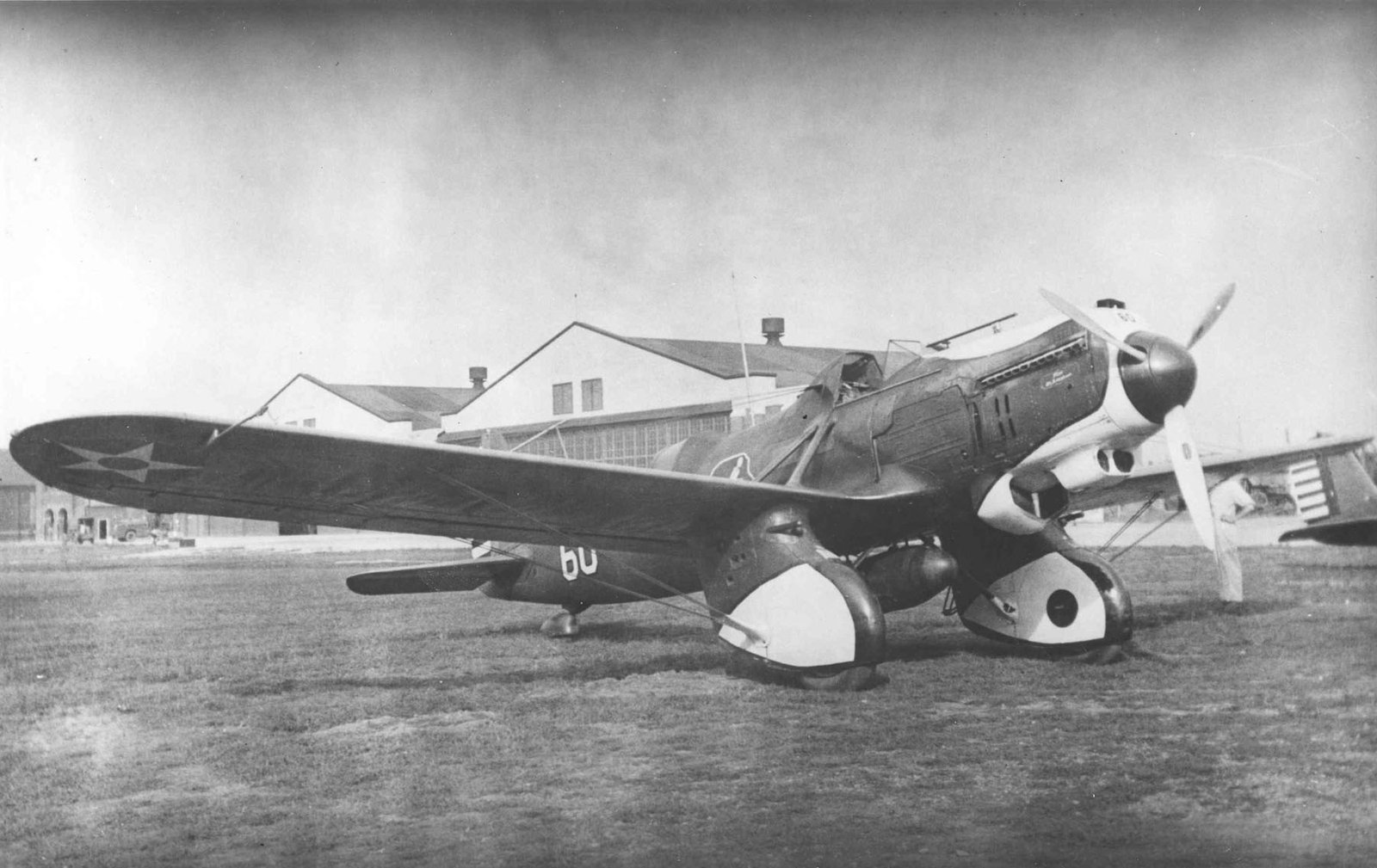
The Curtiss A-8 was an experimental attack aircraft designed by the Airplane Division of the Curtiss-Wright Corporation in 1930. Developed for the U.S. Army Air Corps, the A-8 represented a major technological shift for the manufacturer. Prior to this project, Curtiss-Wright had focused primarily on biplane configurations; consequently, the A-8 is recognized as the first combat aircraft produced by Curtiss to feature a monoplane design. This transition was further emphasized by the aircraft's all-metal construction, moving away from the wood-and-fabric materials common in earlier eras.
Production of the A-8 was extremely limited, as the aircraft was developed as a prototype rather than a series-production model. While exact production quantities and serial numbers are not documented in available records, it is established that only a very small number of airframes were built. Based on the activities of the Curtiss-Wright Airplane Division during the early 1930s, the aircraft was designed and manufactured at the company's facilities in Buffalo, New York. The design and initial construction took place in 1930, with testing occurring around 1930–1931.
Despite its role as a prototype for the U.S. Army Air Corps, the A-8 never entered operational combat service and saw no documented use in any major conflict or civil capacity. Technical specifications, including engine model, horsepower, and performance metrics, remain undocumented in accessible historical summaries. However, the A-8 served as a vital technological stepping stone for Curtiss-Wright. The experience gained from developing this all-metal monoplane provided the structural and design foundation for the company's later, more successful combat aircraft of the mid-1930s, such as the P-36 Hawk and the P-40 Warhawk.
Today, there are no known surviving examples of the Curtiss A-8 in museums or private collections. The Curtiss-Wright Corporation continues to exist as a diversified industrial and aerospace firm headquartered in Davidson, North Carolina, although it ceased the production of complete aircraft in 1948.