
Service History
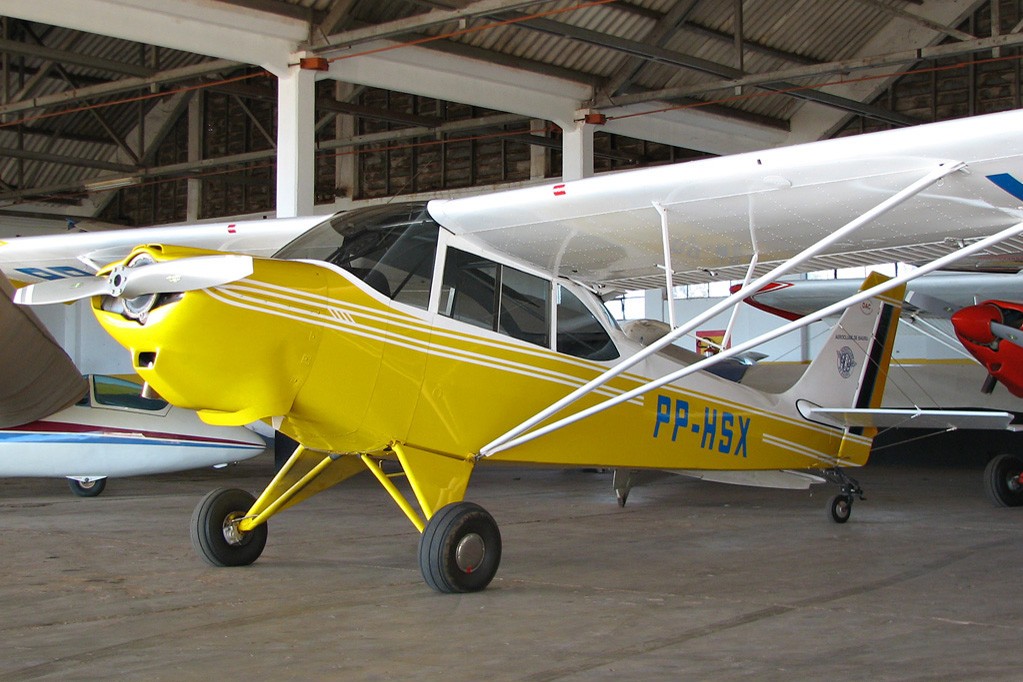
The AB-150 carved out its niche as an affordable workhorse in Argentina's vast agricultural regions, where its combination of four-seat capacity and economical operation made it ideal for utility missions. The aircraft served primarily in civilian roles, transporting personnel to remote farming operations and providing essential connectivity across Argentina's expansive rural territories. Agricultural variants, designated AB-150 Ag, were specifically configured for crop-dusting operations, with at least five examples confirmed to have been built during the production run.
While the AB-150 never achieved the international recognition of larger aircraft types, it represented a crucial link in Argentina's domestic aviation network. The extended-range AB-150RV variant, featuring enlarged fuel tanks and modified fuselage and vertical stabilizer configurations, expanded the aircraft's operational envelope for longer missions across the country's challenging geography.
The Manufacturer
Aero Boero S.A. emerged from humble beginnings in 1956 when Héctor Boero established the company in Morteros, Córdoba Province, Argentina. Initially focused on repair and maintenance of crop-dusting aircraft, the company's hands-on experience with agricultural aviation needs directly influenced their design philosophy. By 1958, the Boero design team—comprising brothers César and Héctor Boero along with Celestine Barale—had developed their first original aircraft, the AB-95.
The company's evolution from repair shop to aircraft manufacturer reflected Argentina's growing aviation industry during the 1960s. Aero Boero produced a comprehensive range of light utility aircraft, including the AB-95, AB-115, AB-150, AB-180, AB-210, AB-260, and AB-260AG variants. This diverse product line allowed the company to serve various market segments while maintaining design commonality across their aircraft family.
Political instability and economic downturns ultimately forced Aero Boero to cease aircraft production in mid-2000, ending 44 years of continuous manufacturing. However, the company continued providing repair services and spare parts support for the existing fleet, maintaining its connection to the aircraft it had created.
Engine & Technical Details
The heart of the AB-150 was its Lycoming O-320-A2B engine, a proven air-cooled flat-four powerplant producing 112 kilowatts (150 horsepower). This engine choice represented a deliberate cost-saving measure compared to the AB-180's more powerful O-360-A1A, which generated 134 kilowatts (180 horsepower). The O-320 series had established its reliability credentials across thousands of general aviation aircraft since the 1950s, making it an ideal match for the AB-150's utility mission.
The aircraft's structure centered on a metal tube framework supporting a fabric-covered fuselage, a construction method that balanced strength with manufacturing economy. High-mounted braced wings provided excellent ground clearance and stability characteristics essential for operations from unpaved airstrips. The conventional tailwheel landing gear configuration further enhanced the aircraft's suitability for rough-field operations.
Design innovations included aerodynamic refinements over the earlier AB-115, incorporating a modified NACA 23012 airfoil that improved lift characteristics while maintaining structural simplicity. The swept-back leading edges of the conventional tail surfaces provided enhanced stability across the aircraft's operating envelope.
Performance & Pilot Perspective
The AB-150 delivered respectable performance figures that prioritized economy over speed. Maximum velocity reached 220 kilometers per hour (140 miles per hour), while economical cruise speed settled at 152 kilometers per hour (94 miles per hour). The aircraft's never-exceed speed of 228 kilometers per hour (142 miles per hour) provided an adequate safety margin for normal operations.
Fuel capacity of 134 liters enabled extended missions, particularly important for agricultural operations covering large territories. The aircraft's maximum takeoff weight of 1,001 kilograms (2,207 pounds) against an empty weight of 590 kilograms (1,301 pounds) provided a useful load of 411 kilograms (906 pounds) for passengers, baggage, or agricultural chemicals.
Production & Legacy
Production commenced around 1969, running parallel with the AB-180 program until approximately 2000. While exact production numbers remain unrecorded, the 31-year production run suggests steady demand for this economical utility aircraft throughout Argentina and neighboring countries.
The AB-150's legacy lies not in revolutionary design breakthroughs but in providing reliable, affordable aviation services to Argentina's agricultural heartland. It represented the practical evolution of South American light aircraft design, bridging the gap between the earlier AB-95 series and the more sophisticated AB-180. Today, surviving examples continue operating in their intended roles, testament to the robust engineering that characterized Aero Boero's approach to aircraft design.
The type's significance extends beyond mere transportation, embodying Argentina's determination to develop indigenous aviation capabilities suited to local conditions and economic realities. In an era dominated by North American and European manufacturers, the AB-150 demonstrated that smaller nations could successfully design and produce aircraft tailored to their specific operational requirements.