
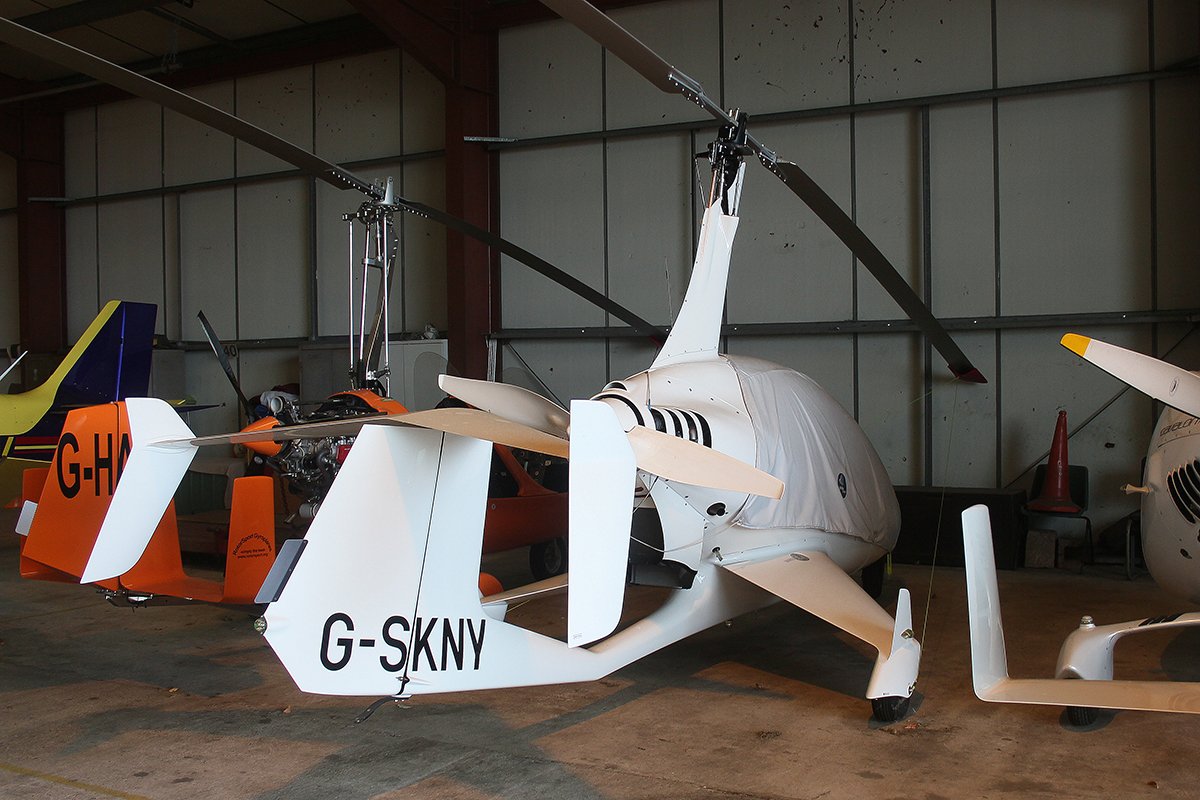
Design Philosophy and Development
The ArrowCopter emerged from a six-year development program that began around 2006, with FD Composites GmbH pursuing an ambitious goal: creating what they termed "a high-end performance autogyro using 21st century methods and techniques." The Austrian manufacturer sought to address traditional gyrocopter limitations through advanced materials and modern manufacturing processes, specifically employing autoclave production techniques with carbon fiber monocoque construction.
The design philosophy centered on safety and performance enhancement. Engineers integrated high torsional and flexional stiffness into the airframe for improved crash protection, while positioning fuel tanks within the winglets and maintaining a low center of gravity through tricycle undercarriage configuration. The prototype OE-VXF completed its maiden flight in Austria in 2008, validating the advanced design concepts.
Technical Innovation
FD Composites incorporated several groundbreaking features into the ArrowCopter design. The carbon fiber monocoque construction provided superior strength-to-weight ratios compared to traditional aluminum gyrocopters. An innovative RFID chip system integrated into each aircraft provided instant access to complete manufacturing data, including serial numbers, lot numbers, and optional equipment specifications—a first in the gyrocopter industry.
The enclosed cockpit versions featured an ergonomically designed interior with integrated air circulation systems, while an enclosed engine exhaust system significantly reduced operational noise levels. Differential braking through toe-operated units enhanced ground handling capabilities, addressing a common complaint among gyrocopter operators.
Powerplant Options
The AC10 utilized Rotax four-cylinder horizontally-opposed liquid-and-air-cooled piston engines in multiple configurations. The standard AC10 featured the Rotax 912S producing 100 horsepower, while an optional turbocharged Rotax 914 delivered 120 horsepower for enhanced performance. By 2012, kit versions offered the newly released Rotax 912 iS alongside the proven 914 UL, both engines capable of operating on leaded, unleaded, avgas, 100LL, or E10 fuel—providing operational flexibility for international operators.
FD Composites also planned a future BMW R1.2 engine option capable of generating up to 135 horsepower, though production records do not confirm this powerplant entered service.
International Market Introduction
The ArrowCopter achieved international recognition through strategic market introductions across multiple continents. In Australia, the first example was G-1010 (construction number 53973), imported by AirCopter Australia of Gandaroo, New South Wales. This aircraft was demonstrated at Natfly 2012 but suffered damage during a forced landing in February 2012 following an in-flight propeller failure—highlighting the challenges facing even advanced gyrocopter designs.
New Zealand saw its first ArrowCopter in 2016 when Model AC-20 ZK-RBV (construction number 039, previously registered as N713TX in the United States) was registered to Lange Enterprises of Dunedin on January 20, 2016.
United States Market Strategy
ArrowCopter USA coordinated with FD Composites for more than two years to establish comprehensive market support before introducing the AC10 kit at AirVenture in July 2012. The company developed an innovative Builder Assist Program designed to streamline construction time to just two weeks while providing comprehensive builder education. Flight training was offered concurrently, addressing the complete pilot-to-aircraft pipeline.
The AC10 kit version was specifically engineered to meet FAA guidelines for kit certification in the United States, reflecting the manufacturer's commitment to regulatory compliance across international markets.
Performance and Specifications
The production AC10 achieved impressive performance parameters for its class. Maximum speed reached 200 kilometers per hour (124 mph), with maximum cruising speed of 165 kilometers per hour (102 mph). Minimum flying speed of just 30 kilometers per hour (18.6 mph) provided excellent short-field capabilities—a key gyrocopter advantage.
With an empty weight of 261 kilograms (575 pounds) and maximum loaded weight of 600 kilograms (1,322 pounds), the AC10 offered substantial payload capacity. The 70-liter fuel capacity provided adequate range for most recreational and training missions.
Manufacturing Standards and Certification
FD Composites manufactured the ArrowCopter to United Kingdom construction standard Section T CAP 643, permitting the 600-kilogram maximum takeoff weight. The aircraft received LSA (Light Sport Aircraft) certification through AustroControl on June 22, 2012, validating its airworthiness standards.
Legacy and Modern Context
The ArrowCopter represented a significant technological advancement in gyrocopter design, demonstrating how modern materials and manufacturing techniques could enhance traditional rotorcraft concepts. While production numbers and current operational status remain undocumented in available records, the aircraft's international certification and marketing efforts across Australia, New Zealand, and the United States indicated serious commercial intent.
The incorporation of advanced composite construction, modern avionics integration capabilities, and comprehensive support programs positioned the ArrowCopter as a bridge between traditional gyrocopter simplicity and contemporary aircraft sophistication.