
Design Origins and National Geographic Mission
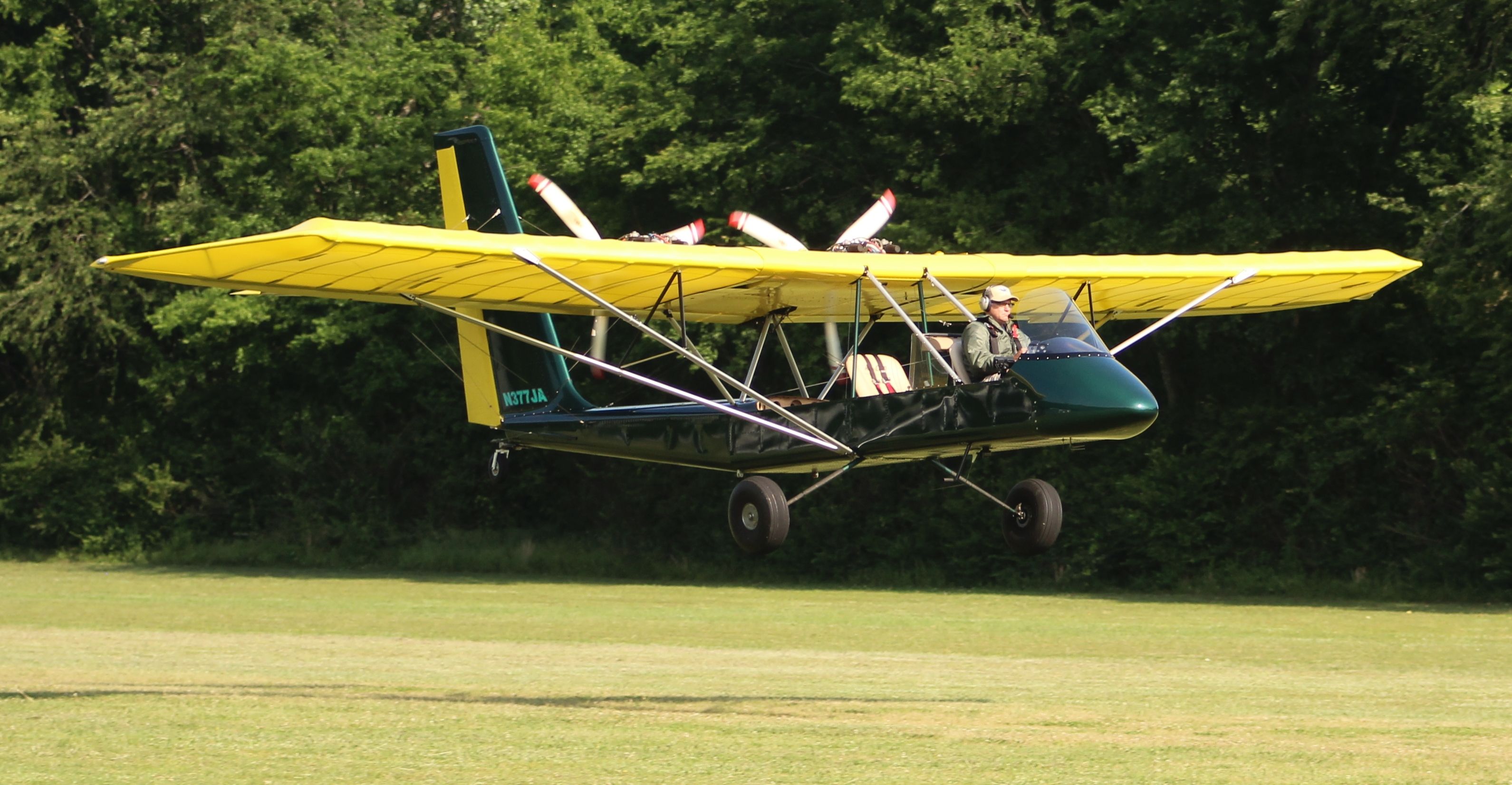
Phil Lockwood conceived the Air Cam in the mid-1990s to address a specific operational challenge: safely filming wildlife in dense rainforests where conventional aircraft could not operate effectively. The design requirements called for wide unobstructed views, single-engine takeoff capability from strips under 200 feet, and reliable operation in remote areas like the Congo Basin where aviation fuel arrived by canoe. The first prototype flew in 1995, built specifically for the National Geographic Society to film the Ndoki Rain Forest in northern Congo.
The Designer and Company Evolution
Phil Lockwood's aviation career began in the 1980s as marketing director for Maxair Aircraft Corporation, where he promoted the Drifter ultralight. After Maxair's bankruptcy, Lockwood acquired the Drifter rights and tooling, establishing the foundation for his aircraft manufacturing expertise. He initially developed the Air Cam through Leza-Lockwood Corporation before the company evolved into Lockwood Aircraft. In mid-2006, Lockwood regained full ownership of the Air Cam design rights from Leza Aircraft and resumed production alongside the Drifter from his Sebring, Florida facility.
Engineering Innovation
The Air Cam's most distinctive feature is its twin pusher engine configuration, with powerplants mounted near the aircraft's centerline to provide benign single-engine handling characteristics. This design enables a 300-foot-per-minute climb rate on a single engine, crucial for operations over dense jungle canopy. The aircraft features independent fuel systems for each engine, drawing from a total capacity of 28 US gallons that provides six hours of endurance. Lockwood upgraded from the Drifter's tube construction to a quickbuild aluminum monocoque fuselage, significantly improving structural integrity and assembly time.
Powerplant Specifications
Standard Air Cam models are powered by twin Rotax 912ULS four-stroke engines, each producing 100 horsepower. Optional Rotax 914 turbocharged engines increase power to 115 horsepower each for improved high-altitude performance. Early production aircraft used 64-horsepower Rotax 582 two-stroke engines, later discontinued in favor of the more reliable four-stroke variants. These Austrian-manufactured BRP-Rotax engines have proven exceptionally reliable in light aircraft applications, with the 912 series accumulating over 100,000 units produced since 1994.
Performance Characteristics
The Air Cam cruises at 100 mph with a never-exceed speed of 110 mph, emphasizing low-speed controllability over outright performance. Its 39-mph stall speed and exceptional short-field capabilities enable operations from unimproved strips as short as 200 feet for takeoff and 300 feet for landing. With both engines operating, the aircraft climbs at 1,500 feet per minute, while single-engine performance maintains a safe 300 feet per minute. Maximum range reaches 340 miles at an economical 70 mph cruise setting.
Production and Regulatory Status
Lockwood Aircraft has manufactured Air Cam kits continuously since 1995, with approximately 250 aircraft licensed and flying as of 2019. The aircraft qualifies as an Experimental Amateur-Built category under FAA regulations, requiring builders to complete at least 51 percent of construction work. This kit approach keeps costs manageable while maintaining the specialized nature of the design for its intended expedition and aerial photography missions.
Operational History
Beyond its original National Geographic jungle filming role, the Air Cam has found a dedicated following among aerial photographers, adventure pilots, and sport aviation enthusiasts. Its tandem open cockpit configuration provides unobstructed views ideal for photography and sightseeing operations. Optional equipment includes floats for water operations and a bubble canopy introduced in 2015 for weather protection. The type has developed what industry publications describe as a "cult following," with operators sharing videos and experiences that serve as effective marketing for the unique design.
Legacy and Museum Recognition
The original Air Cam prototype holds historical significance as the first successful twin-engine kit aircraft designed specifically for expedition work. Phil Lockwood donated this prototype to the EAA AirVenture Museum in Oshkosh, Wisconsin in 2008, where it represents an important chapter in experimental aviation development. The design's influence extends beyond its production numbers, demonstrating how specialized aircraft can evolve from ultralight ancestry to serve demanding operational requirements while remaining accessible to amateur builders.