
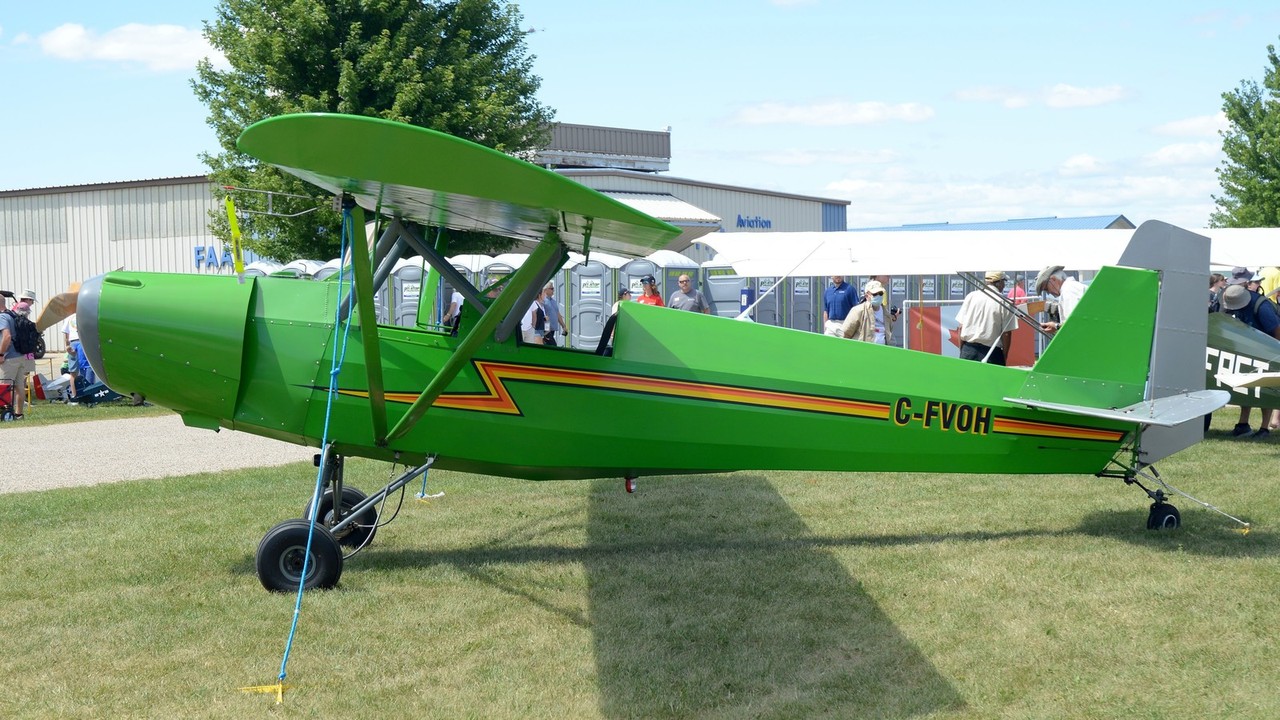
Design Philosophy and Development
John Powell, drawing from his experience as a US Navy commander, conceived the P-70 Acey Deucy as an intentionally modest aircraft that would return aviation to its roots. The design philosophy centered on 1930s technology with stick and rudder controls, offering amateur builders an accessible entry point into experimental aviation. Powell's approach deliberately avoided complexity, instead emphasizing the pure joy of flight through simple, proven aerodynamics.
The aircraft's parasol configuration placed the wing above the fuselage on struts, providing excellent visibility for both occupants while maintaining structural simplicity. This high-wing design proved forgiving for pilots transitioning from training aircraft, contributing to the type's appeal among recreational aviators.
Technical Specifications and Performance
The standard P-70 Acey Deucy utilized a Continental A65 four-cylinder engine, though some builders opted for more powerful alternatives. One documented example featured a Lycoming O-290-G carbureted engine producing 125 horsepower at 2,450 rpm, significantly enhancing performance over the baseline configuration. This particular variant consumed between 10.5 and 11 gallons of fuel per hour at normal cruise power.
With an 18.06-gallon fuel capacity, the aircraft provided approximately 1 hour and 42 minutes of endurance at cruise settings. The 75-knot cruise speed, while modest by modern standards, proved adequate for local recreational flying and short cross-country trips. The tandem seating arrangement maximized the aircraft's narrow fuselage efficiency while maintaining acceptable weight distribution.
Amateur Builder Community
The P-70 Acey Deucy gained recognition within the experimental aircraft community through articles published in Sport Aviation magazine during 1971, 1978, and 1979. These publications provided builders with construction guidance and performance data, fostering a small but dedicated community of enthusiasts. The plans-built nature of the design allowed significant customization, resulting in variants equipped with floats for water operations and enclosed cockpit covers for weather protection.
Ed Marrero's plans-built Acey Deucy exemplified the type's potential, winning Plans-Built Grand Champion at the Sun 'n Fun International Expo and Fly-In. However, this achievement was tempered by the aircraft's subsequent destruction in a tornado, requiring two years of meticulous rebuilding that demonstrated the builder community's dedication to preserving these unique aircraft.
Operational History
The P-70 Acey Deucy proved its cross-country capabilities when one owner completed an approximately 900-nautical-mile flight from Arkansas to Colorado, marking the aircraft's first documented long-distance journey. This flight, conducted in challenging weather conditions, validated the design's structural integrity and demonstrated its suitability for extended operations beyond local recreational flying.
Some registry confusion exists regarding the aircraft's configuration, with certain examples appearing as biplanes while others maintain the standard monoplane arrangement. This variation likely reflects individual builder modifications rather than design inconsistencies, highlighting the experimental nature of amateur-built aircraft.
Manufacturing and Production
Unlike mass-produced aircraft, the P-70 Acey Deucy existed primarily as construction plans distributed to amateur builders. Powell retained ownership of the original prototype, registered as C-GEMY, eventually repurchasing the aircraft and modifying the original design based on operational experience. This hands-on approach allowed continuous refinement of the plans and construction techniques.
The absence of centralized production meant no definitive count of completed aircraft exists, though the design's presence in aviation publications and fly-in events suggests modest but sustained building activity throughout the 1970s and beyond.
Legacy and Historical Significance
The Powell P-70 Acey Deucy occupies a distinctive position in experimental aviation history as a bridge between aviation's golden age and the modern homebuilder movement. Its deliberate simplicity contrasted sharply with increasingly complex general aviation aircraft, offering pilots an authentic stick-and-rudder flying experience.
The aircraft's influence extends beyond active flying examples, with wooden scale models produced for collectors who appreciate its historical significance. These commemorative pieces ensure the design's recognition among aviation enthusiasts even as flying examples become increasingly rare.
The P-70 Acey Deucy represents the enduring appeal of simple, honest flying machines that prioritize pilot engagement over automated systems, embodying the experimental aviation community's core values of innovation, craftsmanship, and pure aviation enjoyment.