
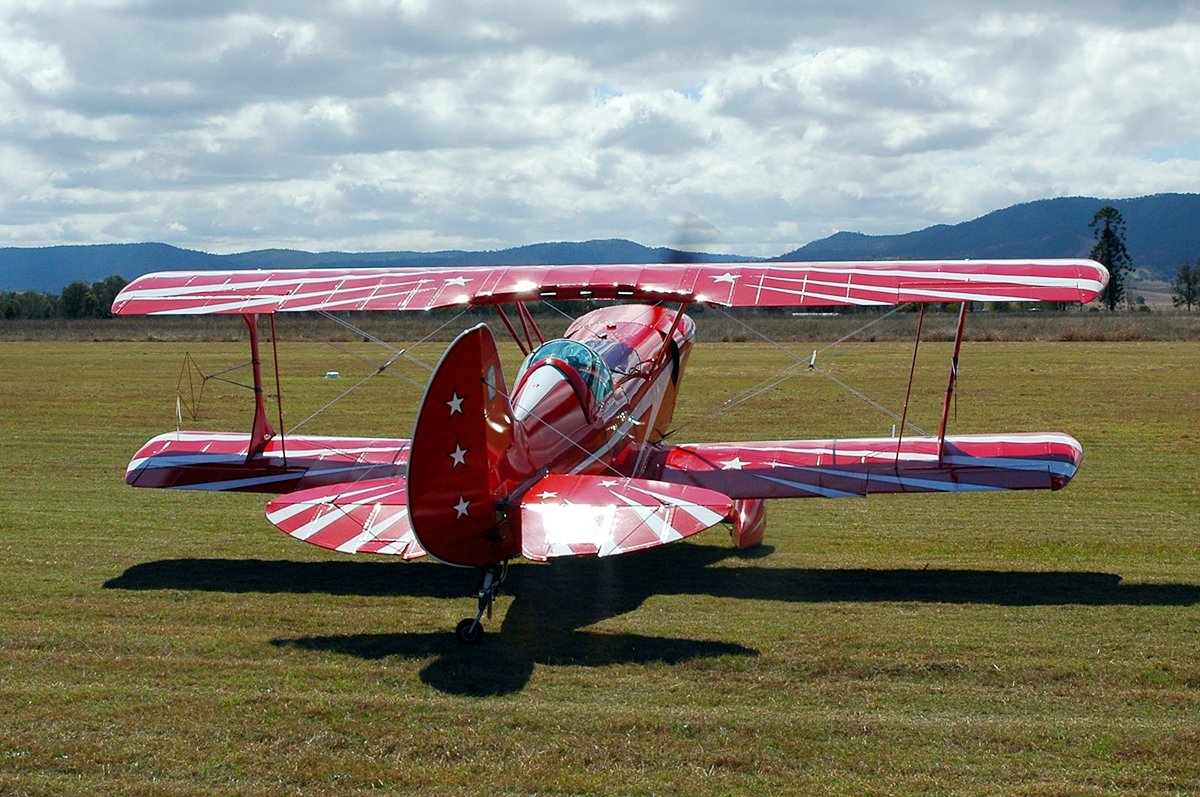
Design Philosophy and Development
Paul Poberezny, founder of the Experimental Aircraft Association, conceived the Acro Sport I in the early 1970s to address specific shortcomings in existing homebuilt aerobatic aircraft. The prevailing "baby biplanes" of the era suffered from dangerously high landing speeds and frequent wingtip damage, making them impractical for many amateur builders. Poberezny's design incorporated input from aerobatic legend Curtis Pitts to create what enthusiasts termed a "hard-driving" aerobatic machine while maintaining construction simplicity through Hershey bar wings and widely splayed landing gear.
The prototype's maiden flight on January 11, 1972, validated Poberezny's engineering approach. Early flight testing revealed the need for stronger landing gear tubing, which was quickly addressed in the production plans. The final design featured a steel tube fuselage framework with fabric covering, wooden wing structures, and a distinctive open cockpit with spatted undercarriage that became the aircraft's visual signature.
Construction and Distribution
Unlike factory-built aircraft, the Acro Sport I existed purely as construction plans marketed to amateur builders. Acro Sport Inc., established on June 14, 1977, in Hales Corners, Wisconsin, became the exclusive distributor of these plans. The company operated independently of Poberezny and the EAA, focusing specifically on aerobatic homebuilt designs. Over nearly four decades of operation, Acro Sport Inc. sold approximately 1,000 sets of plans before ceasing operations on November 5, 2014.
Industry estimates suggest that roughly 250 aircraft were under construction simultaneously during the design's peak popularity, though typical homebuilt completion rates meant only about 10 percent of started projects reached flying status. Notable completed examples included N869M, the second plans-built aircraft finished by Jim Inman in approximately 10 months using Wag Aero components, demonstrating the design's buildability for dedicated constructors.
Technical Innovation
The Acro Sport I's engineering represented a significant advancement in homebuilt aerobatic aircraft design. Its 17-foot 6-inch fuselage housed a single Lycoming O-360 four-cylinder horizontally-opposed engine producing 180 horsepower, providing exceptional power-to-weight performance. The aircraft's empty weight of 900 pounds and maximum gross weight of 1,350 pounds allowed for unlimited aerobatic operations while maintaining manageable ground handling characteristics.
Improved center-of-gravity placement distinguished the Acro Sport I from its predecessors, contributing to more predictable aerobatic behavior and reduced pilot workload during complex maneuvers. The reinforced landing gear, sized appropriately after early prototype testing, could withstand the stresses of repeated aerobatic practice sessions that had proven destructive to earlier designs.
Performance Characteristics
Pilots praised the Acro Sport I's combination of docile handling and explosive aerobatic capability. The aircraft achieved a maximum speed of 152 miles per hour and cruised efficiently at 130 miles per hour, while maintaining a remarkably low stall speed of 50 miles per hour. Its 3,500 feet-per-minute climb rate and 20,000-foot service ceiling provided ample performance for competitive aerobatics.
The design's 350-foot takeoff distance and 800-foot landing roll made it suitable for smaller airports, expanding access for recreational aerobatic flying. With 20 gallons of fuel capacity, the aircraft offered a 350-mile range, sufficient for cross-country flights to aerobatic competitions and fly-ins.
Cultural Impact and Legacy
The Acro Sport I embodied the spirit of the 1970s homebuilt movement, representing evolution from the experimental aircraft of the 1950s and 1960s into purpose-built recreational machines. Featured regularly in EAA Sport Aviation magazine throughout the 1990s, completed examples like those built by constructors Dastous and Kitchen demonstrated the design's enduring appeal to serious aerobatic enthusiasts.
While exact numbers of currently airworthy examples remain unknown, the aircraft's influence on homebuilt aerobatic design extends far beyond its production numbers. As one of the first truly successful plans-built aerobatic aircraft, the Acro Sport I established templates for construction techniques and performance standards that influenced subsequent designs. Its emphasis on buildability without compromising aerobatic capability helped establish amateur construction as a viable path to high-performance recreational flying, contributing significantly to the growth of experimental aviation in America.