
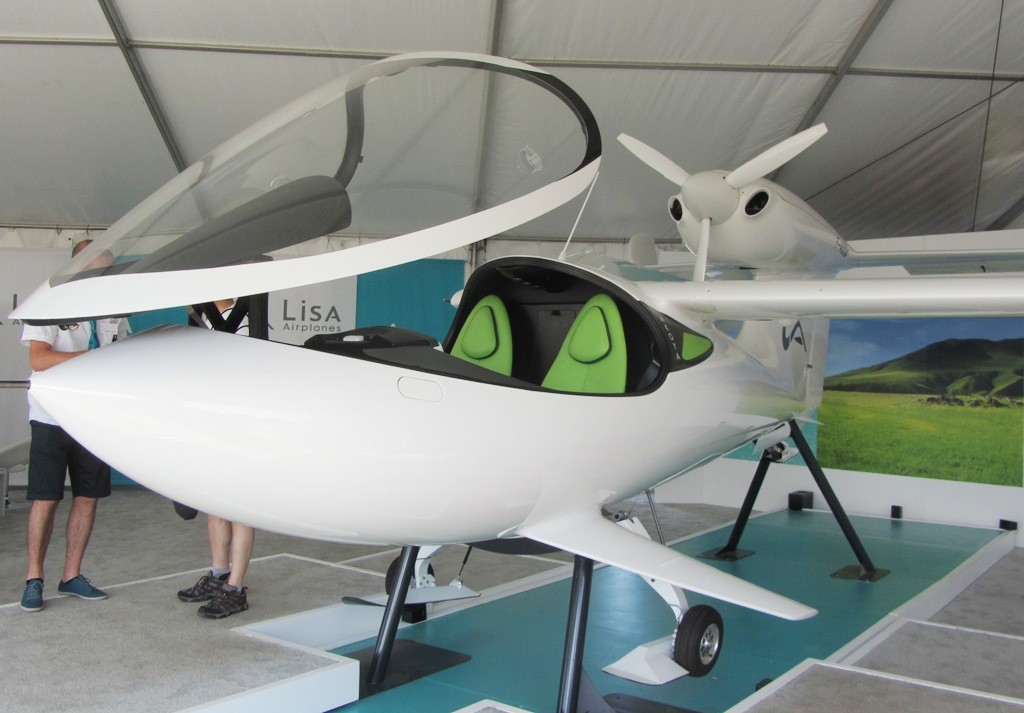
Revolutionary Design Philosophy
The Akoya represented a bold attempt to revolutionize recreational aviation through its unique multi-terrain capabilities. LISA Airplanes engineers in France's Savoie region designed the aircraft to operate seamlessly across land, water, and snow surfaces, targeting yacht owners and recreational pilots seeking unprecedented versatility. The aircraft's most distinctive innovation was its retractable hydrofoil system, dubbed "seafoils," which enabled water takeoffs while retracting during flight to eliminate aerodynamic drag.
Development Timeline and Milestones
Development commenced in 2004 under LISA Airplanes, with the first prototype F-WURE achieving its maiden flight in August 2007 at Chambéry. The aircraft made its public debut at Aero '07 in April 2007, followed by appearances at AirVenture in July 2012. By May 2009, the initial prototype had accumulated 150 flight hours. The program reached a historic milestone in 2011 when the Akoya became the world's first hydrofoil-equipped seaplane to demonstrate takeoff capability over Lake Bourget.
A second prototype, designated Pre-Series 1, took flight in August 2017, incorporating refinements including retractable landing gear and horizontal fuselage fins for improved pilot visibility. This later variant represented the closest approach to a production-ready configuration.
Technical Innovation and Engineering
The Akoya's composite airframe utilized advanced finite element analysis simulations, with structures tested to breaking points during development. The aircraft featured folding wings for convenient storage, addressing the practical concerns of recreational operators with limited hangar space. Its single Rotax 912 ULS engine, producing 73.5 kilowatts, was mounted on a pylon configuration to keep the three-bladed propeller clear of water spray during aquatic operations.
With dimensions of 6.90 meters in length and 11.00 meters wingspan, the aircraft maintained a relatively compact footprint while achieving impressive performance specifications. The design incorporated a 2.35-meter height including propeller, with a wing area of 6.70 square meters supporting a maximum takeoff weight of 650 kilograms.
Performance Characteristics
Flight testing demonstrated the Akoya's capability to achieve a maximum speed of 250 kilometers per hour with a range extending to 670 nautical miles. The aircraft exhibited gentle handling characteristics with a stall speed of 83 kilometers per hour and a climb rate of 7 meters per second. Both takeoff and landing distances were accomplished within 200 meters, making it suitable for confined operating areas.
Fuel efficiency reached 5.6 liters per 100 kilometers using either 94-octane unleaded automotive fuel or 100LL aviation gasoline from a standard 70-liter tank, with an optional additional 110-liter capacity available for extended range operations.
Manufacturing and Business Challenges
LISA Airplanes established an international supply chain with components manufactured across France, Italy, Germany, and Austria, while final assembly, testing, and quality control occurred at the company's Savoie facility. Early projections in 2009 anticipated delivery of 45 units by year-end, but production targets proved overly optimistic.
Financial difficulties plagued the program, culminating in receivership proceedings in July 2012 following investor shortfalls. Despite claiming approximately 100 orders by 2015 at a projected price of €300,000 per aircraft, including comprehensive training and customization options, serial production never materialized. Chinese investment in 2014 temporarily revived hopes for European production, but these efforts ultimately failed to achieve commercial success.
Technical Director and Certification Efforts
Hussein Harb joined LISA Airplanes as Technical Director, leading certification efforts under both ASTM F37 Light Sport Aircraft standards and EASA CS-VLA regulations. The dual certification approach aimed to maximize market accessibility across American and European markets, though neither certification process reached completion due to the program's premature termination.
Legacy and Historical Significance
While the Akoya never achieved its commercial ambitions, it established important precedents in amphibious aircraft design and multi-surface recreational aviation. The successful demonstration of retractable hydrofoil technology represented a genuine innovation in seaplane engineering, potentially influencing future amphibious aircraft development.
Today, only the two prototypes remain as testaments to LISA Airplanes' ambitious vision, with no confirmed examples in active service. The company's current operational status remains unclear, with no confirmed business activity following the 2017 second prototype flight. Despite its commercial failure, the Akoya's technological innovations and elegant French design philosophy contributed meaningfully to the evolution of light sport aircraft capabilities in the early 21st century.