
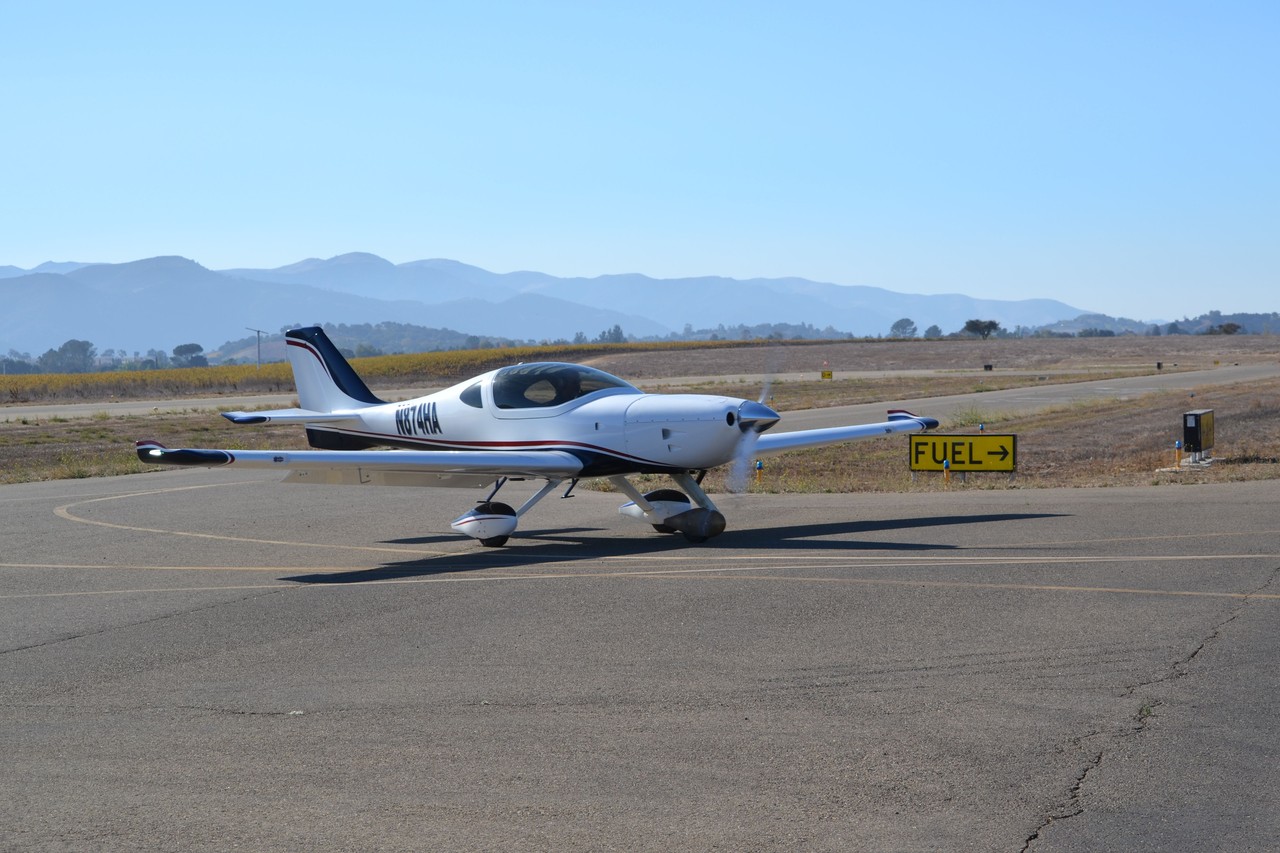
Design and Development
The Lightning LS-1 originated from the collaborative efforts of designers Pete Krotje, Ben Krotje, and Nick Otterback, who established Arion Aircraft LLC in 2004 specifically to bring their high-performance light aircraft concept to market. Their design philosophy centered on creating a fast, composite LSA that could deliver exceptional performance while maintaining reasonable construction costs and build times. The team initially targeted a 600-hour assembly period for kit builders, significantly shorter than many comparable aircraft.
Development proceeded rapidly from conception to flight test. The designers conducted extensive component testing throughout 2005, including critical load testing of the wing structure and various system evaluations. The prototype aircraft, registered as N233AL, successfully completed its maiden flight on March 3, 2006, from the company's hangar facility in Neenah, Wisconsin.
Certification and Production
Arion Aircraft initially offered the Lightning as an experimental amateur-built kit beginning in 2006. However, recognizing market demand for a certified aircraft, the company pursued Special Light-Sport Aircraft certification, which required significant modifications to meet regulatory requirements. The most substantial change involved extending the wingspan to reduce stall speeds to LSA-compliant levels and restricting the powerplant to fixed-pitch propeller configurations.
The LS-1 achieved S-LSA certification on April 15, 2009, following rigorous testing that included flutter trials exceeding 270 mph true airspeed and emergency scenarios including simulated bird strikes with subsequent glide testing. Production expanded steadily, with approximately 150 units completed by 2012 across both kit and certified variants.
Technical Excellence
The Lightning LS-1 showcases advanced composite construction throughout its airframe, contributing to both structural efficiency and aerodynamic cleanliness. The aircraft's low-wing configuration houses a wing area of 91 to 103 square feet, depending on variant, generating impressive performance metrics within LSA weight restrictions.
Powering the LS-1 is the Australian-manufactured Jabiru 3300, a six-cylinder, four-stroke engine producing 120 horsepower. This powerplant enables the aircraft to achieve a maximum cruise speed of 120 knots at 75 percent power while consuming just 4.5 gallons per hour. The engine's reliability and fuel efficiency made it an ideal match for the Lightning's performance-oriented mission profile.
Performance Capabilities
The LS-1's performance specifications place it among the fastest aircraft in the LSA category. With a never-exceed speed of 180 knots and an initial climb rate of 1,800 feet per minute, the Lightning delivers capabilities more typical of traditional general aviation aircraft. The type demonstrates a stall speed of 44 knots clean and 38 knots in landing configuration, providing reasonable approach speeds despite its high-performance nature.
Operational range reaches 700 statute miles with standard 22-gallon fuel capacity, extendable to greater distances with optional 30-gallon tanks. Takeoff performance requires just 275 feet of runway, while landing roll extends to 350 feet, making the aircraft suitable for shorter airfields while maintaining its speed advantage.
Notable Achievements
The Lightning gained national attention in 2007 when pilot Earl Ferguson established a speed record for piston-engine landplanes in the 1,102 to 2,205-pound weight category during a transcontinental flight from Savannah to San Diego. This achievement demonstrated the type's real-world performance capabilities and helped establish its reputation within the sport aviation community.
Manufacturing and Legacy
Arion Aircraft successfully navigated FAA certification audits in April 2012, validating their manufacturing processes and quality control systems. The company has delivered over 170 kits to customers in seven countries, with more than 120 aircraft reported as completed and flying by the mid-2010s. Production has continued into the 2020s, with aircraft bearing serial numbers into the 190s incorporating fourth-generation improvements.
The Lightning's impact on light-sport aviation extends beyond raw performance numbers. As one of the first high-speed composite LSAs to achieve certification, it demonstrated that the light-sport category could accommodate sophisticated aircraft designs previously reserved for experimental or traditional certified categories. The type's success helped establish performance benchmarks that influenced subsequent LSA development across the industry.
Current Operations
Today, Lightning aircraft serve primarily private owners and sport aviation enthusiasts who prioritize performance over training suitability. The type's 43-inch cabin width provides reasonable comfort for two occupants, while 50 pounds of baggage capacity accommodates typical recreational flying missions. The aircraft's 495-pound useful load allows for two average adults with fuel for extended cross-country flights, making it particularly attractive for pilots seeking efficient transportation rather than basic recreational flying.