
Service History
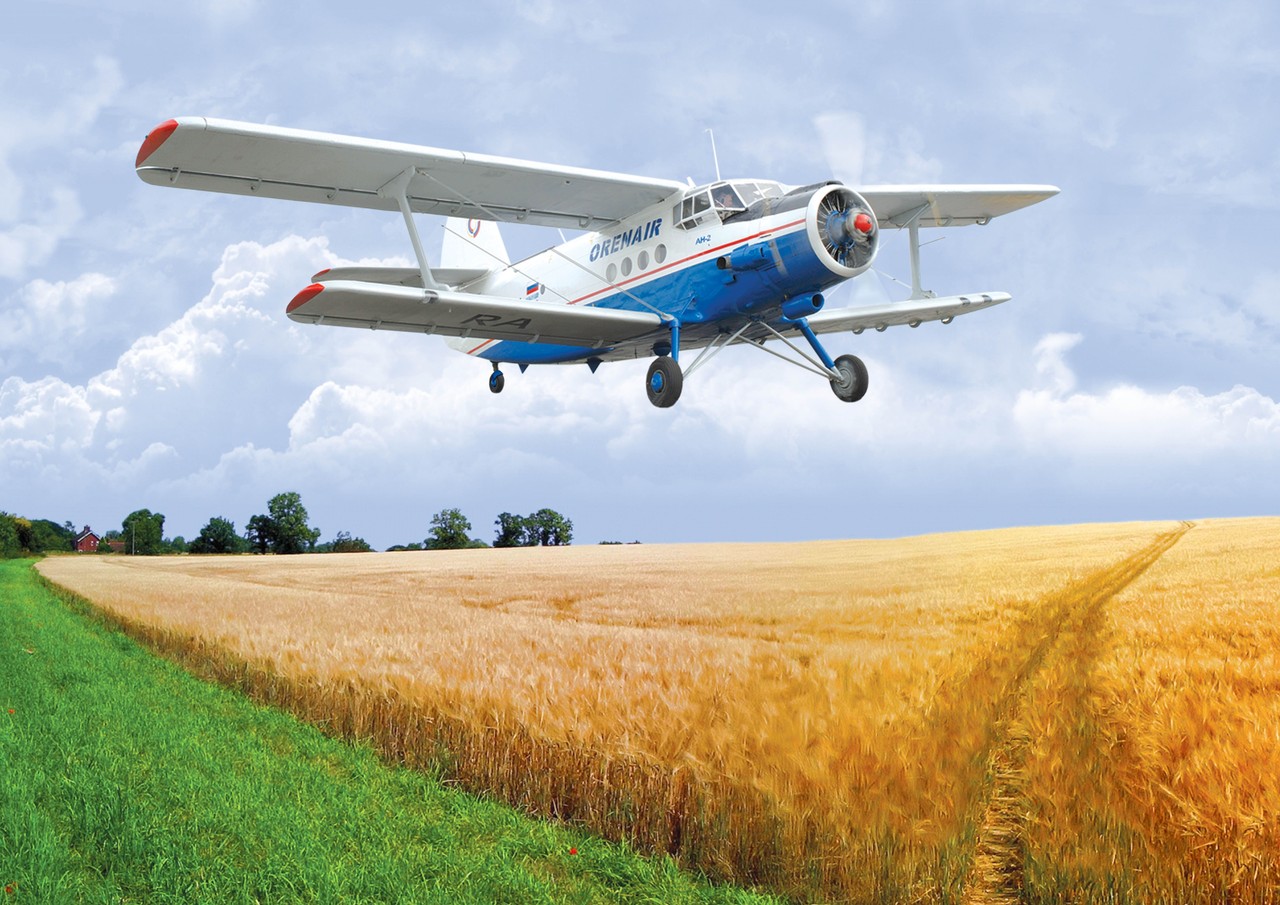
The An-2 achieved unprecedented longevity in aviation history, earning recognition in the Guinness Book of World Records for its 45-year production run from 1947 to 2001. Over 18,000 aircraft were constructed across three countries, with Poland's WSK factory in Mielec producing the majority—more than 11,915 units between 1960 and 1991. As of 2015, thousands remained operational worldwide, including over 1,500 in Russia, 294 in Kazakhstan, and 54 in Ukraine, testament to the design's exceptional durability.
Originally conceived to replace the aging Polikarpov Po-2 in agricultural roles, the An-2 expanded far beyond its intended mission. The aircraft served in transportation, search-and-rescue operations, forestry work, geographical surveys, fire bombing, and scientific research. Its versatility made it indispensable across the Warsaw Pact nations and beyond, with operators appreciating its ability to operate from unprepared airstrips and carry substantial payloads.
Military Service
While designed for civilian utility, the An-2 found widespread military adoption, earning the NATO reporting name "Colt" and USAF designation "Type 22." Military variants could transport 12 fully-equipped paratroopers or equivalent cargo loads, making them valuable for supply missions to remote locations. The aircraft's robust construction and simple maintenance requirements proved ideal for military operators in challenging environments.
The Manufacturer
The Antonov Design Bureau, designated OKB-153, was established under the leadership of Oleg K. Antonov in Kiev, Ukraine. The An-2 represented the bureau's inaugural design, launching what would become one of the Soviet Union's most successful aircraft manufacturers. Initial production began at State Factory 473 in Kiev, where approximately 5,000 units were completed by 1960. After 1965, production of the improved An-2M variant shifted to State Factory 464 at Dolgoprudniy in the Russian SFSR.
Antonov's design philosophy emphasized practical utility over sophistication, creating aircraft that could operate reliably in harsh conditions with minimal support infrastructure. This approach proved prescient, as the An-2's simple yet effective design outlasted many more complex contemporary aircraft.
Engine & Technical Innovation
The production An-2 was powered by the proven Shvetsov ASh-62, a nine-cylinder air-cooled radial engine producing 1,000 horsepower. This powerplant, an evolution from the original prototype's ASh-21 engine, provided the reliability and power necessary for the aircraft's diverse mission requirements. The engine's robust construction matched the airframe's durability, contributing significantly to the type's longevity.
The second prototype's engine upgrade increased payload capacity from 1,300 to 2,140 kilograms (2,870 to 4,720 pounds), a substantial improvement that enhanced the aircraft's commercial viability. Agricultural variants featured specialized equipment including 2,000-liter hoppers for crop dusting and spraying operations.
Design Philosophy and Performance
Antonov's team created an aircraft that prioritized functionality over speed, emphasizing short takeoff and landing capabilities essential for operations from primitive airstrips. The biplane configuration, considered antiquated by 1947 standards, actually provided superior lift characteristics at low speeds and enhanced structural strength for heavy cargo operations.
The An-2's fabric-covered wings and straightforward systems made field maintenance feasible with basic tools and supplies. This design philosophy proved particularly valuable in remote locations where sophisticated repair facilities were unavailable.
International Production and Variants
China began licensed production in 1956, manufacturing the aircraft as the Shijiazhuang Y-5, with small-scale production continuing into the modern era. Limited post-Soviet production occurred between 1993 and 2001, including a final batch of four aircraft delivered to Vietnam in 2001, marking the end of original An-2 production.
Modern variants have emerged to extend the design's relevance. The SibNIA TVS-2-DT, first flown on June 10, 2015, features composite wings without traditional bracing struts or wires. The TVS-2-DTS variant adds an all-composite fuselage, with production planned at Ulan-Ude Aviation Plant to deliver at least 200 aircraft between 2021 and 2025.
Legacy and Cultural Impact
The An-2 earned affectionate nicknames including "Annushka," "Kukuruznik," and "The Fat Cat," reflecting its beloved status among pilots and aviation enthusiasts. In September 2024, Vladimir Putin ordered the UZGA LMS-901 Baikal into production as a replacement, though engine certification delays mean the An-2 will continue serving for years to come.
Aviation experts predict that "gainfully employed An-2s will still be chugging along at 100 years old," a testament to Oleg Antonov's enduring design philosophy that prioritized utility, durability, and operational simplicity over technological complexity.