
Development and Design Philosophy
General Designer Oleg Antonov maintained an unwavering commitment to improving his design bureau's first aircraft, the An-2, throughout his career. By the mid-1960s, the need for a more modern powerplant to replace the An-2's aging radial engine became apparent, though it would take nearly fifteen years before the Soviet Union developed the necessary turbine technology.
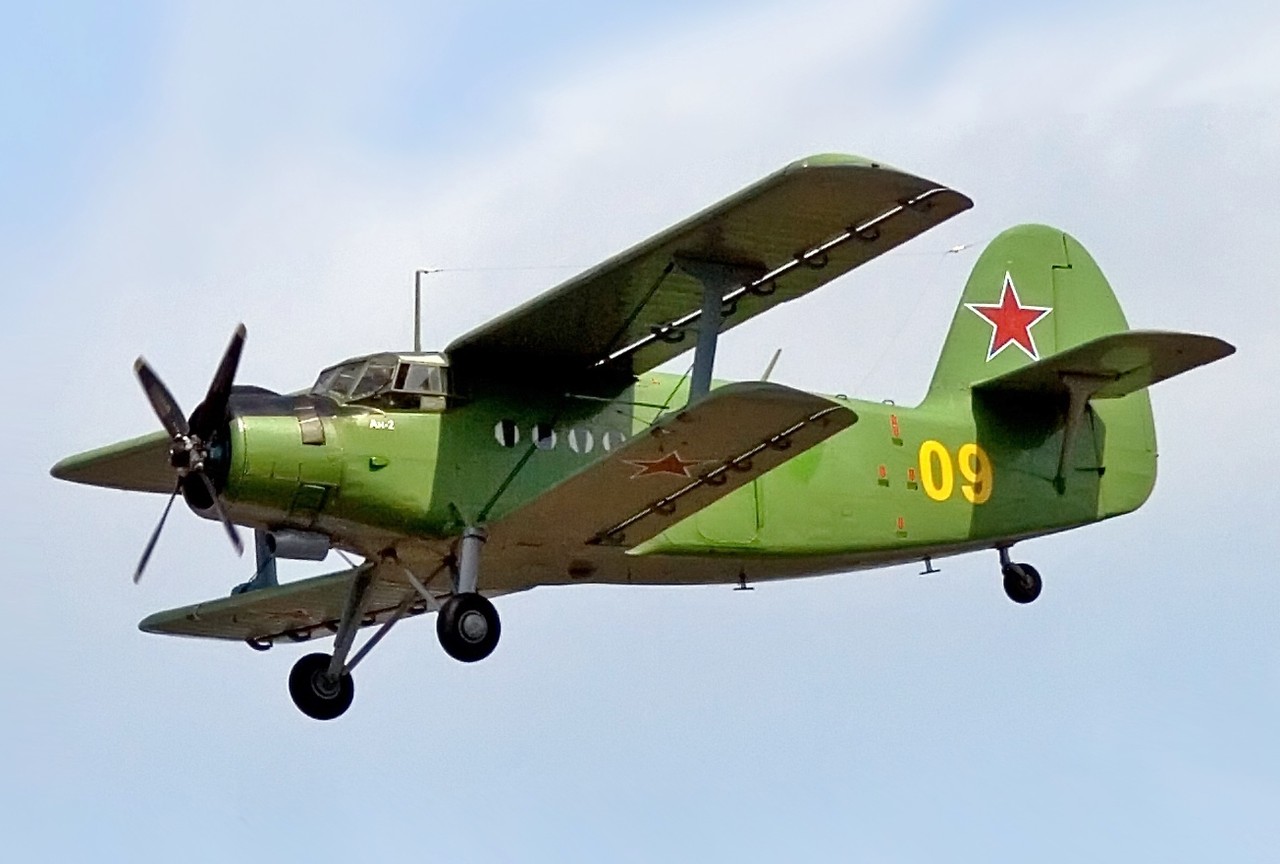
The An-3 prototype emerged from a converted production An-2 at Gostomel, equipped with the experimental TVD-20 turboprop engine developed by Omsk-based Design Bureau 29. This engine upgrade increased power output from 1,010 horsepower to 1,375 shaft horsepower, transforming the aircraft's performance characteristics while maintaining the proven biplane configuration.
Technical Modifications and Performance
Beyond the engine replacement, Antonov engineers implemented numerous improvements to modernize the aircraft. The nose section required complete redesign to accommodate the turboprop powerplant, while the fuselage received an additional door insert on the port side. Cockpit ergonomics were significantly enhanced, and new navigation equipment and warning systems were installed.
Performance improvements over the An-2 were substantial. Maximum speed increased from 185 to 255 kilometers per hour, while range extended from 900 to 1,230 kilometers. The aircraft maintained similar dimensions to its predecessor, measuring 14 meters in length with an 18.18-meter upper wingspan, but maximum takeoff weight increased to 5,800 kilograms.
Production Challenges and Limited Success
Serial production faced immediate obstacles when the TVD-20 engine program encountered difficulties. Production of the powerplant was never fully established during the Soviet era, leaving the An-3 program in limbo with incomplete testing and reliability issues. When production finally commenced in the 1990s, Polyot State Aerospace Enterprise assumed responsibility for manufacturing and sales.
Small-scale production of both the aircraft and engine was established at facilities in Omsk, with the Baranov Aircraft Manufacturing Plant handling engine production while Omsk PA "Flight" managed aircraft conversion. However, the TVD-20 remained problematic throughout the production run, contributing significantly to the aircraft's commercial difficulties.
Variants and Applications
Despite production limitations, Antonov developed three specialized variants based on the standard transport configuration. The An-3TK served cargo and passenger transport roles, while the An-3SH was configured for agricultural applications. The An-3P variant was designed specifically for forest firefighting operations, though market demand for specialized agricultural aircraft had diminished by the time production began.
The most successful variant proved to be the An-3T, a multipurpose configuration that completed certification testing in August 2000. This version addressed broader market needs beyond specialized applications, though commercial adoption remained limited.
The Antonov Design Bureau Legacy
Founded in 1946 under Oleg Antonov's leadership, the design bureau established its reputation producing military transport aircraft during the Soviet era. After relocating headquarters to Kyiv, Ukraine, Antonov continued developing iterations of proven designs rather than pursuing entirely new aircraft concepts.
The An-3 exemplified this evolutionary approach, applying modern technology to a fundamentally sound airframe design. While the bureau achieved international recognition for larger transport aircraft, the An-3 represented their commitment to serving smaller aviation markets.
Commercial Reality and Economic Factors
The An-3's high operational costs proved prohibitive for most potential operators. Regional airlines operating on tight budgets found the aircraft too expensive compared to alternatives, severely limiting market penetration. Production economics also worked against the program, with specialized components and limited production runs driving unit costs upward.
Only 25 aircraft were completed during the production run from 1990 through the early 2000s, making the An-3 one of the least numerous Soviet-designed aircraft to enter serial production. This limited production reflected both technical challenges with the powerplant and unfavorable market conditions.
Current Status and Continued Innovation
Approximately 25 An-3 aircraft remain in service today, though specific operator details are limited. The aircraft's unique status as a turbine-powered biplane ensures continued interest from aviation enthusiasts and specialized operators requiring its particular capabilities.
Antonov's commitment to An-2 modernization continued beyond the An-3 program. In 2017, the company conducted test flights of the An-2-100 variant, powered by an MS-14 turboprop engine producing 1,500 shaft horsepower. This newer powerplant operates on aviation kerosene rather than gasoline, offering improved cost-effectiveness and addressing some economic concerns that limited the An-3's commercial success.
The An-3 remains a unique chapter in aviation history, representing one of the few successful applications of turbine power to a biplane configuration while demonstrating both the possibilities and limitations of modernizing proven aircraft designs.