
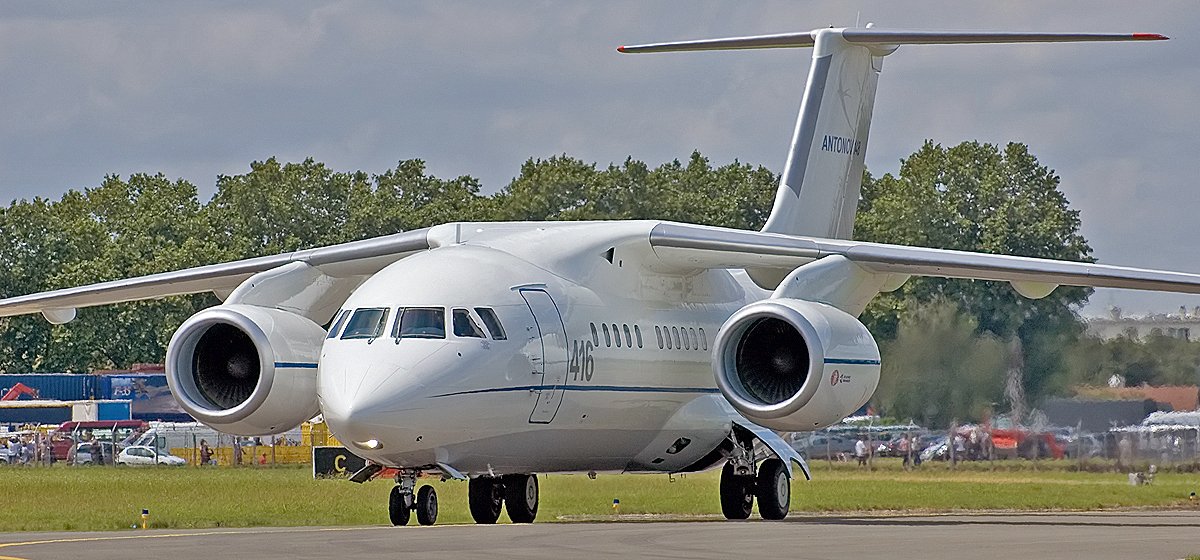
Arctic Operations Pioneer
The An-74 emerged from a specific Soviet requirement for an aircraft capable of operating in the harshest climates on Earth, from the Antarctic ice sheets to North Pole research stations. Originally designated "An-72A Arctic," the aircraft was designed to function in temperatures ranging from −60 to 45 °C while maintaining reliable cargo and passenger transport capabilities. The prototype's maiden flight on September 29, 1983, with test pilots Sergey A. Gorbik and V.A. Shlyakov at the controls, marked the beginning of a specialized transport aircraft that would serve remote operations for decades.
The Antonov Design Bureau Legacy
The Antonov Design Bureau (ANTK Antonov), originally established as a Soviet state enterprise, created the An-74 as part of their broader An-72/An-74 family development program that began in the 1970s. The design bureau's innovative approach to short-field performance resulted in the aircraft's most distinctive feature: engines mounted high above the wing to direct exhaust flow over the trailing edge control surfaces, significantly enhancing low-speed handling characteristics. This configuration earned the aircraft the affectionate nickname "Cheburashka" among Soviet pilots, referencing the large engine intake ducts that resembled the oversized ears of a popular animated character.
Engineering Innovation
Powered by two Lotarev D-36 series turbofan engines, each producing 63.9 kN of thrust, the An-74 demonstrated exceptional short takeoff and landing capabilities that conventional transport aircraft could not match. The high-mounted engine configuration was not merely aesthetic but served a critical aerodynamic purpose, allowing the aircraft to operate from unprepared airstrips including concrete, pebble, ice, and snow surfaces. Early flight testing revealed that pilots found the aircraft "a pleasure to fly," praising its modern flight instrumentation and surprisingly low noise levels despite its rugged operational envelope.
Service Record and Capabilities
The An-74's operational capabilities were proven through demanding real-world missions, including the notable evacuation of Arctic research station SP-32's crew on March 6, 2004. With a maximum speed of 700 km/h and cruise speed of 550-600 km/h, the aircraft could transport its 10-tonne cargo load over distances up to 4,325 km while maintaining a service ceiling of 10,100 meters. The aircraft's crew of 4-5 members operated sophisticated systems designed to function reliably in extreme conditions where equipment failure could prove fatal.
Production and Variants
All production An-74 aircraft were manufactured at the Kharkiv State Aircraft Production Plant in Ukraine, with an estimated 160-250 total aircraft built across all An-72/An-74 variants since production began in the mid-1980s. The first series production aircraft flew in December 1985, establishing a manufacturing program that continued into the 21st century. A small number of additional aircraft were assembled at an Omsk facility using component kits supplied from Kharkiv. The An-74TK-200 variant, developed in 1995, represented a passenger-focused configuration capable of carrying 52 passengers or maintaining the standard 10-tonne cargo capacity over 800-kilometer routes.
Operational Impact
Aeroflot expressed significant interest in the An-74 for serving remote Soviet northern territories and Far East locations where conventional aircraft could not operate reliably. The aircraft's ability to function on low-grade airstrips opened previously inaccessible regions to regular transport service, supporting everything from scientific research stations to remote industrial facilities. By January 1, 2006, twenty-three of thirty aircraft registered in Russia remained in active operation, demonstrating the type's operational longevity and continued relevance.
Technical Excellence
The An-74's design success stemmed from its specialized engineering approach that prioritized reliability and versatility over pure performance metrics. Its STOL capabilities, combined with robust construction and redundant systems, created an aircraft uniquely suited for operations where failure was not an option. The aircraft represented a significant achievement in Soviet aerospace engineering, demonstrating that specialized design could create new operational capabilities rather than simply improving existing performance parameters.