
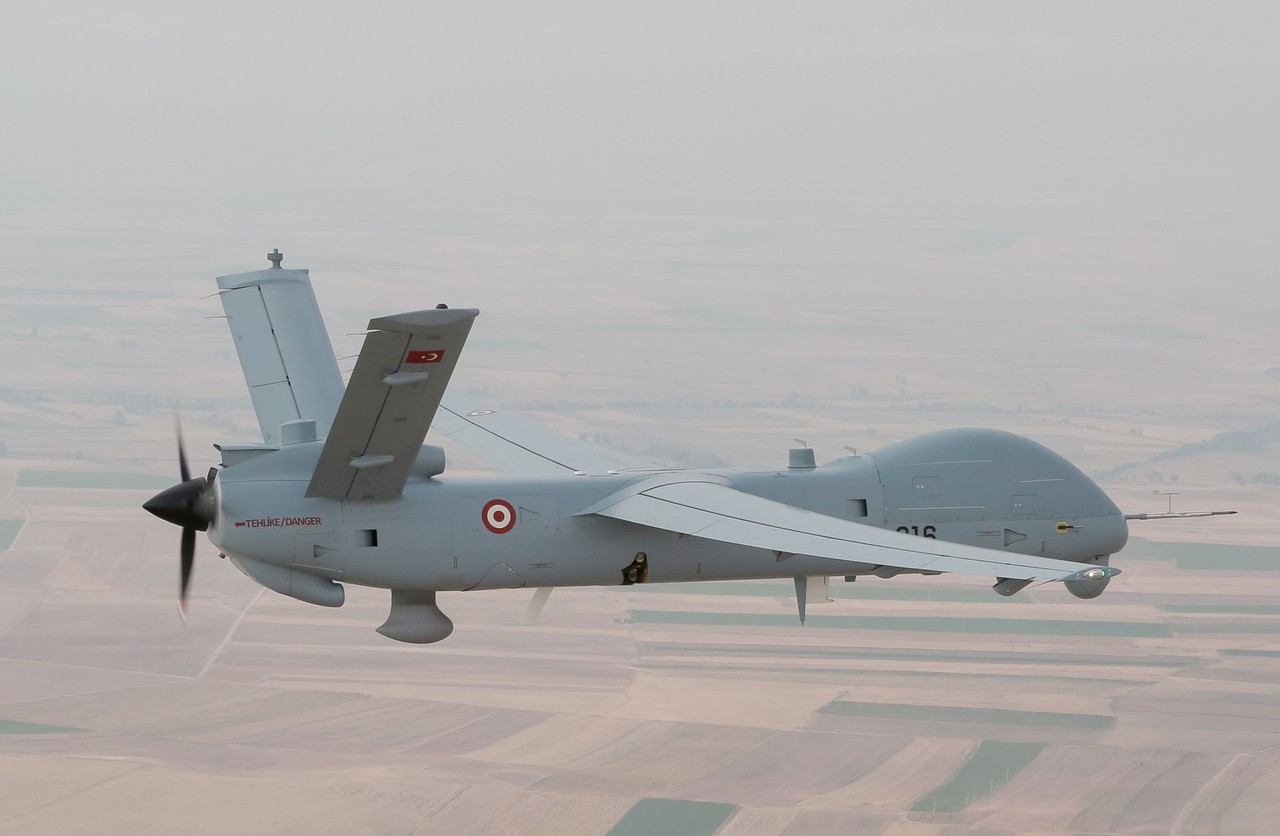
Service History
The Anka entered Turkish Air Force service in 2012, marking Turkey's transition from dependency on foreign drone technology to indigenous capabilities. The Turkish military initially ordered 60 units in 2012, with the service receiving 10 Anka-S variants by 2017 and 22 Anka-B units by 2018. Over 100 units have been produced across all variants, demonstrating the platform's operational success. The drone has been extensively used in counter-terrorism operations and border surveillance missions along Turkey's challenging frontiers.
Operational Variants
The Anka family evolved through several distinct variants tailored to specific mission requirements. The baseline Anka-A focused on reconnaissance missions, while the Anka +A introduced armed capabilities for precision strike operations. The Anka Block B, which first flew in 2014 and completed testing in 2015, featured enhanced high-definition cameras and encrypted communication links while maintaining an unarmed configuration. The most advanced Anka-S variant, entering service in 2017, incorporated improved range and altitude performance along with expanded weapons capacity.
The Manufacturer
Turkish Aerospace Industries traces its origins to Turkey's aerospace ambitions beginning in 1979 with licensed production of the Sikorsky UH-60 Black Hawk. TAI launched the Anka development program in 2004 as part of Turkey's strategic goal to achieve defense industry independence. The company continues operations today, simultaneously developing advanced programs including the TAI Kaan fighter jet projected for 2028 and the larger TAI Aksungur UAV that entered service in 2021.
Engine & Technical Innovation
The Anka-A employs a single Thielert Centurion 2.0 turbodiesel engine producing 155 horsepower through a turbocharged four-cylinder configuration. This German-manufactured powerplant drives a three-bladed propeller in pusher configuration, enabling the distinctive clean nose design optimized for sensor installations. The diesel engine selection provided exceptional fuel efficiency crucial for the 24-hour endurance requirement while operating at the 126 mph cruise speed that balances efficiency with operational capability.
Performance Characteristics
The Anka measures 26 feet in length with an 11-foot height, dimensions that accommodate substantial internal fuel capacity and modular payload bays. Maximum speed reaches 135 mph, though typical operations occur at the more efficient 126 mph cruise speed. The operational radius extends 124 miles from ground control stations, while satellite communication links in later variants enable global operations. The 29,987-foot service ceiling provides standoff capability above most small arms and many surface-to-air missile systems.
International Success
Tunisia became the first international Anka operator in January 2021, validating the platform's export potential. Kazakhstan subsequently acquired three units in 2023, expanding the Anka's operational footprint into Central Asia. These international sales represent significant milestones for Turkish defense exports and demonstrate confidence in the platform's operational effectiveness beyond its home nation.
Production & Legacy
Serial production commenced in November 2013 following successful development testing, with Anka-S production continuing through 2018 and beyond. Manufacturing occurs at TAI facilities within Turkey, supporting the nation's defense industrial base development goals. The program represents Turkey's successful transition from defense technology importer to exporter, with the Anka serving as a technological foundation for subsequent UAV developments including the larger Aksungur and advanced Anka-3 stealth variant.
The Anka's modular design philosophy influenced Turkish aerospace thinking, enabling rapid variant development for diverse mission requirements. This approach allowed Turkey to field reconnaissance, surveillance, and strike capabilities using common training, logistics, and operational procedures. The platform's success provided operational experience that informed development of larger, more capable systems while establishing Turkey as a credible competitor in the international UAV market.