
Service History
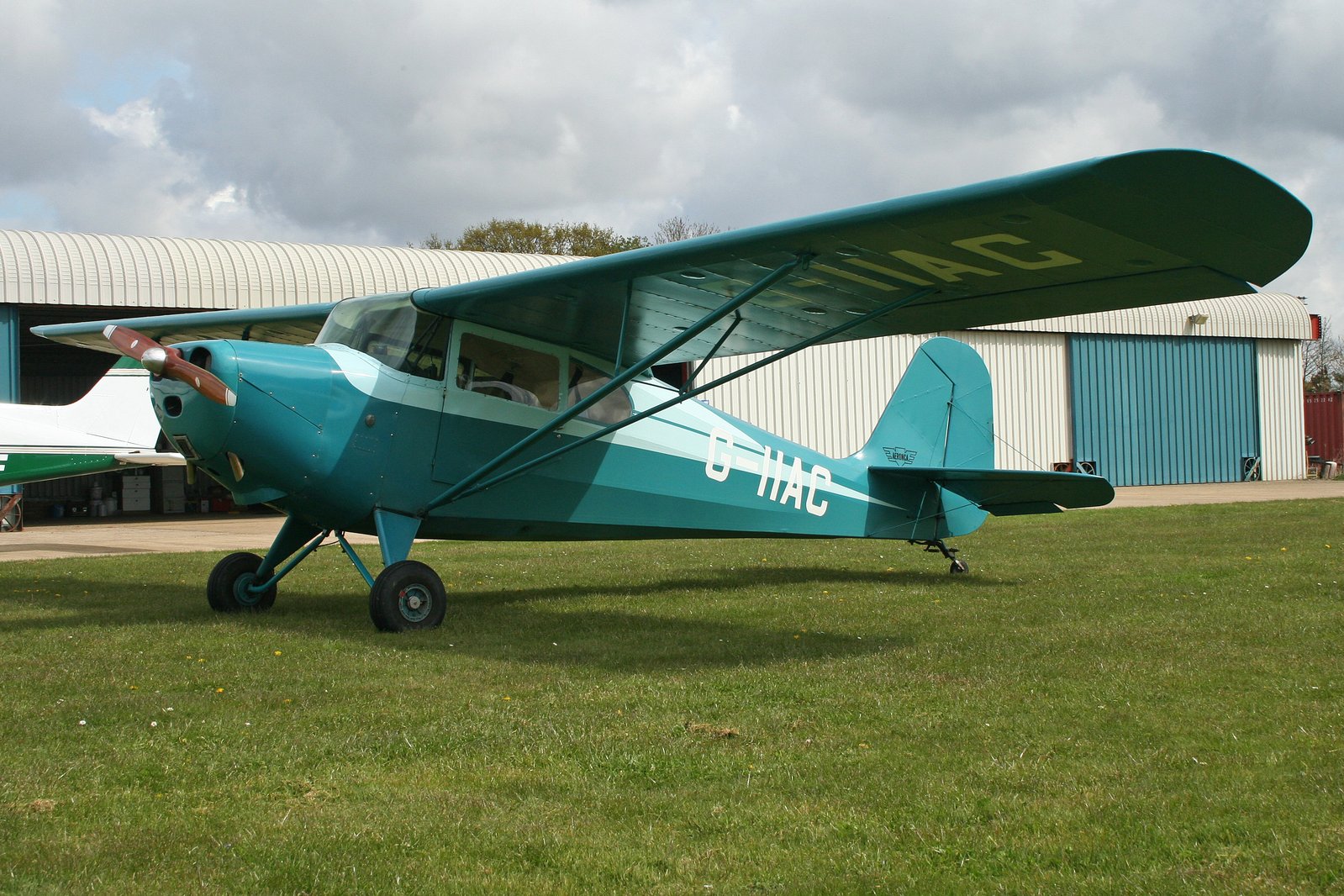
The Aeronca 50 Chief entered service during the golden age of American general aviation, when manufacturers were racing to meet growing demand for personal aircraft. The 50C Chief, powered by the reliable Continental A-50 engine, represented the bulk of production with 248 aircraft delivered. Additional variants included the 50F Chief with Franklin 4AC-150 engines (36-40 built), the 50L Chief with Lycoming O-145-A1 engines (65 built), and the cowled 50LA Chief (20 built). A single experimental 50M Chief was fitted with a Menasco M-50 engine.
The aircraft gained national attention on November 29-30, 1938, when an Aeronca 50C Chief completed the first non-stop flight by a light aircraft between Los Angeles and New York City. Covering 2,785 miles in 30 hours and 47 minutes at an average speed of 90 mph, the flight demonstrated the aircraft's reliability and efficiency, achieving an impressive fuel cost of approximately one cent per mile.
The Manufacturer
Aeronca Aircraft Company operated as a major force in American light aviation from 1923 through 1951, producing 17,408 total aircraft during its 28-year span. During the company's peak postwar years from 1945 to 1950, Aeronca achieved remarkable production rates of 50 aircraft per day. Beyond the Chief family, the company manufactured the successful Champion series beginning in 1944, and contributed significantly to military aviation with over 1,400 O-58/L-3 Grasshopper observation aircraft during World War II.
The company ceased light aircraft production in 1951, marking the end of an era for one of America's most prolific general aviation manufacturers. Aeronca's legacy continued through aircraft like the Champion, which evolved into the Citabria and influenced trainer aircraft development worldwide.
Engine & Technical Details
The 50 Chief featured a strut-braced high-wing design with fully enclosed cockpit, representing a significant advancement over earlier open-cockpit models. The primary 50C variant was powered by the Continental A-50, a 50-horsepower air-cooled flat-four piston engine that provided reliable performance for the aircraft's intended role as a personal and training aircraft.
The aircraft's fabric-covered construction kept weight and costs down while providing adequate performance for civilian operations. The side-by-side seating configuration made it popular for flight training and personal transportation, offering better communication between occupants compared to tandem-seat alternatives.
Wartime Service
While the 50 Chief itself saw limited military service, the broader Chief family became essential to World War II operations. The larger 65C Chief variant was impressed into military service and redesignated as the O-58/L-3 Grasshopper, with more than 1,400 aircraft serving in all theaters of World War II. Military variants included the L-3B (875 built) and L-3C (499 built), which performed observation and liaison duties for the U.S. Army.
Aeronca also contributed to military training efforts by manufacturing TG-5 gliders, with 253 delivered to the U.S. Army Air Forces. This military connection helped establish the company's reputation for producing reliable, cost-effective aircraft.
Production & Legacy
The 50 Chief formed part of the larger Chief family that saw over 2,800 aircraft produced across all variants. Production continued through early 1942 when wartime priorities shifted manufacturing focus. The aircraft's success paved the way for postwar developments, including the 7AC Champion (7,200 built) and the 11AC Chief (1,862 built).
The Chief's influence extended internationally when the design served as the basis for the Hindustan Aeronautics HAL-26 Pushpak trainer in India in 1958. The Champion lineage continued through the 1950s revival as the Champion Citabria, which later became the Bellanca Citabria, demonstrating the enduring appeal of the original Chief design philosophy.
Today, surviving Aeronca 50 Chiefs remain popular among vintage aircraft enthusiasts, valued for their simple construction, reliable operation, and historical significance as representatives of America's pre-war general aviation boom. The aircraft's role in establishing transcontinental light aircraft capabilities and its contribution to pilot training during aviation's formative years secure its place in American aviation history.