
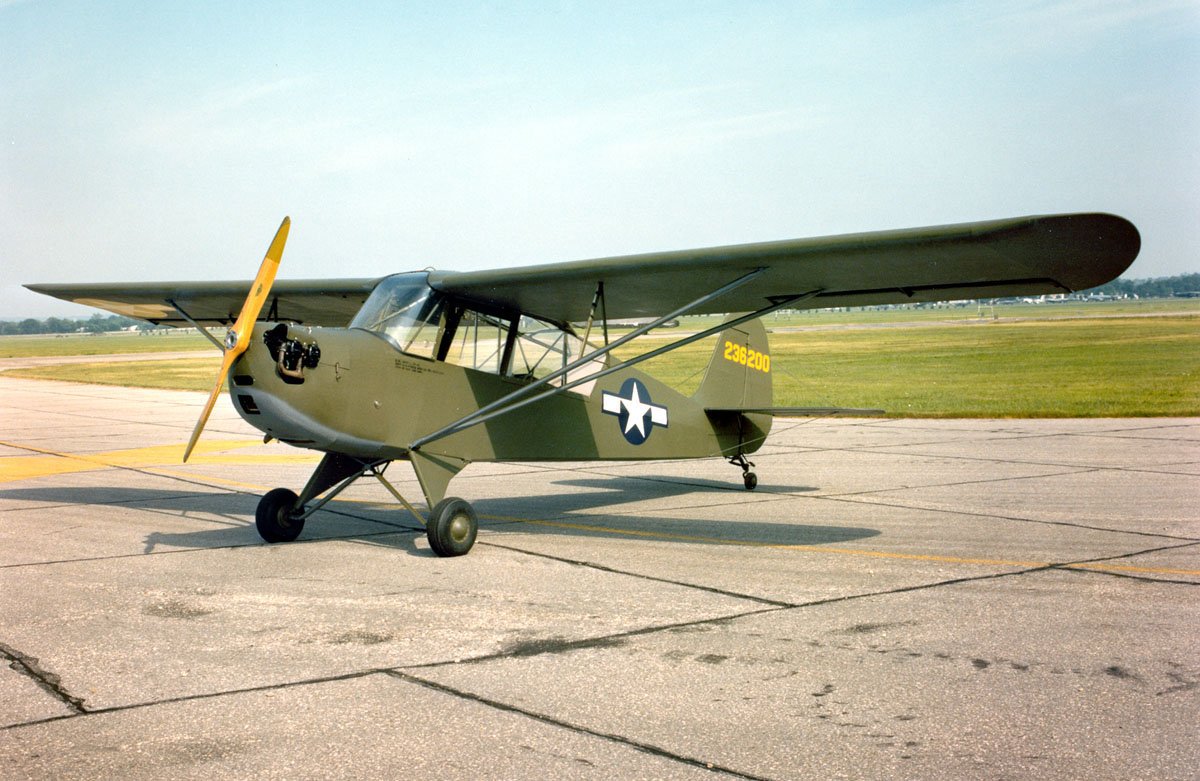
Development and Design
The Aeronca 60 Tandem emerged during the post-World War II aviation boom when the Aeronca Manufacturing Corporation sought to capitalize on the growing demand for civilian training aircraft. Building upon their successful Chief family of aircraft, Aeronca engineers developed the 60 Tandem specifically for flight training schools and private owners who required an economical two-seat aircraft with tandem seating arrangement.
The aircraft's high-wing configuration provided inherent stability characteristics that made it particularly suitable for student pilots. The tandem seating arrangement, with the instructor positioned in the rear seat, allowed for optimal training conditions with unobstructed forward visibility from both positions. This design philosophy aligned with Aeronca's reputation for producing forgiving, easy-to-fly aircraft that served as stepping stones for aspiring aviators.
The Aeronca Manufacturing Corporation
Founded in 1928 in Cincinnati, Ohio, the Aeronca Manufacturing Corporation relocated to Middletown, Ohio, where it established itself as a leading producer of light aircraft. The company name derived from "Aeronautical Corporation of America," and throughout the 1930s and 1940s, Aeronca built a reputation for affordable, reliable general aviation aircraft.
During World War II, Aeronca contributed to the war effort by manufacturing components for military aircraft and producing the L-3 Grasshopper for the U.S. Army Air Forces. This military production experience enhanced the company's manufacturing capabilities and quality control processes, benefits that carried over into their post-war civilian aircraft production.
The company's Chief family of aircraft, which included various models throughout the 1940s and 1950s, represented Aeronca's core product line. These aircraft shared similar design philosophies emphasizing simplicity, affordability, and ease of maintenance – characteristics that made them popular among flying clubs, flight schools, and private owners across America.
Engine and Technical Specifications
The Aeronca 60 Tandem was powered by a Continental A-65 engine, a four-cylinder, air-cooled, horizontally-opposed powerplant that produced 65 horsepower at 2,300 RPM. This engine choice reflected the era's emphasis on reliable, proven powerplants that offered reasonable performance while maintaining low operating costs.
The aircraft's fabric-covered steel tube fuselage construction represented standard practice for light aircraft of the period. This construction method provided adequate strength while keeping manufacturing costs manageable. The high-wing design incorporated external wing struts, a configuration that simplified construction and maintenance while providing the structural integrity necessary for training operations.
With its relatively low wing loading and modest power requirements, the 60 Tandem could operate from short, unpaved airstrips common at smaller airports and flying clubs throughout rural America. This versatility proved essential for flight training operations, which often required access to less developed airports where operating costs remained affordable for students.
Operational History and Service
The Aeronca 60 Tandem found its primary role in civilian flight training during the late 1940s and early 1950s. Veterans returning from World War II, many with military flight experience, created unprecedented demand for civilian pilot training. The G.I. Bill provided funding for flight training, and aircraft like the 60 Tandem served as the backbone of this educational expansion.
Flight training schools across the United States incorporated the 60 Tandem into their fleets, appreciating its docile handling characteristics and economical operation. The tandem seating arrangement proved particularly effective for primary flight instruction, allowing instructors to maintain control while providing students with realistic flying experience.
Private owners also embraced the 60 Tandem for recreational flying and personal transportation. Its modest fuel consumption and straightforward maintenance requirements made it accessible to middle-class Americans who sought to participate in the growing general aviation movement of the post-war era.
Performance and Pilot Experience
Pilots praised the Aeronca 60 Tandem for its predictable flight characteristics and forgiving nature. The aircraft typically cruised at approximately 90 miles per hour, with a service ceiling of around 12,000 feet and a range of roughly 300 miles. While these performance figures were modest compared to more powerful aircraft, they proved entirely adequate for training missions and local recreational flying.
The aircraft's light control forces and stable flight characteristics made it particularly suitable for novice pilots. Its tendency toward stability rather than performance meant that student pilots could focus on learning fundamental flying skills without being overwhelmed by complex aircraft behavior.
Landing characteristics were particularly benign, with a stall speed of approximately 38 miles per hour that provided comfortable margins for student pilots learning approach and landing procedures. The main landing gear's wide stance contributed to ground handling stability, reducing the likelihood of ground loops that plagued some tailwheel aircraft of the era.
Production and Legacy
Aeronca's production of the 60 Tandem remained limited compared to their more popular Chief models, with manufacturing ceasing in the early 1950s as the post-war aviation boom subsided. The aircraft represented one of the final designs from Aeronca's classic era before the company shifted focus toward different market segments.
Today, surviving examples of the Aeronca 60 Tandem are considered collectible aircraft among vintage aviation enthusiasts. Their simple construction and availability of parts through specialized suppliers have enabled many examples to remain airworthy, serving as reminders of an era when flight training relied on basic, honest aircraft that taught fundamental flying skills without electronic aids or complex systems.