
Design and Development
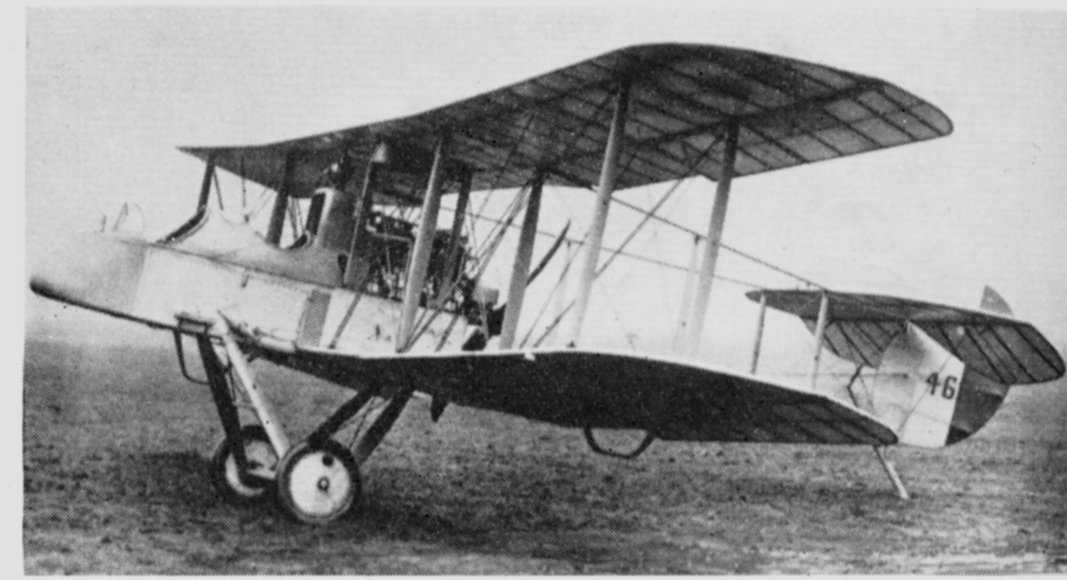
The Airco DH.1 was designed by Geoffrey de Havilland for the Aircraft Manufacturing Company (Airco) during the early stages of the First World War. Conceived as a two-seat biplane, the aircraft utilized a pusher configuration, placing the engine and propeller behind the crew nacelle. This specific layout was an early attempt to enable forward-firing armament without the technical challenge of firing through a propeller, a design philosophy that would later be refined in the single-seat Airco DH.2.
Production History
The prototype DH.1 first flew in January 1915. Following this initial flight, an order for 49 aircraft was placed. While the aircraft was designed by Airco, the company was already occupied with subsequent designs, leading the main series production to be outsourced to Savage Brothers of King’s Lynn in Norfolk, England. Savage Brothers had no prior experience in aircraft construction before undertaking this project. Due to sparse primary records, the exact total number of airframes completed and delivered remains undocumented, though the initial order of 49 is verified.
Military Service
The Airco DH.1 entered service with the Royal Flying Corps (RFC) in the summer of 1915, operating primarily as an armed reconnaissance and general-purpose aircraft. Its frontline service on the Western Front was relatively brief, as it was replaced by the single-seat DH.2 in February 1916. However, some variants continued to serve in other theaters; specifically, the DH.1A was utilized by No. 14 Squadron in Palestine as late as the autumn of 1916.
Legacy
Though it had a short operational lifespan and limited production, the DH.1 is historically significant as a transitional design. It established the developmental path for Geoffrey de Havilland's subsequent pusher fighters, which were instrumental in countering the Fokker Eindeckers. The aircraft also illustrates the rapid industrial expansion of the British aviation sector, as evidenced by the involvement of non-aviation firms like Savage Brothers in wartime production.