
Manufacturing History and Corporate Struggles
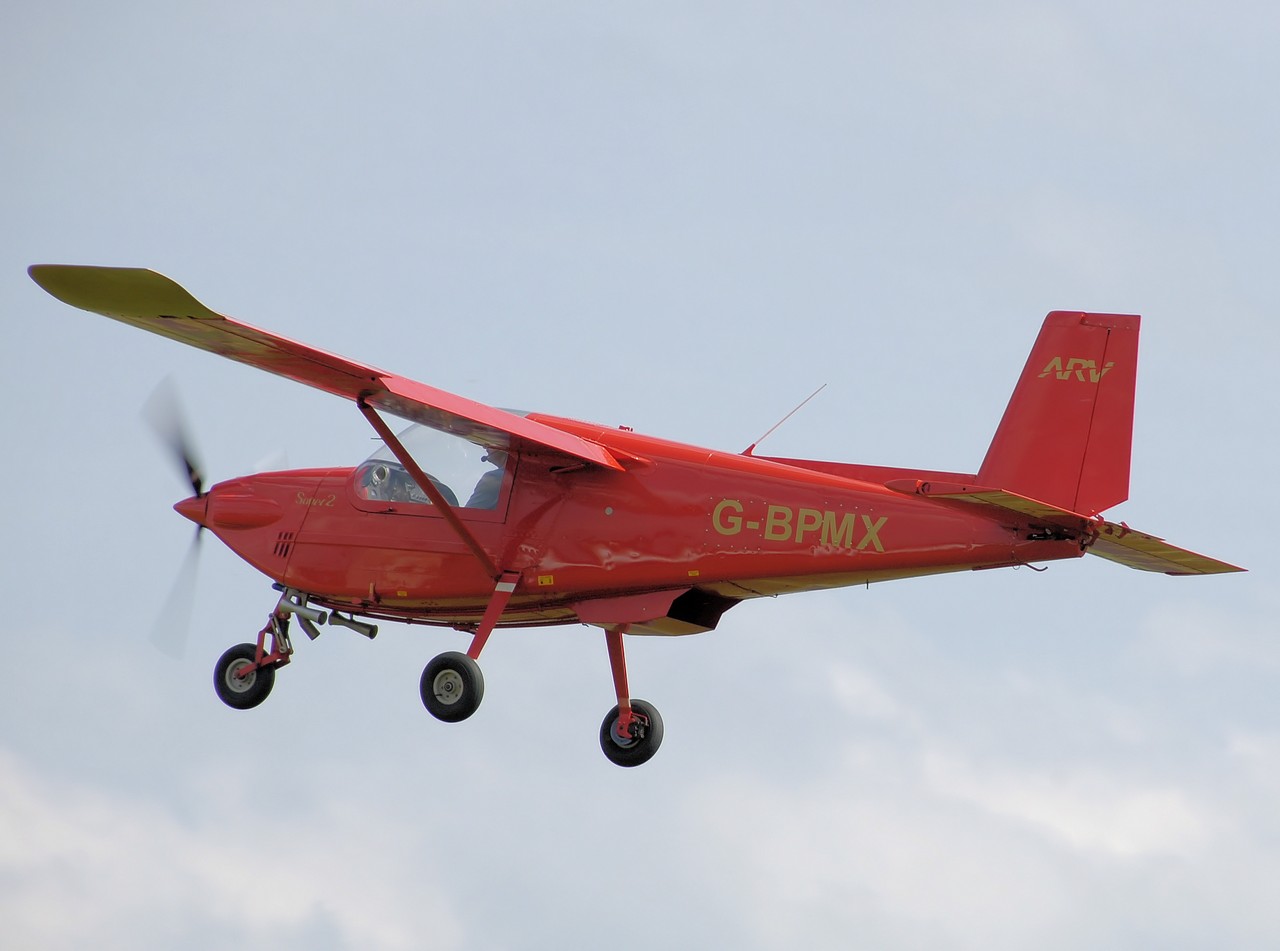
ARV Aviation Ltd., with ARV standing for Air Recreational Vehicle, established operations at Sandown Airport on the Isle of Wight in 1985 under founder Noble's leadership. The company's ambitious plans centered on revolutionary manufacturing techniques using superplastic aluminum, but financial reality proved harsh. After producing 35 aircraft by construction number, ARV Aviation exhausted its working capital and called in administrators on June 17, 1988, ending the original British production run after just three years.
The design rights embarked on a complex international journey following the company's collapse. Taurus Aviation Ltd. initially acquired the assets, later becoming Island Aviation Ltd. In November 1991, Aviation (Scotland) Ltd. of Burnbank purchased the design and manufacturing rights, subsequently forming a joint venture with a Swedish steel company in 1994. This partnership created ASL Hagfors Aero AB, located 160 miles northwest of Stockholm in Hagfors, Sweden.
International Production Attempts
Swedish production proved limited but successful, with ASL Hagfors Aero AB completing three aircraft in 1995 from uncompleted British airframes. These aircraft incorporated significant improvements, including the more reliable 80-horsepower Bombardier Rotax 912A four-stroke engine, addressing the critical powerplant issues that had plagued the original design.
September 1995 marked another transition when Highlander Aircraft Corporation of St. Paul, Minnesota acquired the design and production rights, bringing the Super 2 to American soil. The Minnesota operation continued until 1999, when SkyCraft International Inc. of Homeworth, Ohio took control. However, SkyCraft never achieved production status during its five-year tenure from 1999 to 2004.
Technical Innovation and Engine Problems
The Super 2's most significant technical achievement lay in its construction methodology. The aircraft utilized Supral, a superplastic aluminum that permitted low-cost pressing of multi-curvature panels—a manufacturing innovation that was decades ahead of its time in the light aircraft sector. This technique allowed complex shapes to be formed economically, reducing traditional fabrication costs and assembly time.
However, the original powerplant selection proved disastrous. The 77-horsepower Hewland AE.75-D three-cylinder two-stroke engine suffered from reliability issues serious enough to ground the entire Super 2 fleet between October 1987 and January 1988. This six-month grounding period devastated confidence in the aircraft and contributed significantly to ARV Aviation's financial difficulties.
Subsequent variants addressed the engine problem systematically. The ASL Hagfors Opus 280 variant, introduced in 1992, incorporated the proven Rotax 912A engine, while later production intentions centered on the Mid-West Aero-Engines AE75 powerplant for both the Opus 280 and proposed Highlander kit versions.
Market Position and Production Methods
ARV Aviation targeted flying clubs and homebuilders, offering both factory-complete aircraft and kit versions. The initial eight production aircraft were specifically issued in kit form, allowing homebuilders to complete assembly while reducing factory overhead costs. This dual-market approach reflected the emerging ultralight and experimental aircraft movement of the 1980s.
The side-by-side seating configuration and conventional tricycle landing gear arrangement appealed to training organizations and private owners seeking modern handling characteristics. The shoulder-wing design provided excellent ground clearance while maintaining good visibility for both occupants.
Current Status and Legacy
Opus Aircraft LLC of Stoneville, North Carolina acquired the type certificate in 2004, renaming the design "Opus ARV Super 2" and announcing intentions for renewed production with first deliveries planned for 2009. However, no aircraft have been completed under Opus ownership, leaving the type effectively dormant since the Swedish production ended in 1995.
The total production across all manufacturers and countries reached 40 aircraft, making the Super 2 one of the more successful British light aircraft designs of the 1980s despite its troubled history. The innovative superplastic aluminum construction techniques pioneered by the Super 2 would later influence composite and advanced aluminum manufacturing methods throughout the light aircraft industry.
Today, the Super 2 represents both the promise and perils of innovative aircraft manufacturing. While its technical advances in materials and construction proved sound, the combination of engine reliability issues, undercapitalization, and multiple ownership changes prevented the design from achieving its commercial potential. The surviving aircraft serve as testaments to advanced manufacturing techniques that were perhaps introduced before the market was ready to fully embrace them.