
Service History
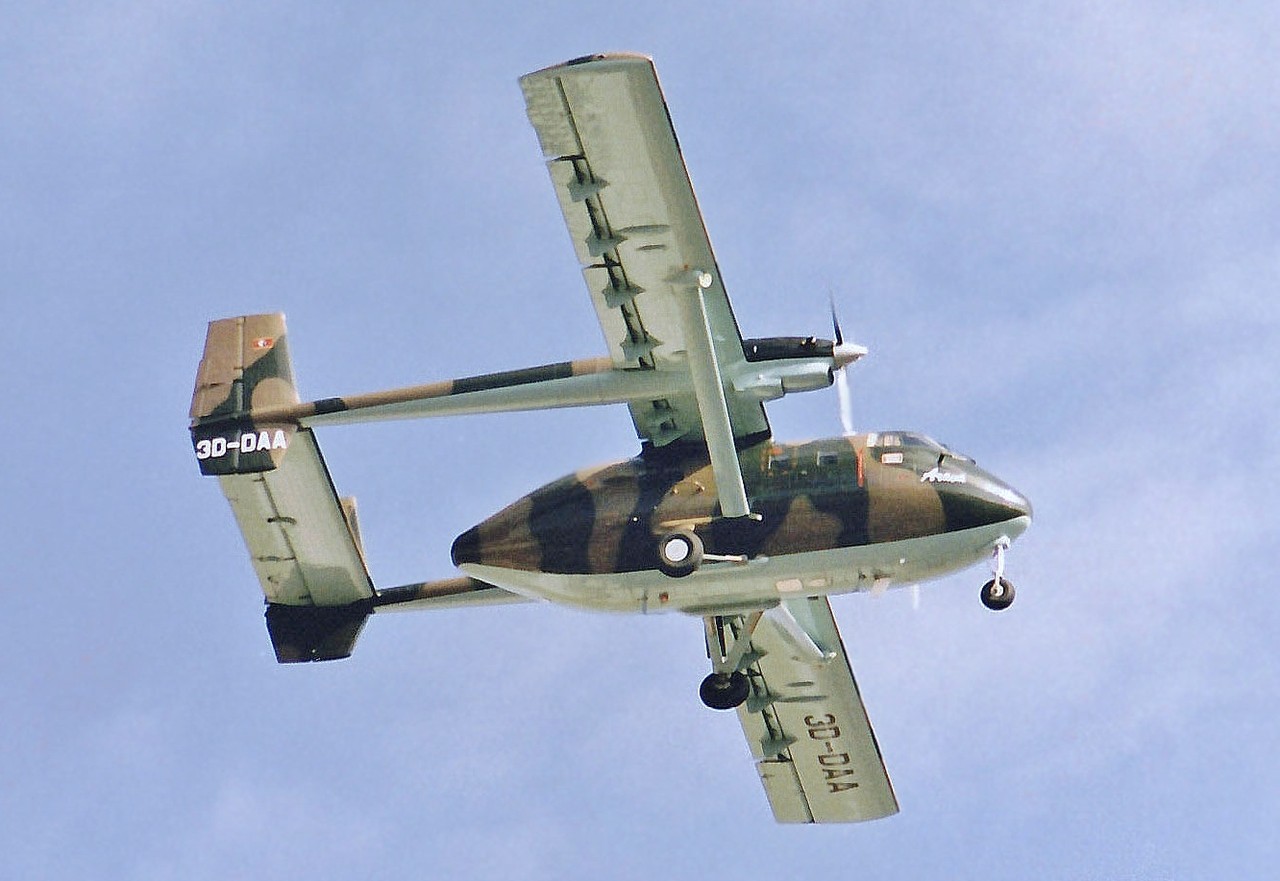
The IAI 201 Arava entered service during one of the most challenging periods in Israeli military history. In October 1973, during the Yom Kippur War, three Arava aircraft were hastily leased by Israel Aircraft Industries to the Israeli Air Force to meet urgent operational demands. These aircraft were assigned to Squadron 122 and flown by IAI pilots on critical transport and casualty evacuation missions to front-line positions. The aircraft's Short Takeoff and Landing (STOL) capabilities proved invaluable for operations from unprepared airstrips near combat zones.
Beyond Israeli service, the Arava found customers across Latin America and Central America. Military forces in Argentina, Bolivia, Ecuador, El Salvador, Guatemala, Honduras, Mexico, and Nicaragua operated the type throughout the 1970s and 1980s. However, the aircraft never achieved the massive international success that IAI had projected, with the company initially forecasting sales of 400 to 600 aircraft if they could capture just 20 percent of the projected market demand.
Development Tragedy and Recovery
The Arava's development was marked by a catastrophic accident that nearly ended the program. On November 19, 1970, during high-speed flutter testing, the first prototype suffered a catastrophic wing strut failure due to excessive flutter, causing the aircraft to disintegrate in mid-air. The accident killed most of the crew, including chief test pilot Avraham Hacohen, who had flown the aircraft's maiden flight. This tragedy generated significant doubt about the aircraft's design integrity and made marketing efforts considerably more difficult for IAI.
Flight testing was suspended for one year while Israeli Air Force pilot Danny Shapira assumed the role of chief test pilot. The program eventually recovered, leading to the successful first flight of the military variant prototype on March 7, 1972, but the shadow of the initial accident continued to affect sales prospects throughout the aircraft's production life.
The Manufacturer
Israel Aircraft Industries was established as Israel's primary aircraft manufacturer to develop indigenous aerospace capabilities beyond reverse engineering and imitation efforts. The Arava represented IAI's first fully original aircraft design to enter production, marking a crucial step in the company's evolution from a maintenance and modification facility to a complete aircraft manufacturer. Design work began in 1966, with the Israeli government under Labor leader Levi Eshkol providing approval in June 1968.
IAI continues to operate today as part of the Israel Aerospace Industries group, though it has undergone significant organizational changes and restructuring over the decades. The company has become a major defense contractor, producing everything from military aircraft to satellites and missile systems, but the Arava remains historically significant as proof of concept for Israel's ability to design and manufacture complete aircraft systems.
Engine and Technical Innovation
The Arava's twin Pratt & Whitney PT6A-27 turboprop engines represented a reliable powerplant choice that contributed to the aircraft's operational flexibility. Each engine produced 720 shaft horsepower, providing sufficient power for the aircraft's designed mission profile. The PT6A series, which entered production in the 1960s, became one of the most widely used turboprop engines in aviation history, known for exceptional reliability and longevity.
The aircraft's most distinctive design feature was its twin-boom layout with a hinged swing-tail cargo door, which facilitated easy loading and unloading of bulky cargo or personnel. The barrel-shaped fuselage was relatively short but wide, optimized for cargo capacity rather than aerodynamic efficiency. Each boom terminated in a vertical stabilizer and rudder, creating the aircraft's characteristic appearance.
IAI developed several variants, including the one-off IAI-202 prototype that flew between mid-1976 and spring 1977. This aircraft featured wet wings with 1,600 pounds of additional fuel capacity, upgraded PT6A-36 engines, increased fuselage length, and distinctive dual Whitcomb winglets. Despite accumulating approximately 75 flight hours, the IAI-202's performance proved only marginally better than the standard Arava, though maximum takeoff weight increased by 2,000 pounds.
Production and Legacy
Production continued from 1972 to 1988, with 103 aircraft of all variants completed. Approximately 70 of these were delivered to military customers, while the remainder went to civilian operators in various specialized configurations including VIP transport, flying clinic, mapping and mining research, oil prospecting, rainmaking, and agricultural research roles.
By 1973, the Arava program faced heavy criticism for overoptimistic sales projections compared to actual market performance. Many potential operators, including the Israeli Air Force itself, ultimately determined that the aircraft lacked sufficient advantages over existing alternatives. The Israeli Air Force announced in 2004 that it would withdraw its remaining Arava fleet, and has since struggled to dispose of grounded aircraft.
As of 2019, only a limited number of Aravas remained operational worldwide. Despite its modest commercial success, the Arava achieved its primary objective of demonstrating Israel's capability to design and produce complete aircraft systems, paving the way for subsequent IAI projects and establishing the foundation for Israel's current position as a major aerospace industry player.