
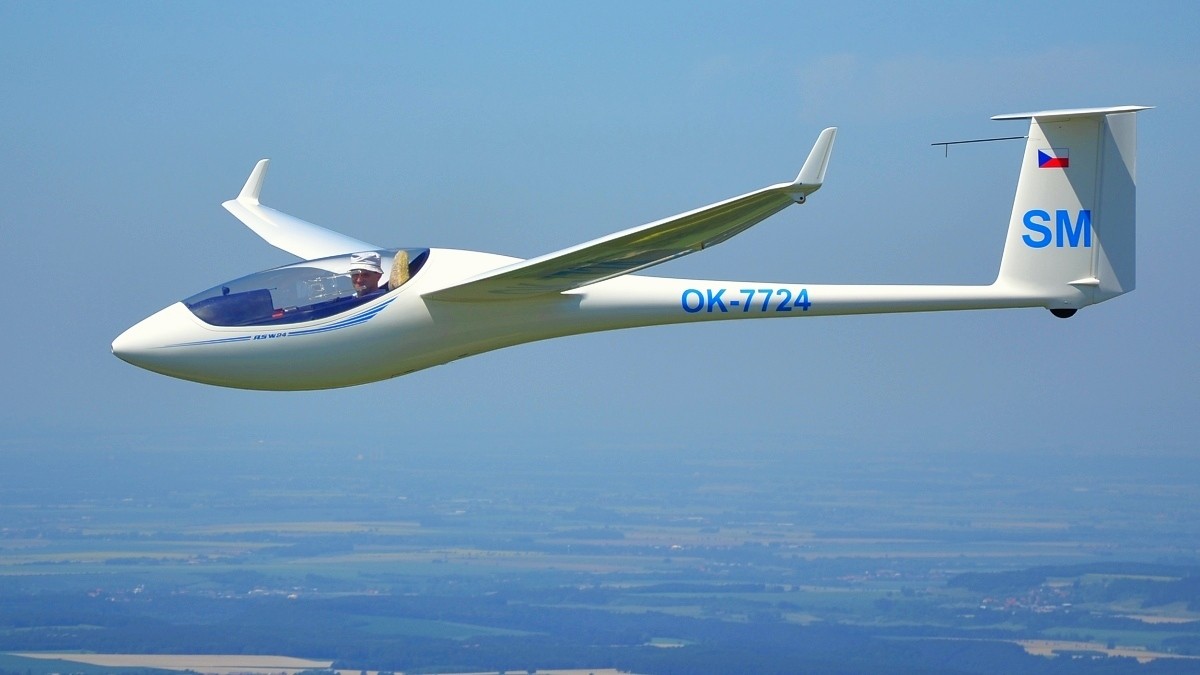
Revolutionary Safety Design
The ASW-24E represented a complete departure from traditional glider construction when it entered production in 1988. Designed by Gerhard Waibel with aerodynamic contributions from Loek Boermans of Delft University, the aircraft pioneered numerous safety innovations that would influence sailplane design for decades. The cockpit featured aramid fiber construction with engineered crumple zones and tall sidewalls, earning recognition with the prestigious OSTIV Award for safety advancement. This revolutionary approach to crash protection marked a significant evolution from the manufacturer's previous ASW-19 model.
Self-Launch Innovation
The ASW-24E's defining characteristic was its self-launching capability, achieved through a compact Rotax 275 two-stroke engine mounted on a retractable pylon system. This manual-start powerplant, operated via pilot-controlled ripcord, allowed pilots to launch independently without ground crew or tow aircraft. The innovative fuselage-retractable design maintained the aircraft's sleek profile during soaring flight, though performance proved marginal at high elevations and hot weather conditions, as experienced by operators at locations like Parowan, Utah at 5,000 feet.
The Manufacturer's Legacy
Alexander Schleicher GmbH & Co. KG produced the ASW-24E at their Poppenhausen, Germany facility. Founded in 1930 by Alexander Schleicher, the company had established itself as an innovative force in sailplane design since the 1950s. The firm continues operations today under its original name, having produced successive generations of high-performance gliders including the ASW-27, ASW-28, and ASG-29, all influenced by technologies pioneered in the ASW-24 series.
Technical Excellence
The ASW-24E incorporated cutting-edge composite construction with carbon fiber primary structure, representing advanced materials technology for its era. The aircraft featured a sophisticated DU 84-158 airfoil optimized for Standard Class competition requirements. Beyond the safety cockpit, practical innovations included electrical ballast management systems and a large disc-brake main wheel for improved ground handling. The expansive canopy design provided exceptional visibility crucial for thermal flying and traffic awareness.
Competitive Performance
In soaring competition, the ASW-24E delivered high cruise performance capabilities that made it competitive at national championship levels. However, pilots noted increased workload during thermal flying compared to some contemporaries. The base ASW-24 achieved ultimate validation when it captured victory at the 2001 World Gliding Championship, demonstrating the fundamental soundness of Waibel's design philosophy. Cross-country pilots appreciated the aircraft's ability to cover significant distances efficiently.
Limited Production Run
Schleicher manufactured exactly 54 ASW-24E variants during the model's five-year production span from 1988 to 1993. This represented a small fraction of total ASW-24 family production, as the self-launching variant required additional complexity and cost compared to the pure sailplane versions. The limited numbers reflected both the specialized nature of self-launching gliders and the premium pricing associated with the advanced construction methods.
Operational Service
The ASW-24E found its primary role with private soaring clubs and individual pilots focused on cross-country flying and competition participation. Unlike transport aircraft, these single-seat machines served recreational and sporting purposes exclusively, with no commercial passenger or cargo applications. Operators valued the independence provided by self-launch capability, eliminating dependence on ground crews and towplanes for field launches.
Current Status
At least one ASW-24E remains airworthy in the United States today, with N24WR holding valid FAA registration through January 31, 2029. The aircraft's service record includes several accidents during its operational history, including documented incidents in 1989, 1991, and 1992 involving various registrations. Despite the safety innovations built into the design, the demanding nature of soaring flight and the aircraft's performance envelope contributed to these operational challenges.
Lasting Influence
The ASW-24E's significance extends beyond its modest production numbers through its pioneering safety technologies and construction methods. The aramid fiber cockpit design and crumple zone engineering established new standards for sailplane occupant protection that influenced subsequent Schleicher designs and competitors throughout the industry. Modern high-performance gliders continue to benefit from the aerodynamic and structural innovations first proven in the ASW-24 series, cementing its place as a pivotal development in soaring aircraft evolution.