
Competitive Dominance
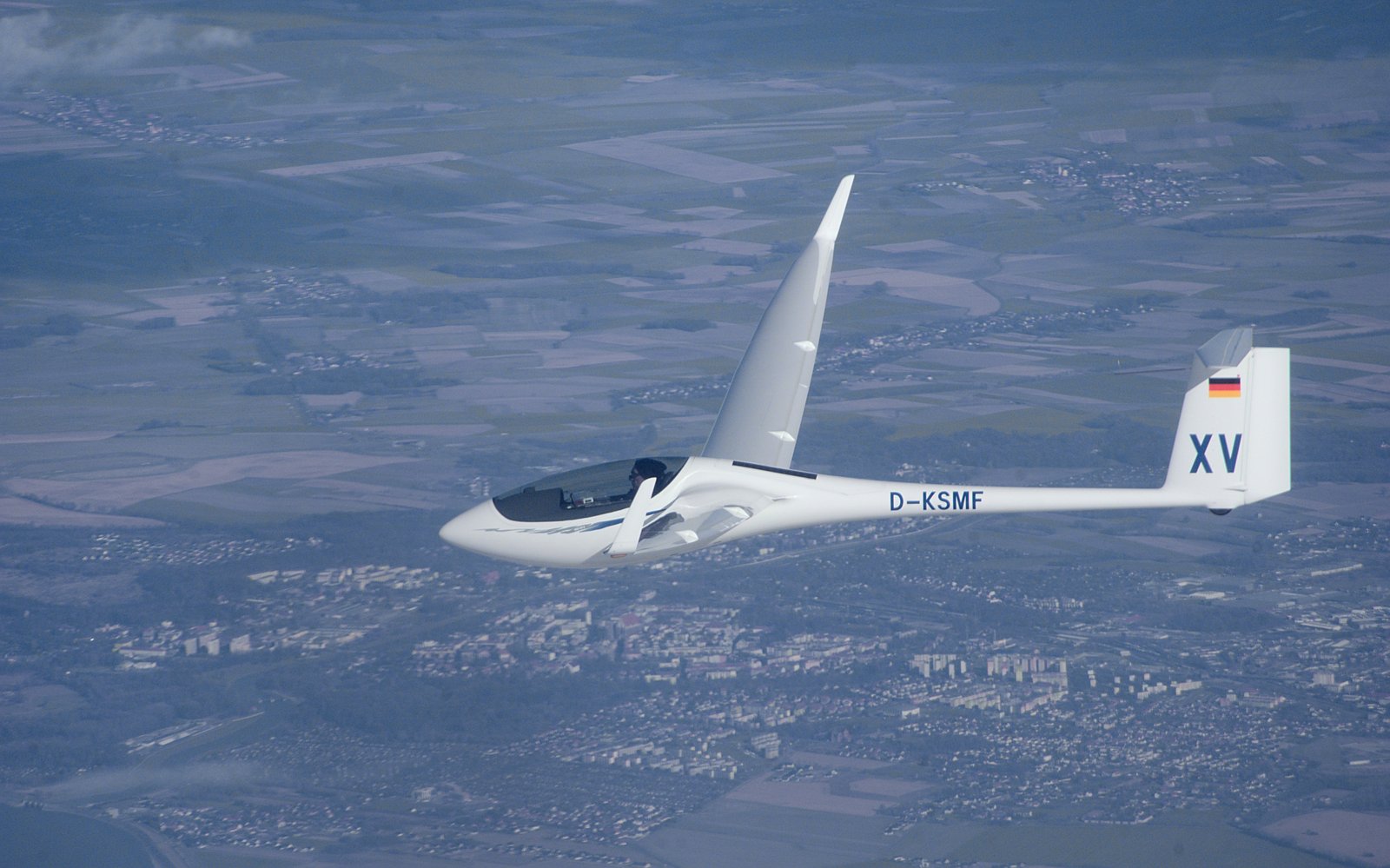
The ASG-29E transformed competitive soaring within its first decade of service, earning victories at the highest levels of international competition. World Champions Luciano Avancini of Italy and Stanislaw Wufczak of Poland achieved first-place finishes flying the ASG-29, cementing its reputation as the premier choice for elite soaring pilots. The aircraft's success stemmed from persistent customer demands for a top-performing glider in the increasingly popular FAI 18-meter class category.
Design Innovation
Michael Greiner's design built upon the proven ASW 27 series, incorporating cutting-edge composite construction using carbon fiber, aramid, and polyethylene fiber-reinforced plastic. The aircraft's most distinctive feature is its advanced wing design with a blowhole boundary layer system integrated with flaps and ailerons, maintaining laminar airflow as far back as 95 percent of the chord. This innovation, combined with the high aspect ratio of 30.9, delivers the aircraft's exceptional 50:1 glide ratio and minimum sink rate of just 28.1 meters per minute.
The ASG-29E's versatility extends beyond pure performance through its sophisticated water ballast system, capable of carrying 170 liters (146 kg) of ballast water. This system allows pilots to optimize wing loading across varying atmospheric conditions, from light thermal days to strong wave conditions.
Powerplant and Retraction System
The distinguishing feature of the ASG-29E variant is its electrically retractable SOLO 2350 engine system. This two-cylinder, two-stroke, air-cooled powerplant produces 18 kW (24 horsepower) in standard configuration, with peak output of 19.6 kW (26 horsepower) for one minute at 5,500 rpm. Weighing just 16.8 kg without propeller, the engine drives a compact 1.0-meter propeller and operates on 10.5 liters of fuel.
The electrical spindle drive system allows complete retraction of the engine assembly, preserving the aircraft's pure gliding performance when unpowered. This capability enables pilots to participate in gliding safaris, explore challenging wave conditions, and extend cross-country flights without the performance penalties associated with fixed engine installations.
Manufacturing Excellence
Alexander Schleicher GmbH and Co., with more than 85 years of glider manufacturing experience, began ASG-29 deliveries in 2006 following the prototype's first flight. The motorized ASG-29E variant received certification in February 2008, with production emphasizing the powered configuration. Of the more than 300 total examples delivered, approximately 190 were ASG-29E motorized variants compared to 110 non-motorized ASG-29 gliders, reflecting market preference for the sustained flight capability.
Operational Flexibility
The ASG-29E's design accommodates multiple competition classes through its modular wing configuration. Pilots can operate the aircraft as either an 18-meter class glider or convert to 15-meter class by installing shorter outer wing panels. The wing joint located 5.5 meters outboard of the fuselage centerline divides each wing into four total panels, enabling rapid reconfiguration between competitions.
With an empty weight of 325 kg and maximum wing loading capabilities up to 57 kg/m², the aircraft performs effectively across a broad range of atmospheric conditions. The substantial ballast capacity allows pilots to fly heavy in strong conditions for improved penetration and speed, then drain ballast for optimal thermal performance in lighter air.
Global Operations
The ASG-29E achieved particular popularity in Australasia, where the sustained flight capability proved invaluable for the vast distances and challenging terrain. Most registered examples in the region are the motorized variant, reflecting practical operational requirements for extended cross-country soaring and safety considerations in remote areas.
Competitive success extended beyond individual championships, with the ASG-29 series becoming the preferred mount for national team pilots and serious competitors worldwide. The aircraft's combination of pure performance and practical versatility addressed the evolving demands of modern competitive soaring.
Current Status
The ASG-29E remains in active production and operation, with examples continuing to compete at the highest levels internationally. The aircraft maintains its position as a benchmark for high-performance motorized gliders, balancing competitive capability with practical operational advantages. Its success demonstrated the viability of retractable engine systems in preserving pure gliding performance while providing the security and flexibility of powered flight capability.