
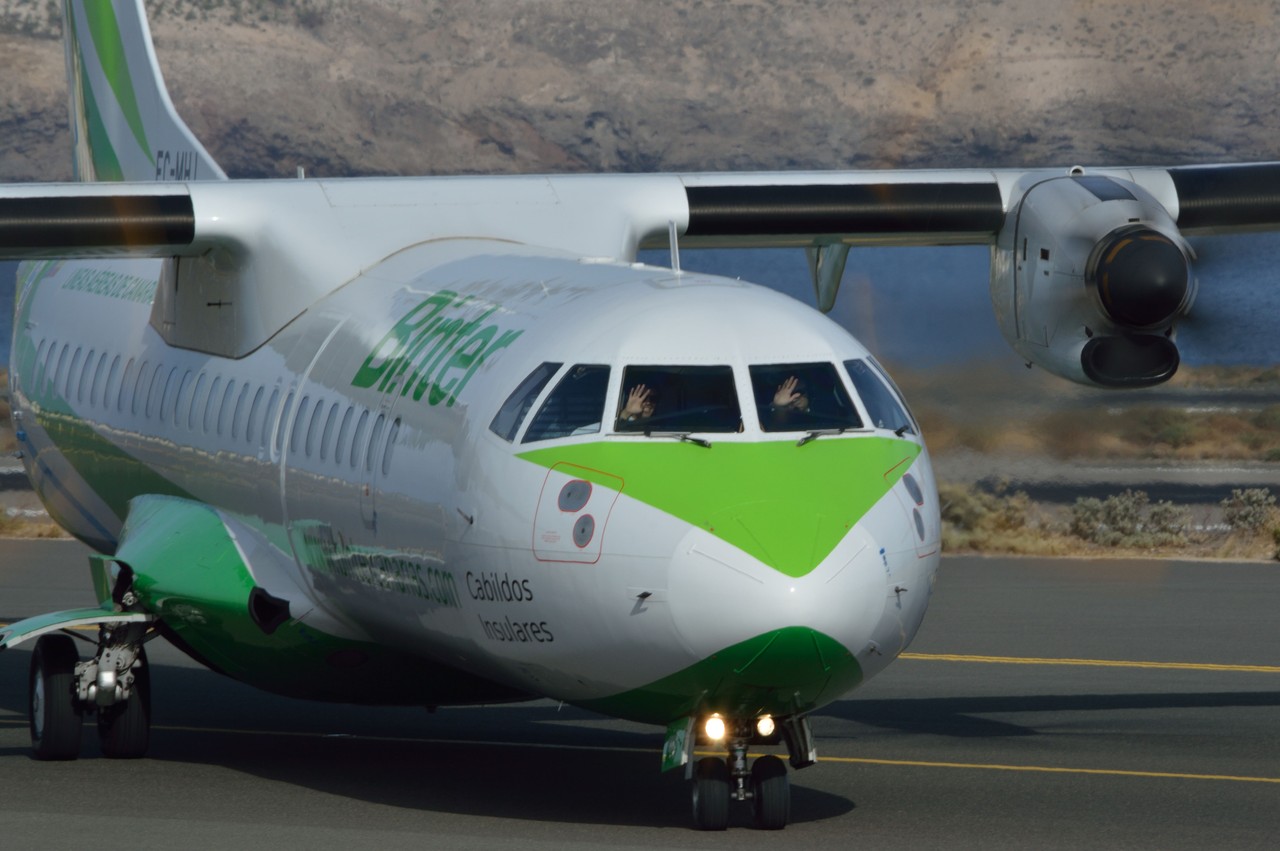
Service History
The ATR 72-201 entered commercial service on October 27, 1989, with Finnish flag carrier Finnair as the launch customer. The aircraft revolutionized regional aviation by providing airlines with an economical solution for short-haul routes that were unprofitable for larger jets. By the mid-1990s, the ATR 72 family had captured significant market share in the 70-seat regional segment, competing directly against the Saab 2000 and Fokker 50.
The 72-201 variant, part of the broader 72-200 series, saw 187 units produced before manufacturing transitioned to the more powerful 72-500 series in 1997. Early operators beyond Finnair included Air Littoral, which had been instrumental in the ATR program's development, and various regional carriers across Europe and Asia who needed efficient aircraft for routes of 200-400 nautical miles.
The Manufacturer
ATR (Aerei da Trasporto Regionale) was established in the early 1980s as an equal partnership between France's Aérospatiale and Italy's Aeritalia, now known as Airbus and Leonardo respectively. Each partner maintained a 50 percent stake in the venture, with Aérospatiale responsible for the forward fuselage, wings, and final assembly, while Aeritalia handled the rear fuselage and empennage.
The consortium launched the ATR 72 program in January 1986 as a stretched derivative of their successful ATR 42. All aircraft were assembled at the dedicated production facility in Toulouse, France, where ATR established sophisticated manufacturing processes that emphasized component commonality between the two aircraft families. Despite facing financial challenges during the 2000s when regional jets threatened turboprop market share, ATR recovered as rising fuel costs made their efficient designs increasingly attractive to cost-conscious airlines.
Engine & Technical Innovation
The 72-201 was powered by twin Pratt & Whitney Canada PW124B turboprop engines, each delivering 2,400 shaft horsepower through four-blade composite propellers. These engines, part of Pratt & Whitney Canada's PW100 series introduced in the 1980s, provided reliable performance in hot-and-high conditions that challenged many competing aircraft.
The ATR 72 incorporated groundbreaking technology for its era, becoming the world's first civil aircraft to feature carbon-fiber outer wings in 1988. This composite construction reduced weight while maintaining structural integrity, contributing to the aircraft's exceptional fuel efficiency. The high-wing configuration provided excellent short-field performance and simplified ground operations, while the spacious cabin offered airlines flexibility in seating arrangements from 68 to 78 passengers.
Operating with a standard crew of two pilots, the 72-201 required no flight engineer, reducing operational costs compared to older regional aircraft. The aircraft's systems were designed for single-pilot operation during certain phases of flight, though regulatory requirements mandated two-pilot crews for commercial operations.
Performance Characteristics
The ATR 72-201 achieved a typical cruise speed of approximately 300 knots (500 kilometers per hour), optimized for stage lengths between 100 and 900 nautical miles. Its maximum takeoff weight exceeded that of the baseline 72-200, allowing for increased payload or fuel capacity depending on route requirements.
Pilots praised the aircraft's docile handling characteristics and predictable performance across varying weather conditions. The high-wing design provided inherent stability, while the powerful engines delivered excellent climb performance even from airports at elevated altitudes or in hot climates where many competitors struggled.
Production Legacy
Manufacturing of the 72-201 and its sister variant, the 72-202, concluded in 1997 after 187 total 72-200 series aircraft had been completed. By this time, ATR had developed the more powerful 72-500 with upgraded PW127 engines, which became the new production standard.
The ATR 72 family achieved remarkable commercial success, with over 1,000 deliveries by 2015, making it the longest-produced 70-seat regional turboprop in aviation history. Many original 72-201 aircraft remain in service with regional carriers worldwide, testament to the type's durability and continued economic viability.
The aircraft's legacy extends beyond mere numbers, as it demonstrated that well-designed turboprops could compete effectively against regional jets on short routes. This success sustained the turboprop market segment and influenced subsequent regional aircraft development. Many 72-201s continue operating with smaller carriers and charter operators, particularly in developing markets where their combination of efficiency, reliability, and lower acquisition costs remain attractive. The type's operational flexibility has also seen some examples converted for cargo service, extending their useful lives well beyond original projections.