
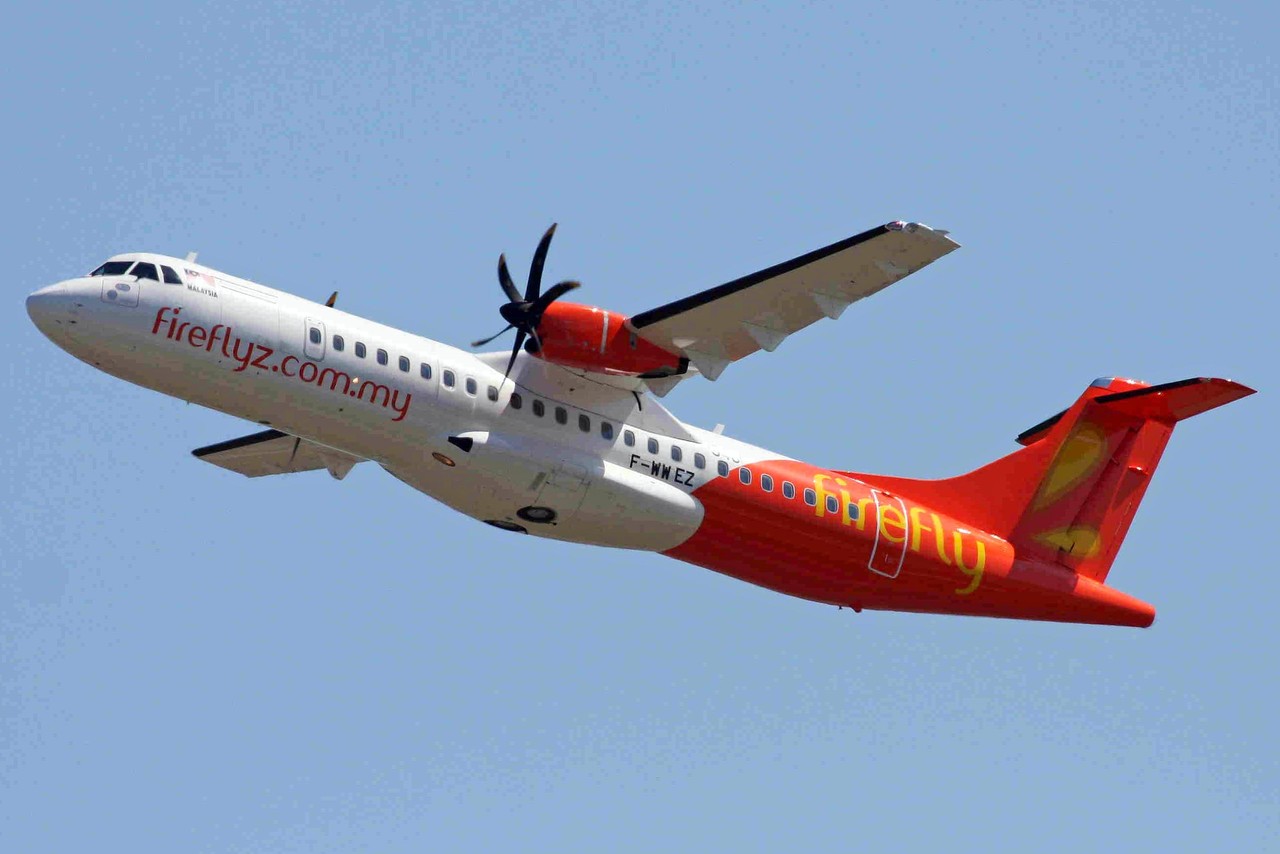
Service History
The ATR 72-211 entered commercial aviation on October 27, 1989, when Finnish carrier Finnair inaugurated revenue service with the type. This marked the beginning of what would become one of regional aviation's most dominant aircraft families. By 2000, the combined ATR fleet had completed 10 million flights, transporting approximately 450 million passengers across 4 billion kilometers of service. The aircraft quickly established itself in the 70-seat regional market, filling a crucial capacity gap between 50-seat turboprops and 100-seat regional jets.
As of 2018, 187 early ATR 72 variants had been delivered to 172 operators across 55 carriers worldwide, demonstrating the type's widespread acceptance in the regional airline industry. The broader ATR 72 family has achieved remarkable commercial success, with more than 1,200 aircraft produced across all variants by 2025.
The Manufacturer
ATR (Avions de Transport Régional) emerged from a strategic partnership between French aerospace giant Aérospatiale and Italian manufacturer Aeritalia, establishing a truly international production approach. The company announced the ATR 72 program on January 15, 1986, building upon the success of their smaller ATR 42 regional aircraft. Today, Airbus SE maintains a 50 percent stake in ATR, ensuring continued backing from one of the world's largest aerospace manufacturers.
The manufacturing process spans multiple European facilities in a carefully orchestrated production system. Final assembly, flight testing, certification, and aircraft deliveries occur at ATR's primary facility in Toulouse, France. Italian manufacturer Leonardo produces fuselage and tail sections at their Pomigliano d'Arco facility near Naples, while Sogerma in Bordeaux handles wing assembly under Airbus France supervision. This distributed manufacturing model has proven highly effective, with ATR delivering more than 1,700 aircraft to over 200 operators in more than 100 countries.
Engine & Technical Innovation
The ATR 72-211 is powered by twin Pratt & Whitney Canada turboprop engines, specifically from the PW120 series that provided the necessary power increase over the smaller ATR 42. These engines drive propeller systems that represent significant technological advancement—the ATR 72 became the world's first civil aircraft to feature carbon-fiber outer wings in 1988, while also pioneering the use of composite propellers in turboprop applications.
The aircraft's design philosophy centered on maximum commonality with the ATR 42, sharing production lines, components, and subsystems to achieve manufacturing efficiency. The 4.5-meter fuselage stretch accommodated 30 additional passengers compared to the ATR 42's 48-seat capacity, while fuel capacity increased approximately 10 percent to support the larger aircraft's requirements. The high-wing configuration provides excellent ground clearance and simplified ground operations at smaller regional airports.
Performance Characteristics
The ATR 72-211's turboprop configuration delivers optimal efficiency for regional routes typically ranging from 200 to 800 miles. The twin-engine layout provides necessary redundancy for passenger operations while maintaining lower operating costs compared to regional jets on shorter routes. Early variants featured four-blade propellers, though later ATR 72 variants would adopt six-bladed systems for improved performance and reduced cabin noise.
The aircraft's 78-passenger capacity positioned it perfectly for regional carriers serving medium-density routes between smaller cities and major hubs. This seating configuration allowed airlines to offer more frequent service on routes that couldn't support larger aircraft, while providing passengers with more convenient scheduling options.
Production Legacy
ATR achieved a significant milestone in 2007 with 113 new aircraft orders, representing the highest single-year order total in the program's history. By 2014, the company had received 1,000 total orders for the ATR 72 family and delivered 754 aircraft across all variants. The ATR 72-211, as an early production variant, established the foundation for this commercial success through its proven reliability and operational economics.
The aircraft's continued production through 2025 demonstrates remarkable longevity in the competitive regional aircraft market. While the ATR 42 became the only 50-seat regional aircraft remaining in production by 2015, the ATR 72 evolved through multiple variants including the 72-500 with PW127 engines and the current 72-600 featuring improved PW127M powerplants.
The ATR 72-211's legacy lies in proving the viability of larger regional turboprops and establishing ATR as the dominant manufacturer in this market segment. Its combination of fuel efficiency, reliability, and appropriate capacity created the template for modern regional aviation, influencing route networks and passenger connectivity across the globe. Today, the ATR 72 family continues serving airlines worldwide, maintaining its position as the backbone of regional air transportation in markets ranging from European short-haul routes to inter-island service in the Pacific and Caribbean.