
Commercial Dominance
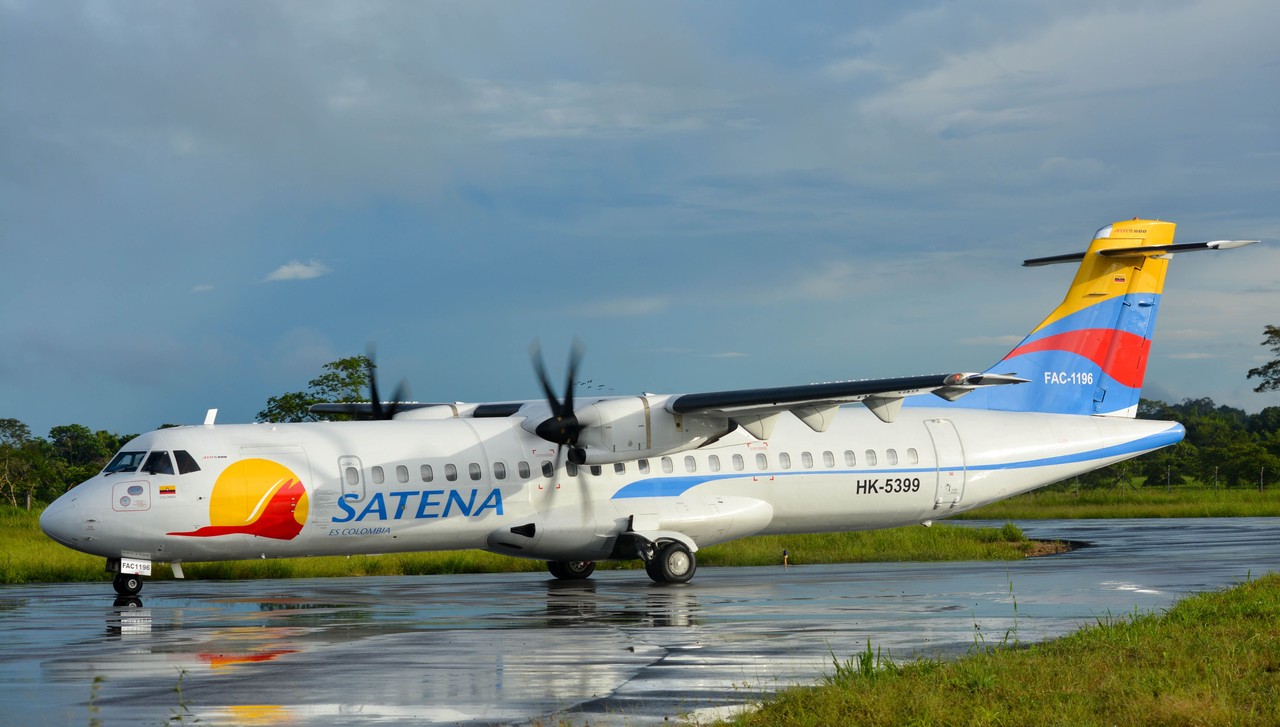
By September 2018, the ATR 72-600 had achieved remarkable market penetration with 444 aircraft delivered to 74 carriers worldwide, alongside a robust backlog of 231 additional orders. The aircraft's success stems from its positioning as the most fuel-efficient regional aircraft available, making it particularly attractive to airlines operating thin routes where larger jets prove economically unviable. Notable operators include Air Algerie, North Star Air, SATENA, Mandarin Airlines, and Loganair, demonstrating the type's versatility across diverse geographic regions and business models.
The Manufacturer's Evolution
ATR (Avions de Transport Régional) operates as a joint venture originally established between Aerospatiale of France and Alenia of Italy, with Airbus SE currently holding a 50% stake in the company. All final assembly occurs at ATR's facility in Toulouse, France, which has undergone dramatic expansion to meet growing demand. The company quadrupled its manufacturing footprint compared to 2005 levels and established a second, modernized final assembly line. In 2017, ATR further diversified by creating an in-house financing and leasing division, expanding beyond pure manufacturing into comprehensive aviation services.
Technical Innovation and Development
The ATR 72-212A emerged from systematic improvements pioneered on the smaller ATR 42-500, receiving its type acceptance application on May 3, 1999, and earning Type Acceptance Certificate No. 99/24 on October 18, 1999. The aircraft incorporates six-bladed propellers driven by twin Pratt & Whitney PW127M turboprop engines, representing a significant advancement over earlier variants. Key design objectives focused on enhanced dispatch reliability, reduced operating costs, and greater automation of power management systems to decrease pilot workload.
The evolution to the ATR 72-600 variant, announced in October 2007, brought substantial avionics improvements including a new glass cockpit system. This modernization aimed to increase operational efficiency while reducing fuel consumption, critical factors for regional airline profitability. The prototype's successful first flight on July 24, 2009, validated these improvements, leading to first deliveries in the second half of 2010.
Operational Characteristics
The ATR 72-212A demonstrates impressive short-field performance with a takeoff distance of just 1,315 meters at maximum takeoff weight under standard atmospheric conditions, while requiring only 915 meters for landing at maximum landing weight. This capability enables operations at smaller regional airports often inaccessible to larger commercial aircraft. The aircraft's 1,370-kilometer range with maximum passenger loading provides adequate reach for typical regional routes while maintaining economic viability.
Pilots appreciate the aircraft's forgiving handling characteristics and the automated systems that reduce workload during routine operations. The PW127M engines provide reliable power throughout the flight envelope, contributing to the type's reputation for dependable service in challenging operating environments.
Military Applications
While primarily designed for commercial service, the ATR 72 has found specialized military applications through collaboration with Turkish Aerospace Industries (TAI). The Turkish Navy operates a small fleet including two ATR 72-600 TMUA aircraft delivered in 2013, followed by the more capable TMPA variants equipped with additional sensors and mission systems. The first TMPA was delivered in December 2020, with the second following in March 2021, bringing the Turkish Navy's total ATR 72-600 fleet to three aircraft by May 2021.
Production Legacy and Current Status
The ATR 72 series continues active production as of 2025, with the 212A/600 variant serving as the current standard. This longevity reflects the aircraft's successful adaptation to evolving market demands and technological advancement. The substantial order backlog and ongoing facility expansion demonstrate sustained confidence in the regional turboprop market segment.
ATR's ability to maintain relevance in an increasingly jet-dominated aviation landscape speaks to the fundamental economics of regional air transport. The 72-212A fills a crucial niche where passenger demand and route economics favor smaller, highly efficient aircraft over larger regional jets. This positioning ensures continued production and development of the type well into the future, cementing its role as the definitive modern regional turboprop airliner.