
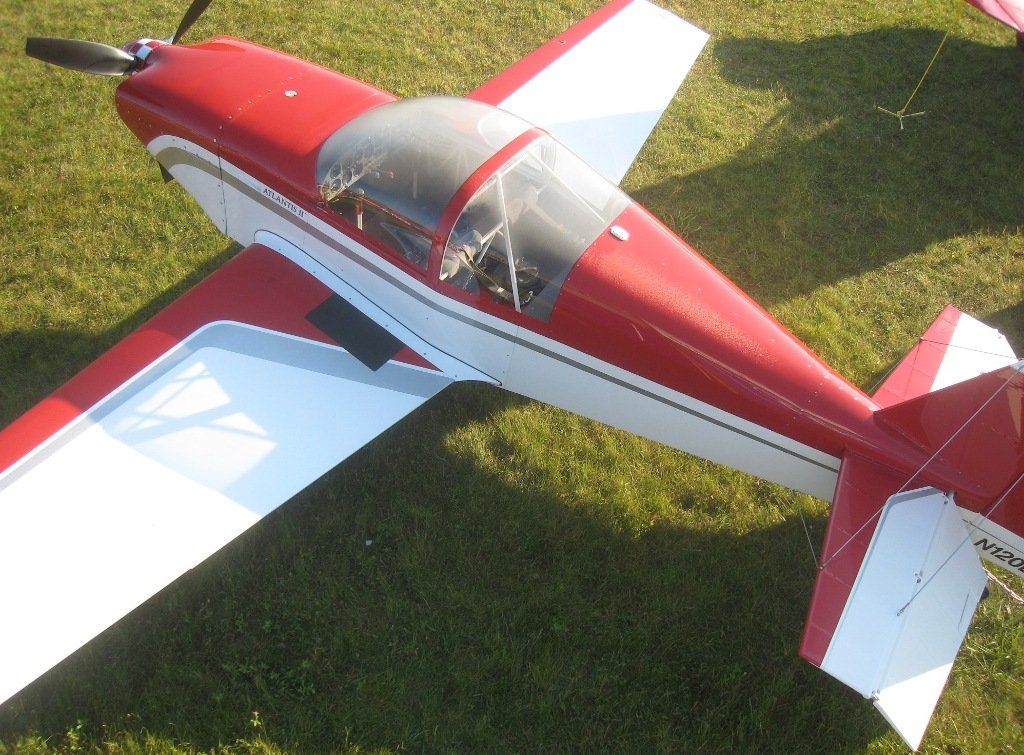
Design Philosophy and Performance
The Atlantis represented Aircraft Technologies' ambitious goal to bring military-grade aerobatic performance to the homebuilt market. The aircraft's extraordinary structural limits of +/-20g for the wings and +/-15g for the fuselage and tail surfaces far exceeded typical general aviation designs, which usually limit loads to +3.8/-1.52g. This exceptional strength enabled the Atlantis to perform unlimited aerobatic sequences including lomcovaks, tumbles, and other extreme maneuvers typically reserved for purpose-built competition aircraft.
The 200 degrees per second roll rate capability positioned the Atlantis among the fastest-rolling homebuilt designs of its era. For comparison, most standard aerobatic aircraft achieve 90-120 degrees per second, while the Atlantis nearly doubled this performance figure. The wing loading of 95 pounds per square foot was deliberately high, contributing to crisp control response and reduced sensitivity to turbulence during precision aerobatic sequences.
Construction and Engineering
Aircraft Technologies employed a hybrid construction methodology combining traditional and modern materials. The fuselage utilized welded 4130 chromoly steel tubing, providing exceptional strength-to-weight ratios and crash protection for the occupants. Wing structures incorporated fiberglass and carbon fiber composites, materials still relatively uncommon in homebuilt aviation during the 1990s.
The side-by-side seating arrangement with dual control sticks allowed for instruction or shared flying experiences, unusual for high-performance aerobatic designs which typically featured tandem seating. The 35-degree reclined seat position helped pilots withstand the extreme g-forces the aircraft could generate while maintaining visual reference during inverted flight segments.
Fuel system design featured wing-mounted tanks feeding a central header tank, ensuring consistent fuel flow during sustained inverted flight and negative-g maneuvers. The 60-gallon capacity provided approximately 2.5 hours of aerobatic flying time with reserves.
Powerplant Selection
The Lycoming IO-360 represented a proven choice for aerobatic applications, having powered numerous certified aerobatic aircraft including variants of the Extra series and Sukhoi Su-26 exports. The fuel-injected configuration eliminated carburetor ice concerns and provided consistent fuel delivery during inverted flight operations. The 200-horsepower output delivered a power-to-weight ratio of approximately 9.5 pounds per horsepower at gross weight, enabling vertical climbs and sustained vertical maneuvers.
The MT constant-speed propeller allowed pilots to optimize blade angles for climb performance during vertical sequences or cruise efficiency during cross-country flights between aerobatic practice areas.
Manufacturing and Market Position
Aircraft Technologies operated from Lilburn, Georgia during the 1990s homebuilt boom period, when experimental aviation grew rapidly following regulatory changes that simplified amateur-built aircraft certification. Fred Meyers led the company's development efforts, focusing on the high-performance aerobatic niche rather than the more common touring or sport flying segments.
The company offered both complete kits and plans-only options, allowing builders to choose between faster assembly times or reduced costs through individual material sourcing. The advanced materials and precision welding requirements meant build times exceeded typical homebuilt projects, likely contributing to the limited production numbers.
Limited Production Legacy
Only three examples achieved FAA registration by November 2014, reflecting the specialized nature of unlimited aerobatic flying and the advanced construction skills required. The demanding build process, combined with the aircraft's extreme performance envelope, limited appeal to experienced aerobatic pilots and accomplished builders.
Aircraft Technologies' closure eliminated ongoing support for builders and ended production of both the Atlantis and the related Acro 1 design. Without factory support or an active type club, the remaining aircraft represent orphaned designs dependent on individual owner maintenance expertise.
The Atlantis demonstrated that homebuilt aircraft could achieve performance levels matching or exceeding certified competition aerobatic designs, but market realities proved that extreme capability alone could not sustain commercial viability. The design's influence persists in subsequent homebuilt aerobatic projects that incorporated similar materials and structural approaches, though none matched the Atlantis's extraordinary g-load capabilities.
Current Status
The airworthiness status of the three registered examples remains unknown, as experimental aircraft databases do not track operational status comprehensively. Given the specialized maintenance requirements and orphaned design status, some examples may no longer be active. The design lives on primarily as a footnote in homebuilt aerobatic development, representing the peak of 1990s amateur-built performance ambitions.