
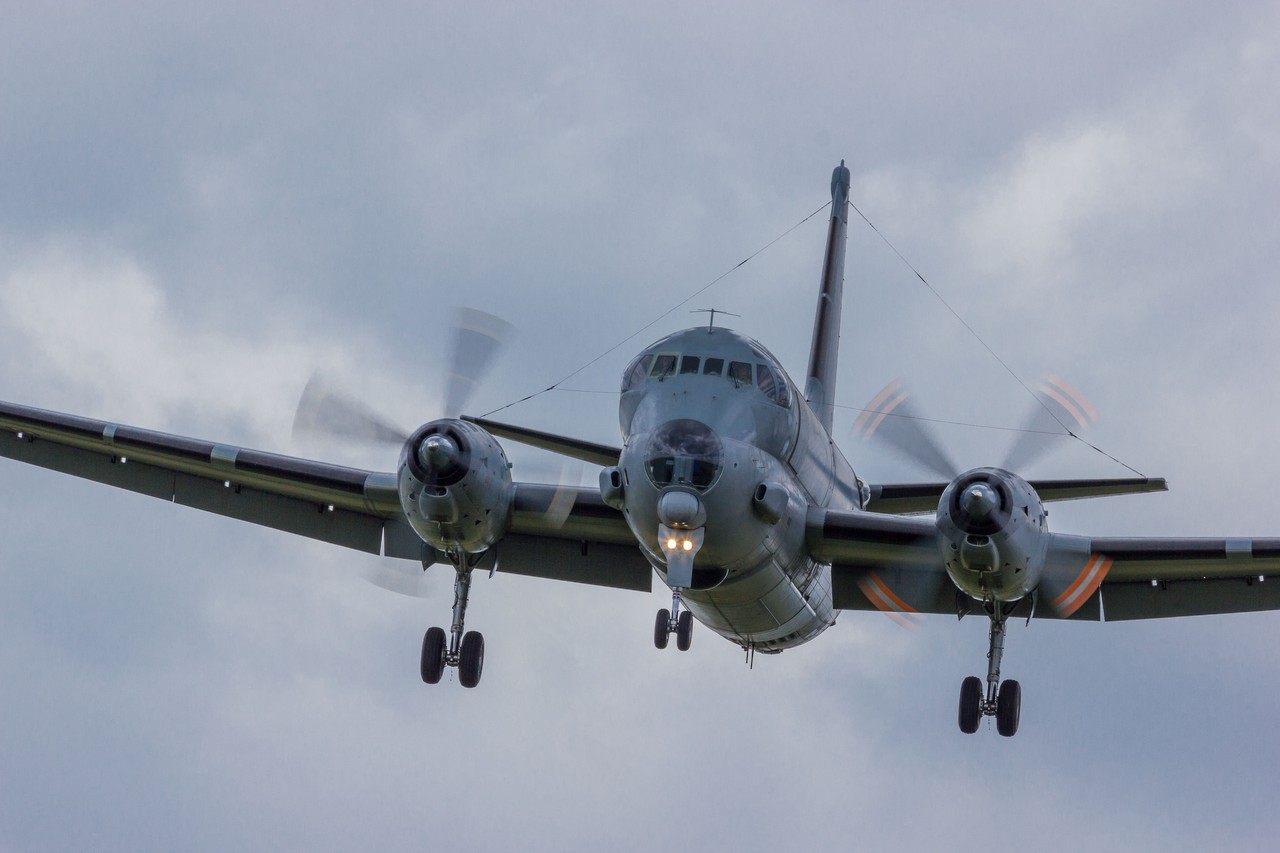
Exclusive French Naval Aviation
The Atlantique 2 serves exclusively with the French Navy's Force maritime de l'aéronautique navale, making France the sole operator of this sophisticated maritime patrol platform. Following its operational debut in 1991, the aircraft quickly replaced all first-generation Atlantic aircraft by 1996. Of the 28 aircraft originally delivered between 1989 and 1997, 22 remained in active service as of 2018, testament to the platform's enduring operational value.
The aircraft proved its versatility beyond traditional maritime roles during the 2013 French intervention in Mali, where Atlantique 2s successfully performed conventional bombing missions using both unguided and precision-guided munitions—a departure from their primary anti-submarine warfare mission.
Development and Design Innovation
The Atlantique 2 project emerged from French government initiative in March 1977, seeking to modernize the original Breguet Atlantic design while controlling costs through minimal structural changes. Jacques Jesberger, Jean-Pierre Bussenot, and Pierre Harquin piloted the first prototype's maiden flight from Toulouse-Blagnac on May 8, 1981. This aircraft, converted from an existing Atlantic 1 (number 42), underwent extensive evaluation flights lasting one year before receiving production approval in June 1982.
Engineers focused their modernization efforts on structural reinforcement, enhanced corrosion protection to extend airframe life, and integration of new composite propellers. Fuel capacity increased by 10 percent through redesigned integral wing tanks, directly improving the aircraft's legendary endurance capabilities. The design philosophy prioritized updating systems and avionics while preserving the proven aerodynamic characteristics that made the original Atlantic successful.
European Manufacturing Consortium
Dassault Aviation led a multinational production consortium including Dornier, MBB, Aérospatiale, Aeritalia, and SABCA-SONACA, maintaining the collaborative European approach established with the original Atlantic program. The company's involvement in maritime patrol aircraft traced back to its 1971 merger with Breguet Aviation, which had won the original 1958 NATO contract for long-range maritime reconnaissance aircraft development.
Production authorization came on May 24, 1984, with manufacturing proceeding at approximately one aircraft per month. The French Navy's initial requirement for 42 aircraft was subsequently reduced to 28, reflecting post-Cold War budget constraints and evolving strategic requirements.
Proven Powerplant Performance
Two Rolls-Royce Tyne RTy.20 Mark 21 turboprop engines power the Atlantique 2, each delivering 6,100 horsepower through twin-shaft design. These British-manufactured engines, proven since the 1950s across numerous maritime patrol platforms, provide the reliable power necessary for extended ocean surveillance missions. The retention of the Tyne engines from the original Atlantic design ensured operational continuity while benefiting from upgraded composite propellers that improved efficiency and reduced maintenance requirements.
Mission Capabilities and Performance
The Atlantique 2's impressive endurance of up to 18 hours, combined with its 5,635-mile ferry range, enables comprehensive ocean patrol coverage from French naval bases. Its maximum speed of 400 mph provides rapid transit capability, while the economical cruising speed of 200 mph optimizes fuel consumption during lengthy surveillance missions. These performance characteristics make the aircraft ideally suited for monitoring France's extensive maritime territories and exclusive economic zones.
Continuous Modernization Program
The Atlantique 2 fleet has undergone systematic upgrades since 2007, with major modernization programs implemented in 2008, 2013, 2015, and 2018. The latest Standard 6 configuration, covering 18 of the 22 remaining aircraft, will sustain operations until 2035 with final deliveries scheduled for 2025. This continuous modernization approach demonstrates the viability of extending proven airframe designs through advanced avionics and systems integration rather than complete platform replacement.
Operational Legacy
The Atlantique 2 represents successful mid-life modernization philosophy, transforming a Cold War-era maritime patrol concept into a 21st-century multi-mission platform. Its ability to adapt from traditional anti-submarine warfare to land-attack missions in Mali showcases the flexibility inherent in well-designed military aircraft. As maritime domain awareness becomes increasingly critical for national security, the Atlantique 2's extended service life through 2035 ensures France maintains sophisticated ocean surveillance capabilities well into the next decade.