
The Post-War Aviation Challenge
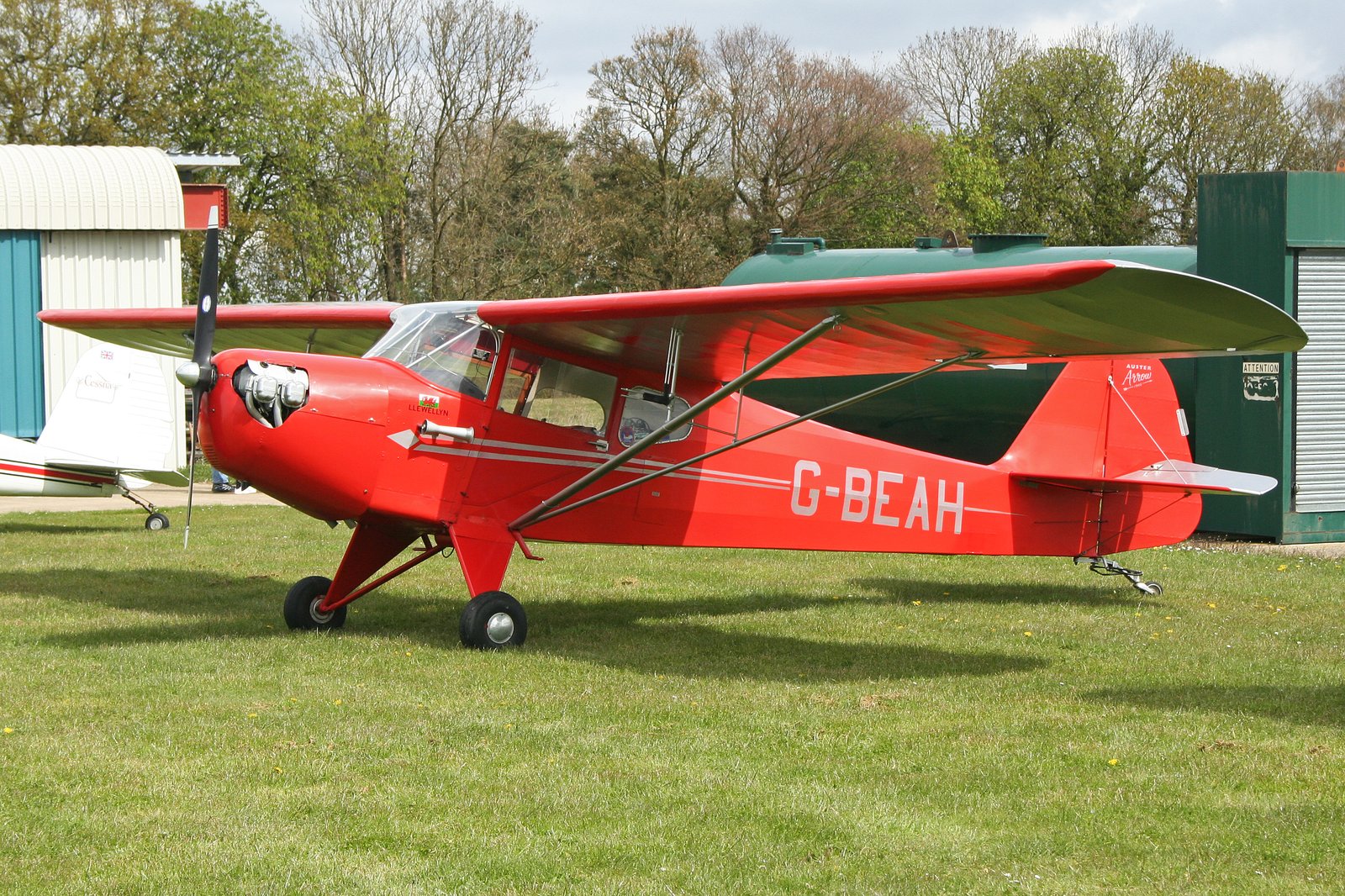
The Auster J/2 Arrow emerged during Britain's challenging transition from wartime to peacetime aviation manufacturing. As the successor to the pre-war Taylorcraft Plus C monoplane, the Arrow represented Auster Aircraft Limited's bold attempt to capture the anticipated boom in civilian flying that many believed would follow the war's end. However, the aircraft's brief production run of just 44 units between 1945 and 1946 revealed the harsh realities of post-war economics and regulatory constraints.
Design and Development
Developed at Auster's Rearsby facility in Leicestershire, the J/2 Arrow embodied conventional high-wing design principles that had served the company well during wartime production of military observation aircraft. The two-seat configuration targeted the growing market for personal and training aircraft, while the 36-foot 1-inch wingspan provided the stability and gentle handling characteristics essential for civilian operators.
The Arrow's most significant limitation proved to be its American powerplant. While the specific engine model remains undocumented in available records, the choice of American propulsion created insurmountable barriers in the British market. Import restrictions on American engines severely constrained domestic sales, forcing potential customers to seek alternatives or abandon purchase plans entirely.
Market Reception and Export Success
Despite its promise as a touring aircraft, the J/2 Arrow struggled against Auster's own three-seat J/1 Autocrat, which offered greater utility and passenger capacity. The Autocrat's success highlighted a fundamental miscalculation in market demand – post-war buyers preferred versatility over the specialized touring mission that the Arrow provided.
Australia emerged as the Arrow's most receptive market, where several examples found homes under the designation "Archer." This export success demonstrated the aircraft's inherent design merit while highlighting how regulatory and economic barriers, rather than technical shortcomings, limited its British market penetration.
Technical Response and Evolution
Recognizing the engine import problem, Auster quickly developed the J/4 variant, substituting the American powerplant with the 90-horsepower Blackburn Cirrus Minor I. This British engine transformed the aircraft's market prospects, delivering a maximum speed of 108 mph and cruise speed of 92 mph at 2,300 rpm. The improved variant demonstrated impressive short-field performance, requiring only 150 yards for takeoff and 80 yards for landing in a 5-mph wind.
The J/4's service ceiling of 12,500 feet and range of 317 miles in still air positioned it competitively against other light aircraft of the era. Its gentle stall speed of just 37 mph made it particularly appealing to training organizations and private owners seeking forgiving handling characteristics.
Operational Quirks and Incidents
The Arrow family gained unexpected notoriety through one of aviation's most unusual incidents. On August 30, 1955, an Australian J/4 variant registered VH-AET achieved an unintended takeoff from Bankstown Airport in Sydney without a pilot aboard. The runaway aircraft prompted an extraordinary response – Royal Australian Navy Hawker Sea Furies pursued the pilotless machine over the ocean before shooting it down to prevent potential catastrophe.
Manufacturing Legacy
Auster Aircraft Limited's brief production run of the J/2 Arrow reflected broader challenges facing British aviation manufacturers in the immediate post-war period. The company's Rearsby facility had proven its capabilities during wartime production, but peacetime markets demanded different approaches to design, pricing, and regulatory compliance.
The Arrow's limited production numbers – just 44 examples – underscore how quickly manufacturers needed to adapt their offerings to market realities. Auster's rapid pivot to the J/4 variant demonstrated the company's responsiveness, though it couldn't fully overcome the J/2's initial market disadvantages.
Survival and Preservation
Today, the Arrow family maintains a small but dedicated following among vintage aircraft enthusiasts. At least one J/4 example, registered G-AIJT, remains airworthy, providing modern pilots with experience of immediate post-war British light aircraft design. These surviving examples represent important links to an era when manufacturers experimented boldly with civilian aircraft concepts, even when market acceptance remained uncertain.
Assessment and Impact
While the Auster J/2 Arrow never achieved commercial success, it marked an important milestone in British aviation's transition to peacetime production. Its brief production run illuminated the complex interplay of technical capability, regulatory environment, and market demand that would shape the light aircraft industry for decades to come. The Arrow's legacy lies not in numbers produced, but in lessons learned about adapting military manufacturing expertise to civilian market requirements.