
Service History
While the Avro Avian never achieved the commercial dominance of its rival, the de Havilland DH.60 Moth, it carved out a significant niche in the international market and became synonymous with long-distance record flights. Between 1926 and the early 1930s, Avro produced 382 Avians across multiple variants, with the steel-tube fuselage Avro 616 Avian IVM accounting for 190 units—the largest production run of any version. The aircraft found particular success in export markets, with licensed production occurring at Whittelsey Manufacturing Company in Bridgeport, Connecticut, and Ottawa Car Manufacturing Company in Canada.
Record-Breaking Flights
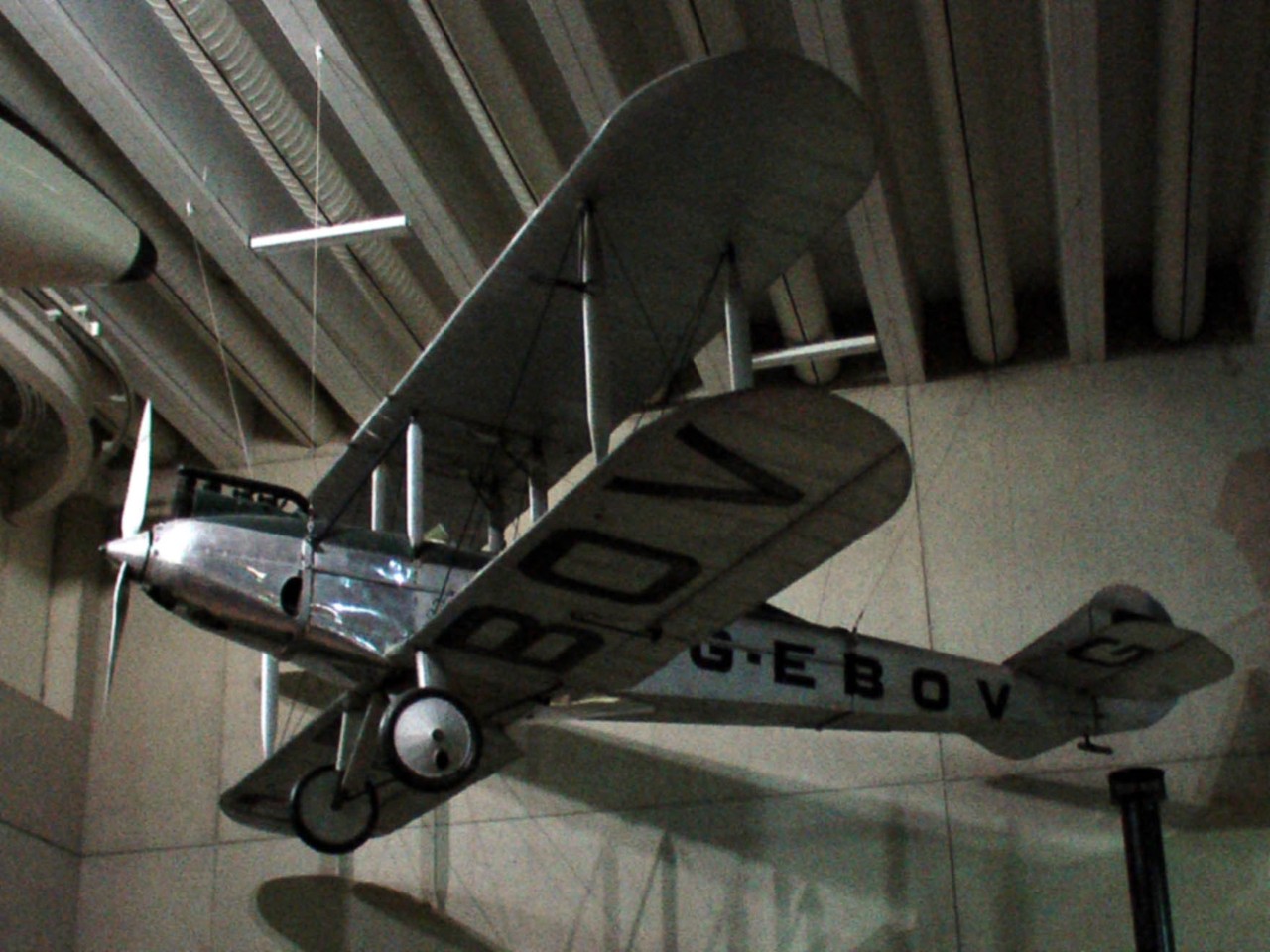
The Avian's greatest claim to fame came through a series of spectacular long-distance flights that captured international attention. On February 22, 1928, Australian pilot Bert Hinkler completed the first solo flight from England to Australia in just 15.5 days, flying the prototype aircraft G-EBOV (originally the Avro 581, later re-engined as the 581E). This achievement made Hinkler a household name and demonstrated the Avian's exceptional reliability over 7,000 miles of challenging terrain.
Amelia Earhart selected an Avian for several of her flights, while Lady Mary Heath took delivery of G-EBUG on October 29, 1927. Harry F. Broadbent completed a remarkable 12,160-kilometer circuit of Australia on September 6, 1931, in VH-UQE, further cementing the type's reputation for long-range capability. Sir Charles Kingsford Smith also flew Avians during various exploits in the 1930s.
The Manufacturer
A.V. Roe and Company, founded in 1910, represented one of Britain's pioneering aircraft manufacturers. Alliott Verdon Roe had established the company after becoming the first Briton to fly a powered aircraft of his own design. The Avian emerged during Avro's transition from experimental aircraft to commercial success, preceding the company's later fame for military aircraft like the Lancaster bomber during World War II.
In 1928, Hawker Siddeley acquired Avro, but the company maintained its identity through subsequent mergers. Avro became part of the British Aircraft Corporation in 1960 and eventually integrated into BAE Systems. While the Avro name no longer exists as an independent entity, its legacy continues within BAE Systems' structure.
Engine and Technical Innovation
The Avian's success stemmed largely from its powerplant: the ADC Cirrus series of four-cylinder air-cooled inline engines. The Avian II and III models used the 85-horsepower Cirrus II, while the IIIA variant received the more powerful 95-horsepower Cirrus III. The Avian IV typically mounted the 84-horsepower Cirrus Mk II, though some variations existed for export models.
Manufactured by the Aircraft Disposal Company, these engines provided an excellent power-to-weight ratio that enabled the Avian's impressive range and reliability. The early prototype had experimented with a 70-75 horsepower Armstrong Siddeley Genet radial engine, but the inline Cirrus configuration proved superior for the aircraft's intended role.
A significant innovation came with the Avro 616 Avian IVM in 1929, which featured a welded steel-tube fuselage replacing the original wooden structure. This modification enhanced durability for overseas operations and tropical climates, explaining why the IVM became the most popular variant.
Military Service
While designed for civilian use, the Avian saw limited military application. At the outbreak of World War II in 1939, the Royal Air Force impressed numerous Avian IV aircraft for use as ground instructional airframes. The Royal Canadian Air Force operated several examples, including c/n R3/CN/299, delivered in April 1930 from the Ottawa assembly line. The South African Air Force flew at least one Avian, serial number 519, which was photographed between 1931 and 1932.
The aircraft served primarily as trainers rather than in combat roles, reflecting its civilian design origins and the RAF's need for basic instruction platforms during wartime expansion.
Production Variants
Avro developed the Avian through several iterations, beginning with two preproduction Avian I aircraft delivered to the RAE Aero Club and Lancashire Aero Club. The Avian II saw nine units built, followed by 33 Avian III aircraft and 58 of the improved Avian IIIA variant. The Avian IV reached 90 units before the steel-fuselage IVM became the production standard.
Two Avian III aircraft were converted to floatplanes as the Avro 605, demonstrating the design's versatility, though these remained civil aircraft rather than military variants.
Legacy and Survivors
Several Avians remain airworthy today, with Australia's G-AUFZ holding the distinction of being the country's oldest registered aircraft. This Avian II, construction number R3/AV/127, was built in 1927 and test-flown by Bert Hinkler himself. It now resides at the Golden Wings Flying Museum, representing a direct link to aviation's pioneering era.
Other survivors include VH-UJG (c/n R3/CN/185), which was exported to New Zealand and later the United Kingdom as G-EUJG after 2001. The restoration of VH-UVX incorporated components from the damaged VH-UQE, Harry Broadbent's record-breaking aircraft that was damaged in 1982.
The Avian's cultural significance extends beyond its technical achievements, embodying the spirit of 1920s and 1930s aviation when individual courage and reliable machinery opened new frontiers in global travel.