
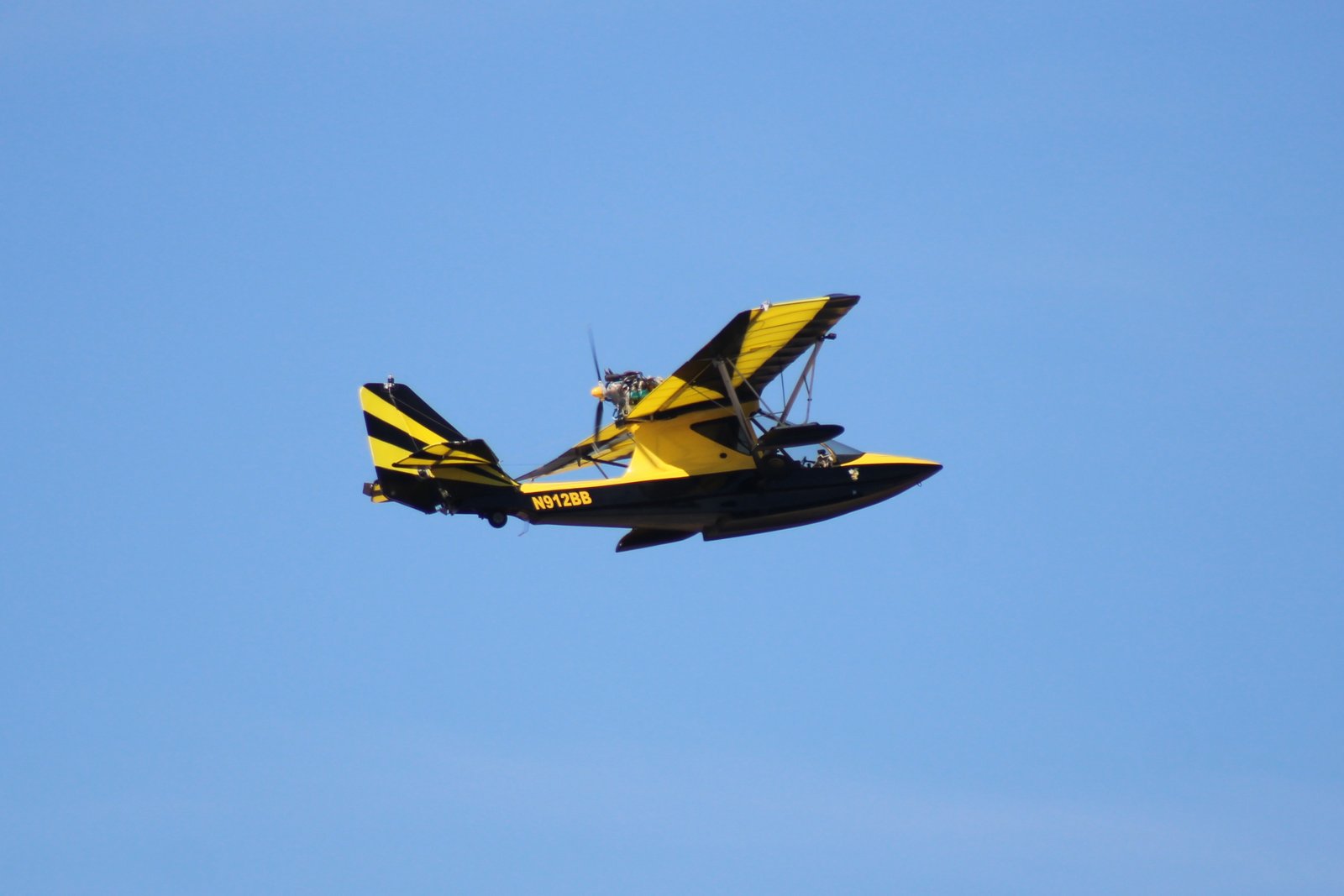
Service History
The Aventura 2 captured the Experimental Aircraft Association's Seaplane Award in 1996, the same year it entered production, establishing its credentials in the recreational amphibious market. Since entering service, the aircraft has maintained continuous production for more than 25 years, with Aero Adventure conservatively reporting nearly 200 Aventura models built by 2017. When accounting for the complete design lineage tracing back to the original Buccaneer series, approximately 1,000 aircraft have been constructed, making it one of the most successful amateur-built amphibian designs.
The aircraft serves primarily recreational pilots seeking backcountry and water access capabilities. Sold exclusively as a kit for amateur-built construction, the Aventura 2 appeals to aviation enthusiasts who value the combination of land and water operations in a relatively affordable package. Optional wing-mounted fuel tanks extend the aircraft's range for cross-country adventures.
The Manufacturer
The Aventura 2's development history spans four decades through multiple companies. The design lineage began in the 1980s when John Gruenner and Bob Bailey at Advanced Aviation, owned by the Richter family, developed the Buccaneer II, which debuted at Sun N Fun in 1986. Carlos Pereyra, a recent immigrant with aviation design experience, joined Advanced Aviation as an employee and eventually became production manager.
In 1994, Pereyra partnered with Greg Arnett to form Arnet Pereyra Inc., launching the Aventura line of amphibious aircraft. The new company earned the EAA Amphibian Design of the Year award in 1995, validating their engineering approach. Aero Adventure Inc. acquired Arnet Pereyra in 2003 and continues manufacturing the complete Aventura line today.
Under current leadership by Alex Rolinski, described as heading a young team with FAA Airframe & Powerplant credentials, the company modernized production through CAD design using Solidworks and improved manufacturing efficiency. The transition to computer-aided design has reduced costs while maintaining the original design philosophy that made the aircraft successful.
Engine & Technical Details
The Aventura 2 utilizes Austrian-manufactured Rotax engines, offering builders a choice between the 65-horsepower Rotax 582 two-stroke or the 100-horsepower Rotax 912ULS four-stroke powerplant. The Rotax 914UL has also been documented in service. These engines burn approximately 4.5 gallons of automotive gasoline per hour, providing economic operation for recreational flying.
The aircraft incorporates several innovative features for its class, including twin pitot tubes that provide redundant airspeed measurement. One pitot tube supplies air data to modern Dynon electronic flight displays, while the second feeds FAA-required mechanical backup instruments. Some aircraft are equipped with ballistic recovery systems, specifically the BRS 5 1200 VLS parachute system, enhancing safety margins for low-altitude operations typical of amphibian flying.
Pilot Perspective
Pilots appreciate the Aventura 2's docile handling characteristics and versatility in accessing remote locations. The side-by-side seating configuration facilitates instruction and enhances the social aspect of recreational flying. The pusher propeller arrangement reduces noise in the cockpit and eliminates propwash over the wing during water operations.
Performance specifications include a cruise speed of 80-85 mph and a never-exceed speed of 100 mph, making it suitable for low-and-slow recreational flying rather than cross-country transportation. The single-hull amphibian design provides more predictable water handling compared to flying boat configurations, while the retractable landing gear enables operation from conventional airports.
Production & Legacy
The Aventura 2's three-decade production run demonstrates remarkable longevity in the kit aircraft market. The design succeeded by filling a specific niche for affordable amphibious capability that larger manufacturers largely ignored. Its amateur-built status allows owners to perform their own maintenance while keeping operating costs manageable.
The aircraft's name, meaning "adventure" in Spanish, accurately reflects its mission as an exploration platform for pilots seeking access to remote lakes, rivers, and backcountry strips. Manufacturing continues at the company's DeLand, Florida facility at 915 Biscayne Boulevard, Hangar A, where parts and support remain available for both current production aircraft and earlier Buccaneer variants. The design's proven track record and ongoing production ensure the Aventura 2 will continue serving recreational aviators seeking amphibious adventure for years to come.