
Commercial Dominance
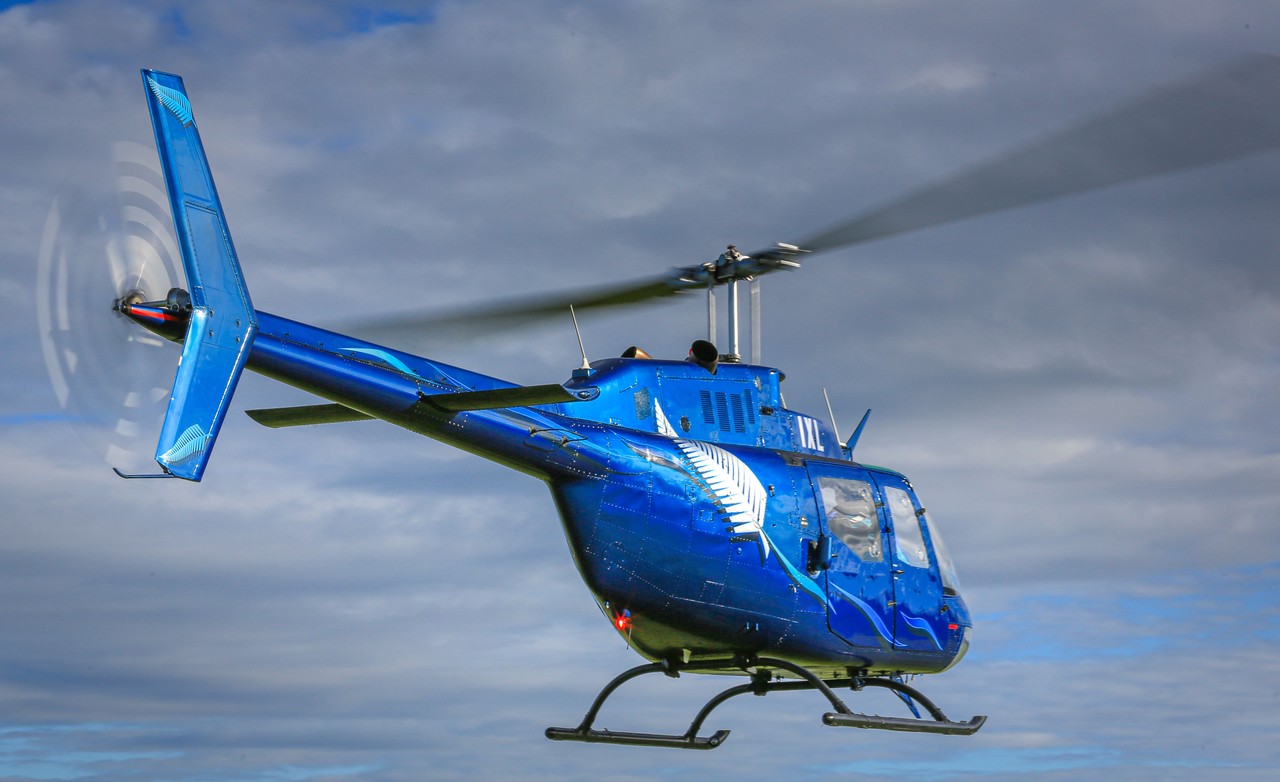
The Bell 206B JetRanger achieved unprecedented success in the civilian helicopter market, becoming the backbone of commercial rotorcraft operations across multiple industries. By the time production ceased in 2010, the entire Bell 206 family had accumulated more than 7,300 aircraft delivered worldwide, making it the best-selling light helicopter series in history. The aircraft found widespread use in police departments, news organizations for traffic reporting, emergency medical services, and corporate transportation. Harry Holly of Hollymatic Corporation became the first customer, taking delivery on January 13, 1967, marking the beginning of the JetRanger's commercial reign.
Military Heritage
Though designed for civilian use, the 206B shared its DNA with military variants that saw extensive combat service. The design evolved from Bell's unsuccessful YOH-4 entry in the U.S. Army's Light Observation Helicopter competition, which Bell lost to Hughes. However, when the Army reopened the competition in 1969 due to production delays, Bell's refined design won as the OH-58 Kiowa. Military variants served in Vietnam from 1969, the Gulf War in 1991, and subsequent conflicts in Afghanistan and Iraq. The U.S. Navy adopted the design as the TH-57 Sea Ranger for pilot training, while international operators included Canada's CH-139 JetRanger fleet.
The Manufacturer's Evolution
Bell Helicopter, originally founded as Bell Aircraft Corporation by Lawrence Dale Bell in 1935, entered the rotorcraft business after World War II and quickly established itself as an industry leader. The company initially manufactured the 206B at its Hurst, Texas facility, where the prototype first flew on January 10, 1966. In 1985, Textron Inc. acquired Bell Helicopter, and the following year, civil helicopter production shifted to Bell Textron Canada's facility in Mirabel, Quebec. Today operating as Bell Textron, the company continues helicopter production with modern variants like the Bell 505 Jet Ranger X, which serves as the 206B's successor.
Powerplant Innovation
The 206B's success stemmed largely from its reliable Allison 250 series turboshaft engines, manufactured by what is now Rolls-Royce Corporation. The initial 206B JetRanger II introduced in 1971 utilized the Allison 250-C20, producing 400 shaft horsepower. Bell upgraded the design in 1977 with the 206B-3 JetRanger III, powered by the improved Allison 250-C20J generating 420 shaft horsepower. This engine family, first entering production in the 1960s, has accumulated over 30,000 units built across all variants and remains in production today. The modular design allowed for rapid maintenance, while the flat power rating ensured consistent performance in hot and high-altitude conditions.
Flight Characteristics
Pilots praised the 206B for its docile handling characteristics and operational reliability. The helicopter's teardrop-shaped fuselage provided excellent aerodynamic efficiency, while the simple two-bladed rotor system reduced maintenance complexity compared to more sophisticated designs. With a service ceiling of 20,000 feet and maximum range of 337 nautical miles, the aircraft offered respectable performance for its class. The design emphasized ease of operation, making it popular for pilot training and charter operations where predictable handling was essential.
Production Legacy
Bell manufactured approximately 4,491 Model 206A/B helicopters between 1967 and 2010, with the final 206B-3 (serial number 4690) delivered in December 2010. This production run spanned 39 years, testament to the design's enduring appeal and market relevance. The aircraft's commercial success proved the viability of turboshaft power for light helicopters, influencing subsequent designs across the industry. Today, hundreds of 206B variants remain in active service worldwide, continuing to perform utility missions more than five decades after the type's introduction.
Cultural Impact and Preservation
The JetRanger's distinctive silhouette became synonymous with helicopter operations in popular culture, appearing frequently in films and television as the archetypal civilian helicopter. Its ubiquity in police and news operations made it instantly recognizable to the public. Several examples are preserved in aviation museums, including C-GWML, a 1968 Model 206A later upgraded to 206B configuration, displayed at the Saskatchewan Aviation Museum in Canada. The aircraft's legacy lives on through its influence on modern helicopter design and its role in establishing the template for successful commercial rotorcraft operations.