
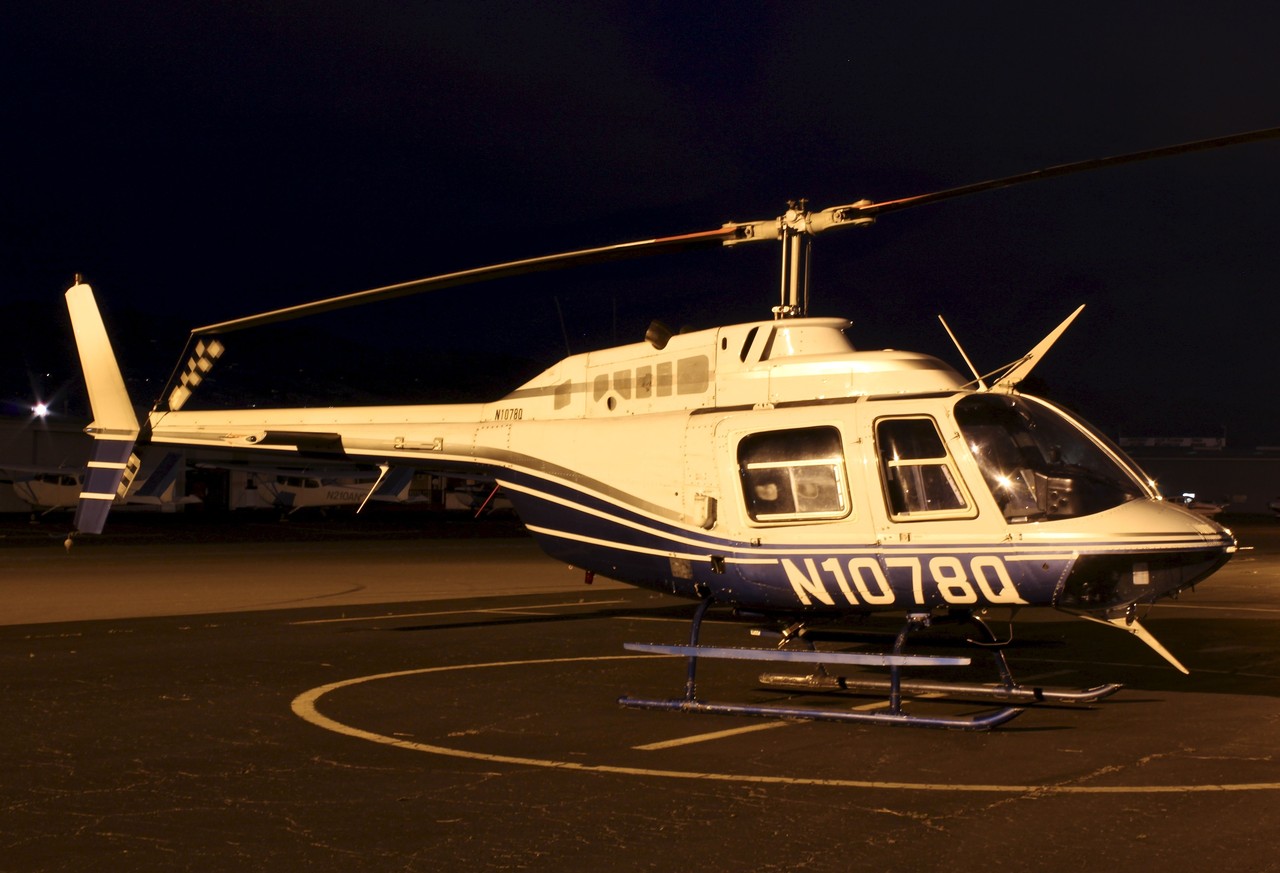
Limited Production Excellence
The Bell 206LT TwinRanger represented one of aviation's most exclusive helicopter programs, with exactly 13 units rolling off Bell's Mirabel production line between 1993 and 1997. This remarkably small production run made the TwinRanger one of the rarest commercial helicopters ever manufactured, yet its engineering significance far exceeded its numbers. The aircraft emerged during an era when operators demanded enhanced safety margins for high-risk missions, particularly in offshore and remote utility operations where single-engine helicopters faced inherent limitations.
Engineering Innovation
Bell's engineering team approached the TwinRanger project with a clear mandate: deliver twin-engine redundancy without compromising the LongRanger's proven airframe characteristics. They achieved this by installing two Allison 250-C20R turboshaft engines, each producing 335 kilowatts of power, onto the familiar LongRanger IV platform. This powerplant selection proved particularly astute, as the Allison 250 series had already established legendary reliability through more than three decades of service and over 32,000 units produced across various applications.
The design team retained the LongRanger's distinctive two-bladed rotor system and stretched fuselage, measures that preserved the aircraft's handling characteristics while accommodating the additional engine weight and complexity. The twin-engine configuration provided operators with the critical ability to continue flight following single-engine failure, a capability that single-engine helicopters simply cannot match.
Bell Helicopter's Canadian Operations
Production took place at Bell's sophisticated Mirabel facility in Quebec, established in 1981 as part of Bell Textron's expansion into Canadian manufacturing. This plant had assumed responsibility for civil helicopter production from 1986 onward, representing Bell's commitment to international manufacturing excellence. Bell Helicopter itself traced its rotorcraft heritage back to the post-World War II transition of the original Bell Aircraft Corporation, founded by Lawrence Dale Bell in 1935.
Textron's 1985 acquisition of Bell had provided the financial foundation for ambitious projects like the TwinRanger, though the parent company's business analysis ultimately determined that the limited market demand could not justify continued production beyond the initial 13-unit run.
Operational Capabilities
The 206LT excelled in missions where safety margins justified its premium over single-engine alternatives. Its service ceiling of 4,267 meters and range of 579 kilometers provided substantial operational flexibility, while the familiar LongRanger cabin could accommodate diverse mission configurations. Emergency medical services particularly benefited from the twin-engine redundancy, as stretcher-equipped variants could maintain flight capability even with single-engine failure during critical patient transport missions.
Corporate operators appreciated the aircraft's ability to access challenging landing zones with enhanced safety margins, while utility companies found the external load capability valuable for construction and maintenance operations in remote locations. The helicopter's maximum speed of 240 kilometers per hour placed it competitively within its class, though the twin-engine configuration inevitably increased operating costs compared to single-engine alternatives.
Commercial Service Record
Air Logistics of New Iberia, Louisiana emerged as one of the TwinRanger's most notable operators, though the company's major LongRanger fleet expansion in March 2003 came six years after TwinRanger production had concluded. This timing illustrated the aircraft's fundamental market challenge: operators recognized its capabilities but often settled for less expensive single-engine alternatives or waited for newer twin-engine designs.
The TwinRanger found no military applications, remaining purely within commercial aviation throughout its brief production life. This civilian focus reflected Bell's positioning of the aircraft as a premium utility helicopter rather than a military variant.
Legacy and Impact
Despite its limited production numbers, the 206LT TwinRanger influenced subsequent light twin-engine helicopter development. Its demonstration that twin-engine reliability could be successfully integrated into a light helicopter platform helped establish market acceptance for later designs like the Bell 407, which incorporated similar safety philosophies with more advanced single-engine powerplants.
Today, few of the original 13 TwinRangers remain in active service, and Bell no longer provides factory support for the type. The aircraft's rarity has made it a curiosity among helicopter enthusiasts, though its operational significance was always more about pioneering twin-engine concepts than achieving widespread market penetration.
The TwinRanger's brief production run ultimately demonstrated both the technical feasibility and economic challenges of twin-engine light helicopters, lessons that continue to influence rotorcraft design decisions decades after the last unit left Mirabel in 1997.