
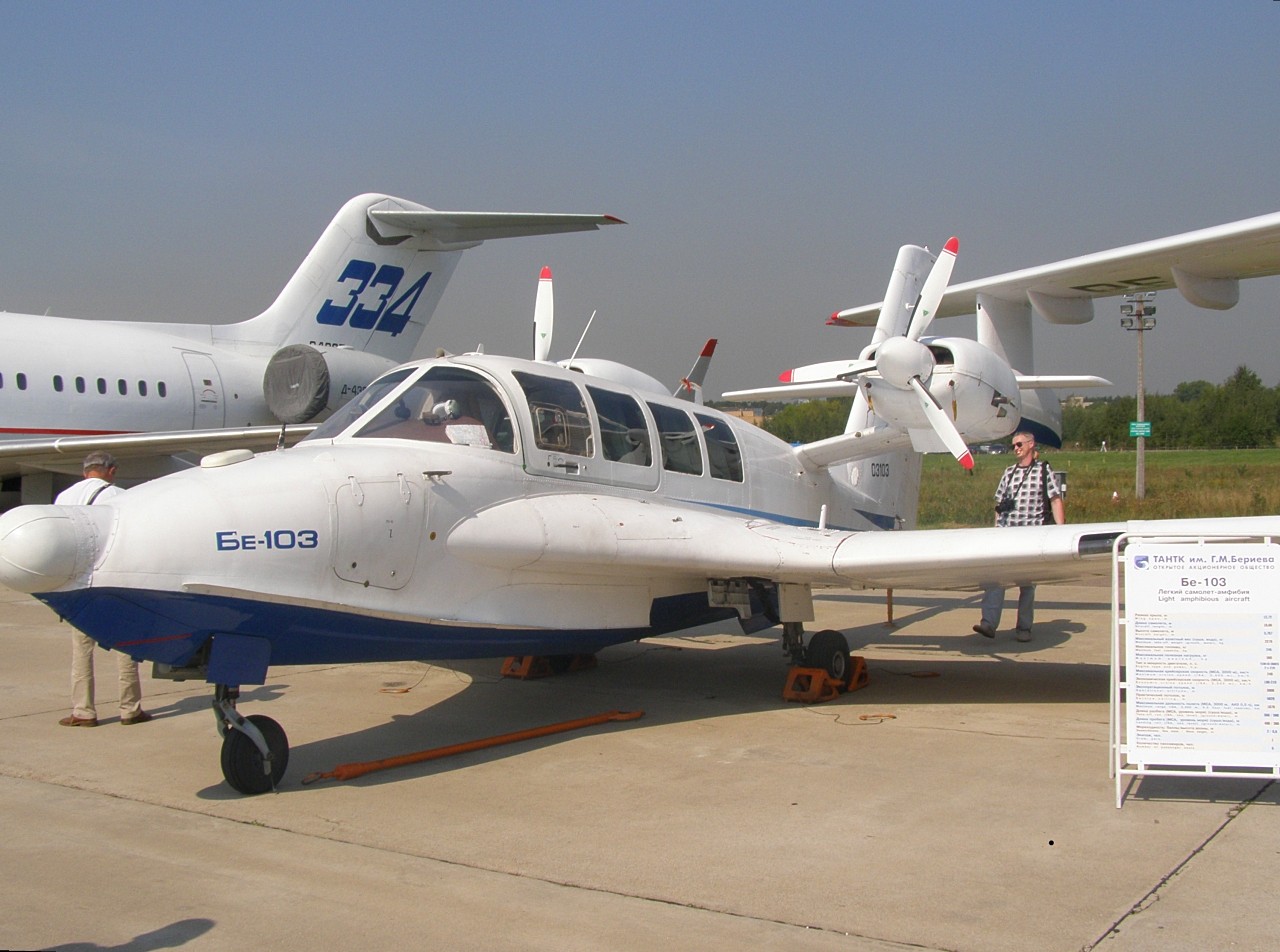
Design and Development
The Be-103 emerged from Beriev's ambition to create an amphibious aircraft capable of autonomous operations in Russia's remote northern territories and Siberia, where traditional airstrips remain scarce but water bodies provide abundant landing opportunities. The Beriev OKB completed the prototype in 1992, incorporating innovative features that would distinguish it from conventional seaplanes. The aircraft's 22-degree swept wing design included fixed leading-edge slats spanning 11 feet, while water-displacing sponsons modified from the wing roots provided enhanced stability during water operations.
The design team implemented several technological innovations, including aluminum-lithium alloy construction with titanium reinforcement in high-stress areas, wet wing fuel storage, and notably omitted wing flaps in favor of the swept-wing configuration. Three aquaplaning implements—a planing step and wing trailing edges—enhanced seaworthiness, while a five-hour flight data recorder captured 30 operational parameters. The aircraft featured engine fire detection systems, ice detection equipment, and three-bladed MT-12 reverse-pitch propellers with 6-foot diameters.
Certification and Market Entry
Following its maiden flight on July 15, 1997, the Be-103 pursued an ambitious international certification campaign. The aircraft achieved a historic milestone on July 21, 2003, when it received FAA Normal category certification at EAA AirVenture Oshkosh, becoming the first Russian aircraft to earn this distinction. FAA Director Marion Blakey personally visited the aircraft on August 1, 2003, underscoring the significance of this achievement in post-Cold War aviation relations.
The certification process extended beyond the United States, with approvals secured from the European Union, Brazil, China, and Russia. To reach the Oshkosh airshow, the Be-103 required transport aboard an Antonov An-124, highlighting the logistical challenges of intercontinental delivery for amphibious aircraft. Initial production units were delivered to US dealer Kent Linn at Sky Manor Airport in Pittstown, New Jersey, establishing the American market presence.
Production and International Sales
Manufacturing commenced at the Komsomolsk-on-Amur Aircraft Production Association (KnAAPO) in Russia's Far East, with first deliveries occurring in 2003. The production program attracted significant international interest, particularly from China, which signed a $20 million contract in 2004 for 20 aircraft. By 2010, three examples appeared on the US civil register, while dozens more operated worldwide in various utility roles.
Beriev expanded production capabilities through a 2016 licensing agreement with China's Energy Leader Aircraft Manufacturing, potentially establishing Asian assembly operations. This partnership reflected growing Chinese interest in general aviation and amphibious aircraft capabilities, though actual licensed production numbers remain undisclosed.
Technical Specifications and Performance
The Be-103's powerplant consists of two Continental IO-360-ES4 fuel-injected horizontally opposed engines, each delivering 157 kilowatts (210 horsepower). These engines drive MT-Propeller MT-12 three-bladed propellers, optimized for both water and land operations. Fuel capacity reaches 340 liters (90 US gallons) stored in the aircraft's wet wing design, supporting the operational range requirements for remote area access.
With a gross weight of 5,033 pounds and maximum takeoff weight of 5,011 pounds, the Be-103 balances payload capacity with amphibious operational requirements. The retractable tricycle landing gear enables conventional airport operations, while the hull design and sponson configuration provide water handling characteristics essential for lake and river operations in challenging environments.
Operational Applications
The Be-103 serves diverse mission profiles including passenger transport, cargo delivery, maritime patrol, environmental monitoring, emergency medical evacuation, and recreational flying. Its design philosophy emphasized autonomous operations in areas lacking aviation infrastructure, making it particularly valuable for Siberian and northern Canadian operations where water bodies provide the primary landing surfaces.
The aircraft's certification for both day and night operations, combined with its comprehensive avionics suite including the flight data recorder and ice detection systems, enables year-round utility in demanding climatic conditions. Emergency medical configurations accommodate stretcher patients, while cargo variants maximize payload capacity for supply missions to remote communities.
Legacy and Current Status
Production continues with examples operating worldwide, though exact manufacturing numbers remain proprietary. The Be-103's significance extends beyond its production numbers, representing successful Russian entry into the international general aviation market and demonstrating post-Soviet aerospace industry capabilities. As one of only two twin-engine seaplanes in active production alongside the Dornier Seastar, the Be-103 occupies a specialized but important market niche.
The aircraft's FAA certification precedent opened pathways for other Russian aviation products in Western markets, while its operational success in diverse geographic conditions validates the amphibious aircraft concept for 21st-century utility aviation. Despite geopolitical uncertainties affecting Russian aerospace exports, the Be-103's international presence and Chinese licensing arrangements suggest continued relevance in global amphibious aviation markets.