
Service History
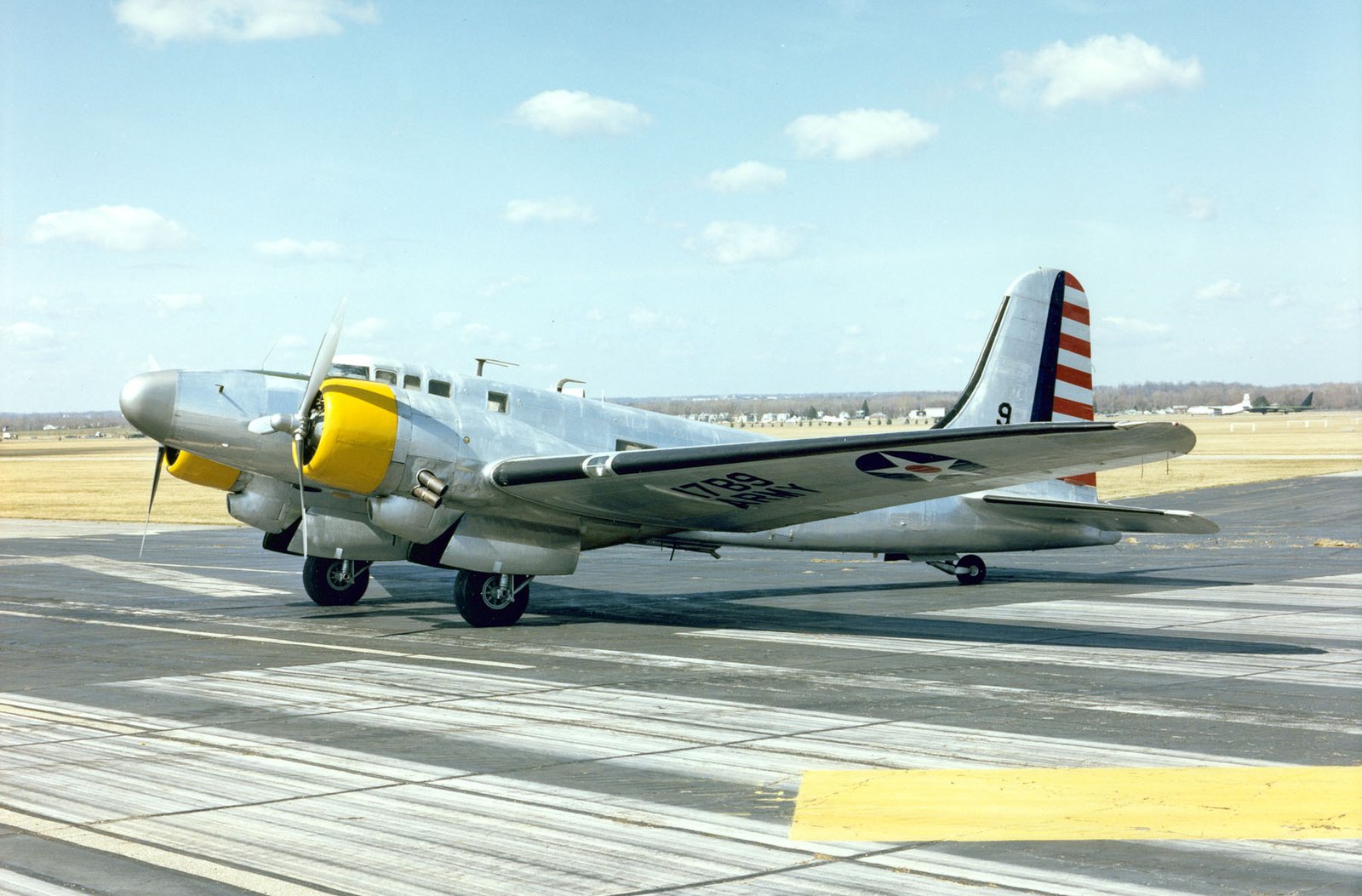
The B-23 Dragon occupied a unique position in American military aviation as the bridge between obsolescent pre-war bombers and the advanced designs that would dominate World War II. Despite entering service in 1940, all 38 aircraft were relegated to training, coastal patrol, and utility transport duties by mid-1942. The type never saw overseas combat, quickly overshadowed by superior designs like the B-25 Mitchell and B-26 Marauder that entered production shortly after.
Wartime Operations
The United States Army Air Corps deployed B-23s primarily for anti-submarine patrols along the West Coast during the early war years. Their high speed and modern defensive armament made them suitable for this role, though their limited production numbers prevented widespread deployment. By 1943, twelve to eighteen aircraft received conversion to C-67 and UC-67 transport variants, featuring glider-towing capabilities and passenger accommodation modifications.
The Manufacturer
Douglas Aircraft Company, founded by Donald Wills Douglas Sr. in 1920, built the B-23 at its Santa Monica, California facilities. The company had established itself as America's premier aircraft manufacturer through revolutionary designs like the DC-3 airliner, which directly influenced the B-23's wing design and overall configuration. Douglas operated independently until 1967, when it merged with McDonnell Aircraft to form McDonnell Douglas, which Boeing subsequently acquired in 1997.
Engine and Technical Innovation
Two Wright R-2600-1 Twin Cyclone radial engines powered the B-23, each producing 1,600 horsepower through supercharged 14-cylinder, two-row configurations. Wright Aeronautical's R-2600 series, which entered production in 1938, would power over 18,000 aircraft including the famous B-25 Mitchell and F4U Corsair. The B-23's most significant innovation was America's first operational bomber featuring a glazed tail gun position, where a prone gunner operated a .50-caliber machine gun through a telescopic sight.
Design Philosophy
Douglas engineers completely redesigned the earlier B-18 Bolo, incorporating the DC-3's proven wing structure and fully retractable landing gear. The aircraft doubled the payload capacity of its predecessor, the Martin B-10, while achieving speeds that surpassed contemporary medium bombers. Five .50-caliber machine guns provided defensive coverage from nose, dorsal, ventral, and tail positions, representing a significant advancement in bomber armament philosophy.
Performance Characteristics
Pilots appreciated the B-23's excellent handling qualities and impressive performance envelope. The aircraft cruised at 210 miles per hour and could reach a maximum speed of 282 miles per hour, exceptional for 1940. Its improved aerodynamics and powerful engines provided superior altitude performance compared to earlier American bombers, though specific ceiling and range figures varied with mission configuration.
Production and Legacy
Douglas manufactured all 38 B-23s under a modified Army Air Corps contract between July 1939 and September 1940. Originally planned as additional B-18As, the contract was altered to reflect the improved B-23 specification. Post-war, many aircraft found new life as executive transports and small airliners, with notable operators including Great Lakes Carbon Corporation and aviation pioneer Howard Hughes, who personally used one for transportation.
Museum Preservation
Only a handful of B-23 Dragons survive today, preserved in major aviation museums across the United States. The National Warplane Museum in Geneseo, New York, displays serial number 39-0038, acquired from the Commemorative Air Force in 2009. Pima Air & Space Museum in Tucson, Arizona, exhibits serial number 39-051, while the National Museum of the United States Air Force at Wright-Patterson Air Force Base maintains serial number 39-0037 in its collection.
The B-23 Dragon's historical significance extends beyond its modest production numbers, representing the crucial evolutionary step from 1930s bomber designs to the sophisticated aircraft that would dominate World War II skies.